Press Enquiries
Please direct all press enquiries and image requests to museum@nus.edu.sg.
In The Spotlight
Beyond the Field: Notes from a curatorial trainee for prep-room Intimate Landscapes
By Nurul Kaiyisah
“How can a drawing represent an object? What flight of the material imagination gives this
design its purchase on the world?”[1]
Bearing opportunities for all to encounter with the unknown, NUS Museum’s latest exhibition, prep-room: Intimate
Landscapes, presents visual explorations by four collaborators from the NUS Department
of Architecture (Goi Yong Chern, Lin Derong, Ian Mun, Wong Zi Hao) of sites they have traversed and
interacted with viscerally. The prep-room exhibits a survey of methods these individuals have taken on,
to approach and read landscapes beyond traditional modes of knowing – to engage with affective knowledge
existing within these sites.
In its initial stages of exhibition-making, the objects and drawing archives from Yong Chern, Derong, Ian and Zi Hao had deeply fascinated me, beyond the contents it possesses. It marked my initial foray into understanding spaces through the study of geological and infrastructural in these sites. Conversations shared amongst Sidd, the four of them, and I were rudimentary at first; revolving around the trajectories of their creative research for the first iteration of the prep-room. Aligned to Matthew Gandy’s description of these explorations, their assembly of works grappled with the “relationship between aesthetic experience, modification of nature and exercise of power”.[2] All four of them had lines of inquiry of their own that they took on immediately and began visiting (and revisiting too) these sites and their body of archives to make acquaintance with realms that reside within those spaces.
As time progresses and draws nearer to the date of the Open Studio slated for the prep-room, the central enquiry on modes of reading ‘intimately’ began to embrace another significant concern: How do these creative investigations then be translated into a visual language that entails situatedness in their experiences? The nature of our discussions then pivoted towards curatorial strategies we could engage with to triangulate individual voices and the artistic mediums they chose to express in. Although we were working with an array of visual forms that interacted with four different sites, it was imperative to ensure that each body of work could hold conversations with one another. Beyond just positing embodied experiences vested in these works, the prep-room should hold space for them to engage in a coherent dialogue. It was a critical undertaking for the curatorial team to strike a balance between these subjectivities.
On that note, Sidd and I too had tangential lines of inquiries of our own that explores the intangible and the unseen, resting at the crevices of these landscapes. We soon gathered resources that probes further into the mythopoeic and lived stories of realms that take shape beyond the physical structures of the site. The world of speculative histories and literature reveals fecund grounds for us to investigate structures that uphold dominant modes of knowledge-production and most importantly, embrace viscerality echoed in the works of the four individuals. Here, we assembled transcripts of oral history, newspaper articles, both art and literary works, in our curatorial research that speaks on (and/or for) these realms. We were also introduced to other interlocutors who have long dedicated their lives to preserving these unconventional means of knowledge too.
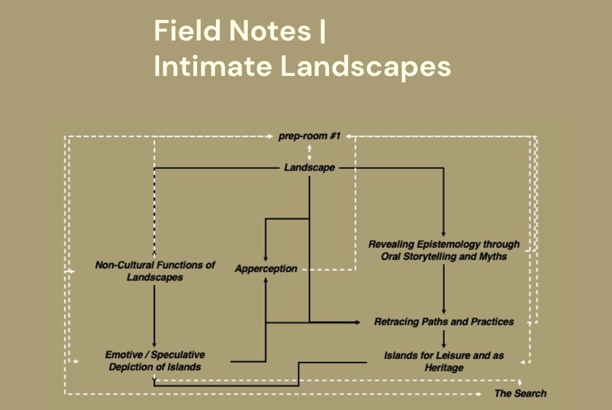
Together with Celine, who is on the NUS Museum Internship programme, we organised these materials for a micro-site, as a means of repository for future references. Alike to a cartographer surveying the lands beyond, the micro-site becomes our Field Notes for the prep-room. Celine had also designed the micro-site in a way that it prompts the user to go “down the rabbit holes” where links to each archive material are circuitous, mimicking the nature of our curatorial research, for some materials that we have sought were not digitised and/or have not been documented just yet.
Aware of these lacunae in knowledge and given the task to facilitate programming for the prep-room, I had lengthy discussions with the Outreach team too on how best to activate the works in the prep-room and the micro-site itself. We then landed on the idea of organizing an Open Studio for the prep-room where it welcomes visitors to engage with the four individuals and their work. If the situation prevails in the future, we intend to pair the four individuals with experts in respective fields for a programme that encourages casual dialogues on the former’s creative pursuits for the following iterations of the prep-room.
Thus, it is only befitting that the creative research projects of Yong Chern, Derong, Ian and Zi Hao are translated into a ‘prep-room’ mode of exhibition in NUS Museum. The undertaking by the 4 individuals along with Sidd, Celine and I to introduce a register of methods and approaches to document, draw, represent or narrate a landscape is certainly daunting and requires all hands on deck. Even so, we oftentimes faced gaps in our curatorial research in which we actively seek for contributions from members of the public through our micro-site. The four individuals themselves too spoke on the futility and pressure of producing an all-encompassing experience in their archives and works. It is a fool’s errand to claim that prep-room Intimate Landscapes is comprehensive of all methods available to read landscapes and/or that these methods posited could document every ambulant epistemology of the site.
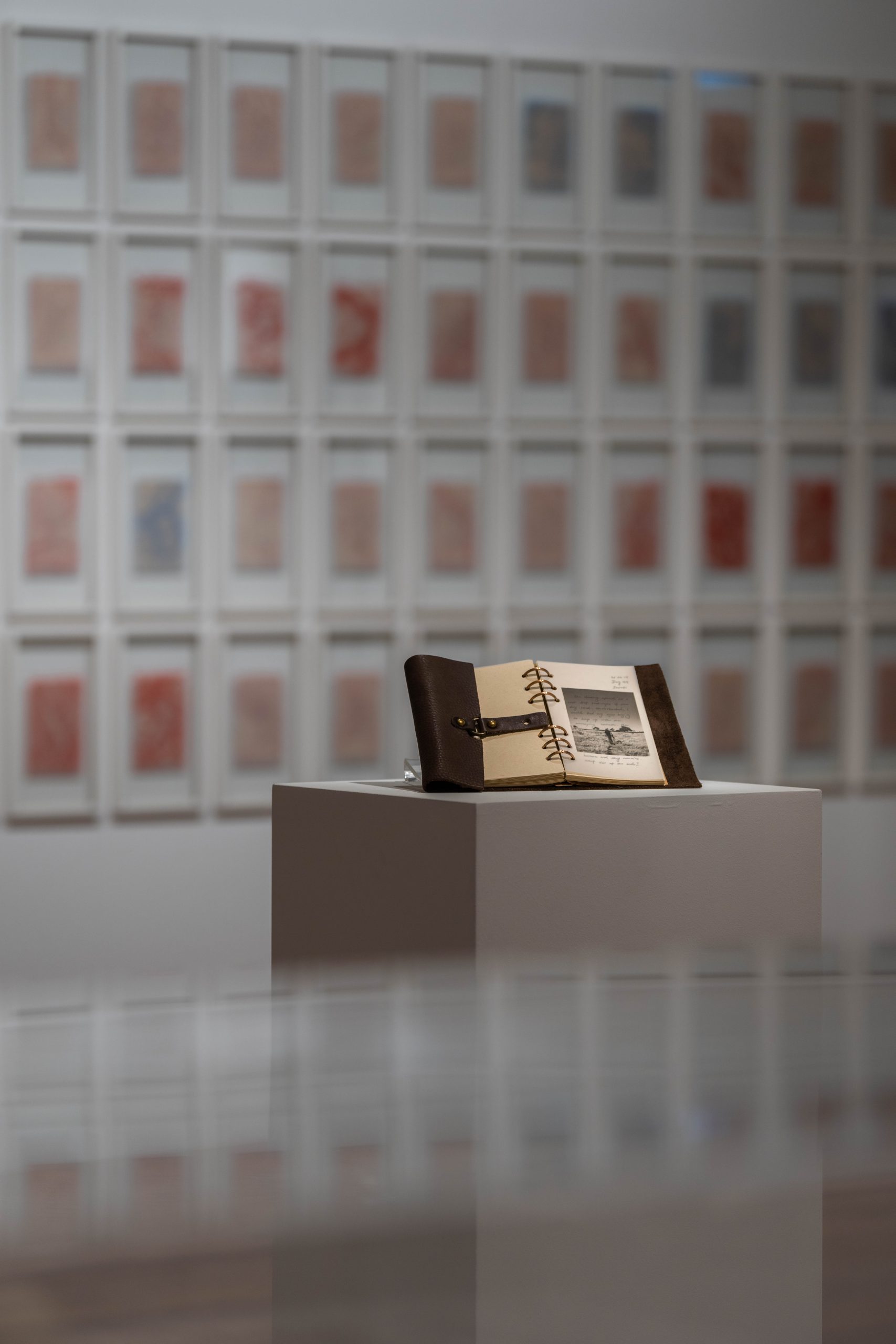
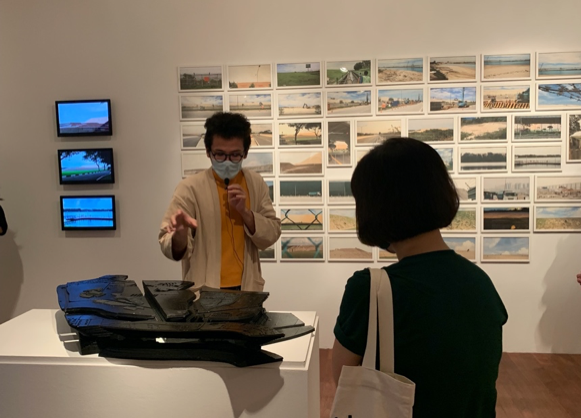
The emphasis of this prep-room centres on the evolving observations of these four individuals and their respective methods where embodied experiences and subjectivities surface and most importantly, be in conversation with one another. It lies in the way Zi Hao’s journalistic series of Drawing Encounters, his documentation of Sarang Rimau in text, juxtaposes with the opposing wall that presents Derong’s Scrambling Sand, an array of framed images of sandhills that informs us of the level of access/excess to them. It lies in the way Yong Chern’s The Malayan Picturesque, visual tracings of figures in leisure and/or labour, speaks to Ian’s Tales of Land in Fabled Pink, a film that captures scenic landscapes of Sua Pan, Botswana, with particular attention to the nature, fauna and also machinery on the lands of these salt mines.
With this, while the prep-room offers a survey of these methods, it is noteworthy to appreciate the human effort and scale that goes into the construction of the prep-room’s iteration we see today – be it to the four individuals who had traversed these lands and to the team that facilitated with the conceptual armature and the physical construction of the exhibition itself. The experience of working in collaboration with one another allowed room for diverse dialogues around the lands we inhabit and the sharing of affective knowledge to take place. We can only hope that the prep-room inspires a child-like curiosity in visitors to explore landscapes before them and experience an ‘intimate view’ of these sites themselves, much like how the four individuals had done, to their creative pursuits.
[1] Paul Carter, Dark writing: geography, performance, design (Honolulu, HI: University of Hawai’I Press, c2009), 4.
[2] Matthew Gandy, “Unintentional landscapes”, Landscape Research, Volume 41 Number 4 (2016), 434.
- Student Voices

18 November 2025
16 May 2025
NUS Baba House to undergo two years of conservation works
Enthusiasts can look forward to a slate of programmes ahead of and during the temporary closure.
6 October 2023
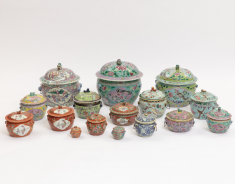
NUS Museum receives largest-ever donation of Straits Chinese artefacts
"Collected by Mrs Alice Tan over a 30-year period, the donated artefacts will contribute to a deeper study of the impact of Straits Chinese culture in Singapore and the region, and provide broadened avenues for interdisciplinary collaborations."
15 August 2023
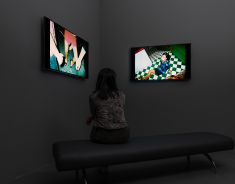
From personal photo collection to exhibition: NUS Museum's latest showcase features visual narratives by 9 members of the NUS community
Titled Photography Journal Open Call (PJOC), the exhibition presents an eclectic collection of photographic works by nine NUS students, alumni artists and academic staff.
12 April 2021
Nurturing a creative campus through public art advocacy
The Public Art Initiative was launched to underscore NUS’ commitment to deepening the role of public art in holistic, interdisciplinary and broad-based education.

8 October 2019
October at the NUS Museum: between war and the artist, art and the tropics
This October, NUS Museum unveils two new exhibitions surveying the art historical in the region from distinct positions.

31 May 2019
New exhibition from Gilles Massot to be unveiled at NUS Museum
“…you have to lose your way to find yourself in the right place” presents the works of Singapore-based French artist, Gilles Massot. Featuring a selection of photographs, videos, sketches and writings from his extensive corpus of works.

14 February 2019
Glossaries of the Straits Chinese Homemaking
Following eleven years of giving glimpses of a Peranakan family’s domestic life in the early 20th century, NUS Baba House presents the exhibition Glossaries of the Straits Chinese Homemaking.
22 March 2018
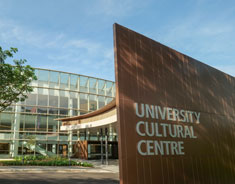
NUS' cultural icon refreshed for a new generation
The University Cultural Centre's first major renovation improves the high standard of guest comfort, efficiency and production possibilities.
3 February 2017
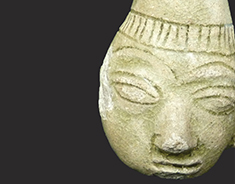
Exhibition: From the Ashes: Reviving Myanmar Celadon Ceramics
NUS Museum presents ongoing attempts to revive the technology of making ash-glazed ceramics in Myanmar.

23 November 2016
Exhibition: Between the brush lines of Lim Tze Peng
Solo exhibition at NUS Museum considers 70-year oeuvre of Singapore's oldest living artist.

1 November 2016
Book Launch: NUS Baba House launches inaugural guidebook
From architecture to social history, book reveals the myriad facets of Singapore's only restored Straits Chinese family home.
21 October 2016
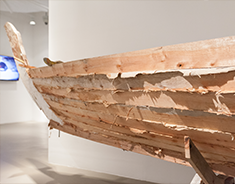
Exhibition: Looking within - What makes an exhibition?
NUS Museum presents exhibition introspecting into curatorial impulses and the exhibitionary medium.
1 July 2016
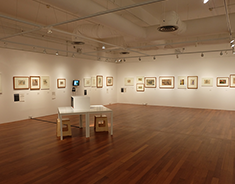
Exhibition: "Who wants to remember a war?"
NUS Museum draws on war posters, woodcuts and drawings to explore contemporary narratives of the Vietnam War.

10 May 2016
Award: NUS Museum wins inaugural award for innovative museological practice
International Committee of University Museums and Collections recognises efforts to facilitate conversation between audiences and exhibitions.
14 April 2016
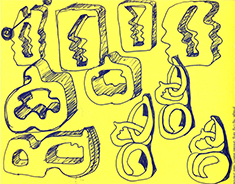
Exhibition: Figuring Ng Eng Teng
NUS Museum reveals unstudied elements and works from the late Cultural Medallion recipient’s practice.
Student Voices
Beyond the Field: Notes from a curatorial trainee for prep-room Intimate Landscapes
By Nurul Kaiyisah
“How can a drawing represent an object? What flight of the material imagination gives this
design its purchase on the world?”[1]
Bearing opportunities for all to encounter with the unknown, NUS Museum’s latest exhibition, prep-room: Intimate
Landscapes, presents visual explorations by four collaborators from the NUS Department
of Architecture (Goi Yong Chern, Lin Derong, Ian Mun, Wong Zi Hao) of sites they have traversed and
interacted with viscerally. The prep-room exhibits a survey of methods these individuals have taken on,
to approach and read landscapes beyond traditional modes of knowing – to engage with affective knowledge
existing within these sites.
In its initial stages of exhibition-making, the objects and drawing archives from Yong Chern, Derong, Ian and Zi Hao had deeply fascinated me, beyond the contents it possesses. It marked my initial foray into understanding spaces through the study of geological and infrastructural in these sites. Conversations shared amongst Sidd, the four of them, and I were rudimentary at first; revolving around the trajectories of their creative research for the first iteration of the prep-room. Aligned to Matthew Gandy’s description of these explorations, their assembly of works grappled with the “relationship between aesthetic experience, modification of nature and exercise of power”.[2] All four of them had lines of inquiry of their own that they took on immediately and began visiting (and revisiting too) these sites and their body of archives to make acquaintance with realms that reside within those spaces.
As time progresses and draws nearer to the date of the Open Studio slated for the prep-room, the central enquiry on modes of reading ‘intimately’ began to embrace another significant concern: How do these creative investigations then be translated into a visual language that entails situatedness in their experiences? The nature of our discussions then pivoted towards curatorial strategies we could engage with to triangulate individual voices and the artistic mediums they chose to express in. Although we were working with an array of visual forms that interacted with four different sites, it was imperative to ensure that each body of work could hold conversations with one another. Beyond just positing embodied experiences vested in these works, the prep-room should hold space for them to engage in a coherent dialogue. It was a critical undertaking for the curatorial team to strike a balance between these subjectivities.
On that note, Sidd and I too had tangential lines of inquiries of our own that explores the intangible and the unseen, resting at the crevices of these landscapes. We soon gathered resources that probes further into the mythopoeic and lived stories of realms that take shape beyond the physical structures of the site. The world of speculative histories and literature reveals fecund grounds for us to investigate structures that uphold dominant modes of knowledge-production and most importantly, embrace viscerality echoed in the works of the four individuals. Here, we assembled transcripts of oral history, newspaper articles, both art and literary works, in our curatorial research that speaks on (and/or for) these realms. We were also introduced to other interlocutors who have long dedicated their lives to preserving these unconventional means of knowledge too.
Together with Celine, who is on the NUS Museum Internship programme, we organised these materials for a micro-site, as a means of repository for future references. Alike to a cartographer surveying the lands beyond, the micro-site becomes our Field Notes for the prep-room. Celine had also designed the micro-site in a way that it prompts the user to go “down the rabbit holes” where links to each archive material are circuitous, mimicking the nature of our curatorial research, for some materials that we have sought were not digitised and/or have not been documented just yet.
Aware of these lacunae in knowledge and given the task to facilitate programming for the prep-room, I had lengthy discussions with the Outreach team too on how best to activate the works in the prep-room and the micro-site itself. We then landed on the idea of organizing an Open Studio for the prep-room where it welcomes visitors to engage with the four individuals and their work. If the situation prevails in the future, we intend to pair the four individuals with experts in respective fields for a programme that encourages casual dialogues on the former’s creative pursuits for the following iterations of the prep-room.
Thus, it is only befitting that the creative research projects of Yong Chern, Derong, Ian and Zi Hao are translated into a ‘prep-room’ mode of exhibition in NUS Museum. The undertaking by the 4 individuals along with Sidd, Celine and I to introduce a register of methods and approaches to document, draw, represent or narrate a landscape is certainly daunting and requires all hands on deck. Even so, we oftentimes faced gaps in our curatorial research in which we actively seek for contributions from members of the public through our micro-site. The four individuals themselves too spoke on the futility and pressure of producing an all-encompassing experience in their archives and works. It is a fool’s errand to claim that prep-room Intimate Landscapes is comprehensive of all methods available to read landscapes and/or that these methods posited could document every ambulant epistemology of the site.
The emphasis of this prep-room centres on the evolving observations of these four individuals and their respective methods where embodied experiences and subjectivities surface and most importantly, be in conversation with one another. It lies in the way Zi Hao’s journalistic series of Drawing Encounters, his documentation of Sarang Rimau in text, juxtaposes with the opposing wall that presents Derong’s Scrambling Sand, an array of framed images of sandhills that informs us of the level of access/excess to them. It lies in the way Yong Chern’s The Malayan Picturesque, visual tracings of figures in leisure and/or labour, speaks to Ian’s Tales of Land in Fabled Pink, a film that captures scenic landscapes of Sua Pan, Botswana, with particular attention to the nature, fauna and also machinery on the lands of these salt mines.
With this, while the prep-room offers a survey of these methods, it is noteworthy to appreciate the human effort and scale that goes into the construction of the prep-room’s iteration we see today – be it to the four individuals who had traversed these lands and to the team that facilitated with the conceptual armature and the physical construction of the exhibition itself. The experience of working in collaboration with one another allowed room for diverse dialogues around the lands we inhabit and the sharing of affective knowledge to take place. We can only hope that the prep-room inspires a child-like curiosity in visitors to explore landscapes before them and experience an ‘intimate view’ of these sites themselves, much like how the four individuals had done, to their creative pursuits.
[1] Paul Carter, Dark writing: geography, performance, design (Honolulu, HI: University of Hawai’I Press, c2009), 4.
[2] Matthew Gandy, “Unintentional landscapes”, Landscape Research, Volume 41 Number 4 (2016), 434.
- Student Voices


News
18 November 2025
16 May 2025
NUS Baba House to undergo two years of conservation works
Enthusiasts can look forward to a slate of programmes ahead of and during the temporary closure.
6 October 2023
NUS Museum receives largest-ever donation of Straits Chinese artefacts
"Collected by Mrs Alice Tan over a 30-year period, the donated artefacts will contribute to a deeper study of the impact of Straits Chinese culture in Singapore and the region, and provide broadened avenues for interdisciplinary collaborations."
15 August 2023
From personal photo collection to exhibition: NUS Museum's latest showcase features visual narratives by 9 members of the NUS community
Titled Photography Journal Open Call (PJOC), the exhibition presents an eclectic collection of photographic works by nine NUS students, alumni artists and academic staff.
12 April 2021
Nurturing a creative campus through public art advocacy
The Public Art Initiative was launched to underscore NUS’ commitment to deepening the role of public art in holistic, interdisciplinary and broad-based education.
8 October 2019
October at the NUS Museum: between war and the artist, art and the tropics
This October, NUS Museum unveils two new exhibitions surveying the art historical in the region from distinct positions.
31 May 2019
New exhibition from Gilles Massot to be unveiled at NUS Museum
“…you have to lose your way to find yourself in the right place” presents the works of Singapore-based French artist, Gilles Massot. Featuring a selection of photographs, videos, sketches and writings from his extensive corpus of works.
14 February 2019
Glossaries of the Straits Chinese Homemaking
Following eleven years of giving glimpses of a Peranakan family’s domestic life in the early 20th century, NUS Baba House presents the exhibition Glossaries of the Straits Chinese Homemaking.
22 March 2018
NUS' cultural icon refreshed for a new generation
The University Cultural Centre's first major renovation improves the high standard of guest comfort, efficiency and production possibilities.
3 February 2017
Exhibition: From the Ashes: Reviving Myanmar Celadon Ceramics
NUS Museum presents ongoing attempts to revive the technology of making ash-glazed ceramics in Myanmar.
23 November 2016
Exhibition: Between the brush lines of Lim Tze Peng
Solo exhibition at NUS Museum considers 70-year oeuvre of Singapore's oldest living artist.
1 November 2016
Book Launch: NUS Baba House launches inaugural guidebook
From architecture to social history, book reveals the myriad facets of Singapore's only restored Straits Chinese family home.
21 October 2016
Exhibition: Looking within - What makes an exhibition?
NUS Museum presents exhibition introspecting into curatorial impulses and the exhibitionary medium.
1 July 2016
Exhibition: "Who wants to remember a war?"
NUS Museum draws on war posters, woodcuts and drawings to explore contemporary narratives of the Vietnam War.
10 May 2016
Award: NUS Museum wins inaugural award for innovative museological practice
International Committee of University Museums and Collections recognises efforts to facilitate conversation between audiences and exhibitions.
14 April 2016
Exhibition: Figuring Ng Eng Teng
NUS Museum reveals unstudied elements and works from the late Cultural Medallion recipient’s practice.
Leave a comment