Press Enquiries
Please direct all press enquiries and image requests to museum@nus.edu.sg.
In The Spotlight
Changing with the Times
In a world that has experienced drastic changes in this pandemic, how is our experience with time affected? This is the question posed by the panelists at the Critical Conversations discussion in the lead-up to NUS Arts Festival 2021: A Question of Time.
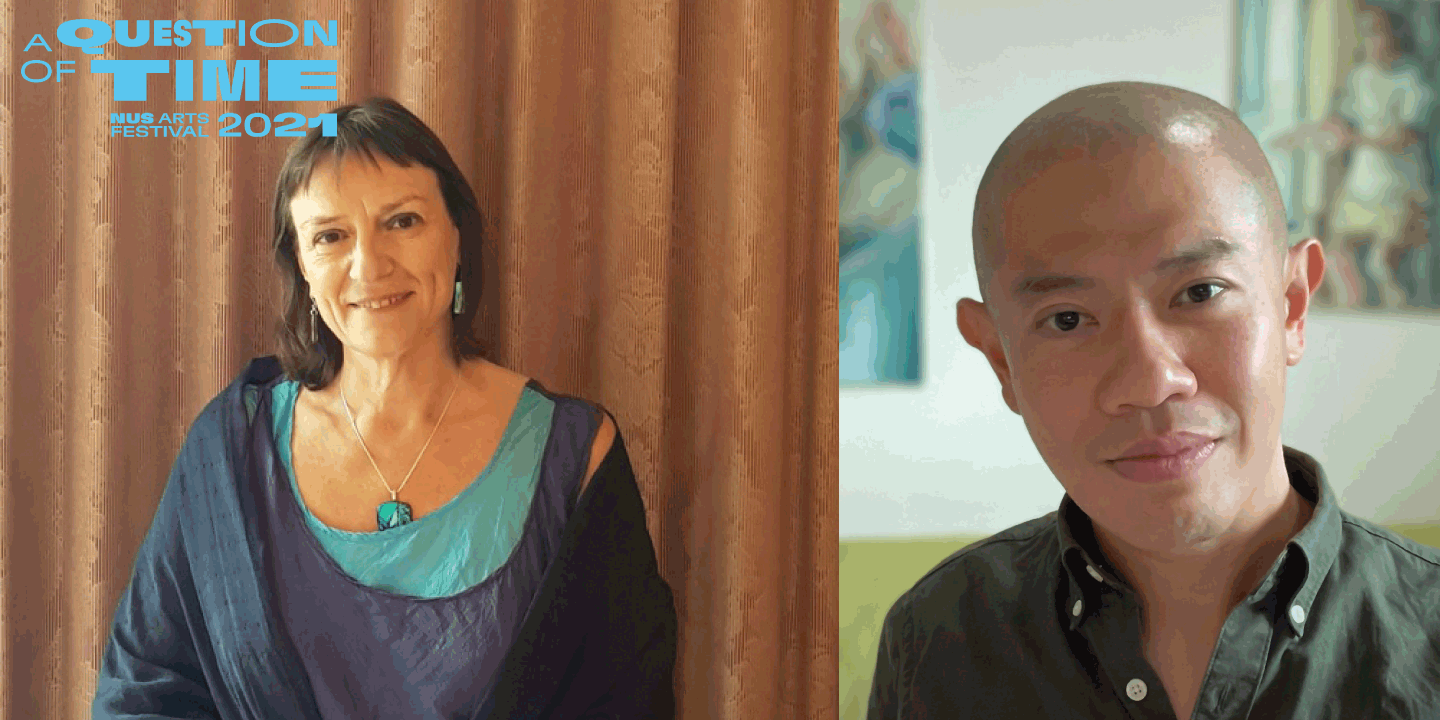
We caught up with both A/P Tracy Skelton and Dr Chin Chuan Fei to better understand their views on this fast-changing world as a sneak peek to ‘A Measure of Time in a COVID World’
In this pandemic, how has your research impacted your personal approaches to and conceptions of time?
A/P Skelton: In the context of this pandemic as well as the impact of my research, I have personally thought the most about children, young people and marginalised groups who have been held in a form of immobility and enforced stillness. Children and young people often want to rush through time, grow older, become taller, so that they can ‘enter’ the world of time where they can be active, do things, get to the next celebratory event or rite of passage and ‘be someone’ – to be a child no longer. For marginalised groups, such as the LGBTQ+ community, there is an enforced waiting as they are held outside of society and not recognised as fully made, and rather infantilised and excluded. Covid-19 has enforced time negatively in many ways and waiting negatively is more widely experienced by marginalised groups. Lockdowns, enforced dwelling, spatial restrictions, new working and studying regimes have created time as anguish, annulment, and anxiety.
Dr Chin: My new project explores how sexual minorities in Singapore experience self-compassion. It develops my interest in two modes of inquiry about ourselves: phenomenology and psychotherapy. Phenomenology examines our lived experiences in time, while psychotherapy helps us to explore how these experiences are shaped by the struggles we meet and the stories we tell. Both have encouraged me to be curious about how I measure and divide up time, how I share it with others, and how I sometimes struggle with it.
What advice would you give to those struggling with adapting to new passages of time?
A/P Skelton: Try to accept the fact that global and local time have changed and we must adapt – but we must also remember what time was, felt like and functioned prior to COVID-19. We have all become humans in waiting, held in a form of stasis but at the same time (how often we use this word ‘time’ for so many meanings) finding ourselves rushed and overburdened with new forms of labour, disruptions and deadlines. Reflecting on time we had before and how we used it is important to hold on to. Our very near pasts are still lingering, still memorable and we may be able to return to them at some point in the future – but we need to think more about how we should treasure time rather than squander it. If the world slows down notably in the new formations founded by COVID-19 then that might be a better way to realise our humanity, our responsibilities and focus on the time we should give to save our shared planet.
Dr Chin: During this period of disruption and transition, we may struggle to balance being aware of time passing and being absorbed in meaningful activity. Some counsellors and psychologists advise that we reach out for social support and create new rituals for marking time. I’ll add that we can be kinder to ourselves, by acknowledging when we’re suffering and how we’re responding creatively, even in small ways. Research on self-compassion suggests that this gentle practice can bring perspective to our pain, clarify our needs, and support us in making responsible choices.
How can we foster a more intersectional understanding of time?
A/P Skelton: We should work to recognise the multiplicity of time, learn more about how different parts of the world and the people in those places work with time rather than against time. Time means so many things to different people and it is a precious entity. We should try to reformulate what we mean by ‘waiting’ and find the positives. For many people, however, time is forced onto and out of people – inhumane working conditions, languishing in carceral spaces of control and containment, waiting endlessly for support, care, recognition. Time should not be a privilege for the wealthy it should be shared as a form of wealth across humanity – time to sleep, to eat, to care for someone, to be happy, to love and be loved, to raise a family, to create a home, to include others, to learn and to just stop for times that matter.
Dr Chin: We might begin by listening, with care, to each other’s stories of how time passes. Our experiences of time are shaped in surprising ways by individual struggles and social structures; I learnt this when I started asking people about their experiences of boredom in the pandemic.
The arts can help us to build this dialogue. Now, we have more access to films and writings that record how different populations experience time – in Singapore and elsewhere, confined in new and old ways, at home, in migrant dormitories, in refugee camps. On a relevant side note, the Singapore Art Museum curated an exhibition recently, which invites us to reflect on the time we spend together in private and public spaces. It is still online.
If “time is someone”, how would you describe the character of time?
A/P Skelton: Time as a character can be painfully slow or frighteningly fast. Time may make us wait or it may swiftly deliver something we need, feel, desire, yearn for. Impatience is a negative character of time; time spent with generous and kind characters is so valuable and worthwhile. The latter should be cherished, the former softened.
Dr Chin: Mostly my accountant, occasionally my ally. It was my friend and coach Dr Catelijne Coopmans who invited me to imagine time as an ally. I’m still discovering what else has to change in my life – my values, relationships, and expectations — to make fast this imagining.
A Measure of Time in a COVID World will be live online on 24 February, 7 PM at the NUS Arts Carnival 2021: A Question of Time. Click here to register for the webinar!
18 November 2025
16 May 2025
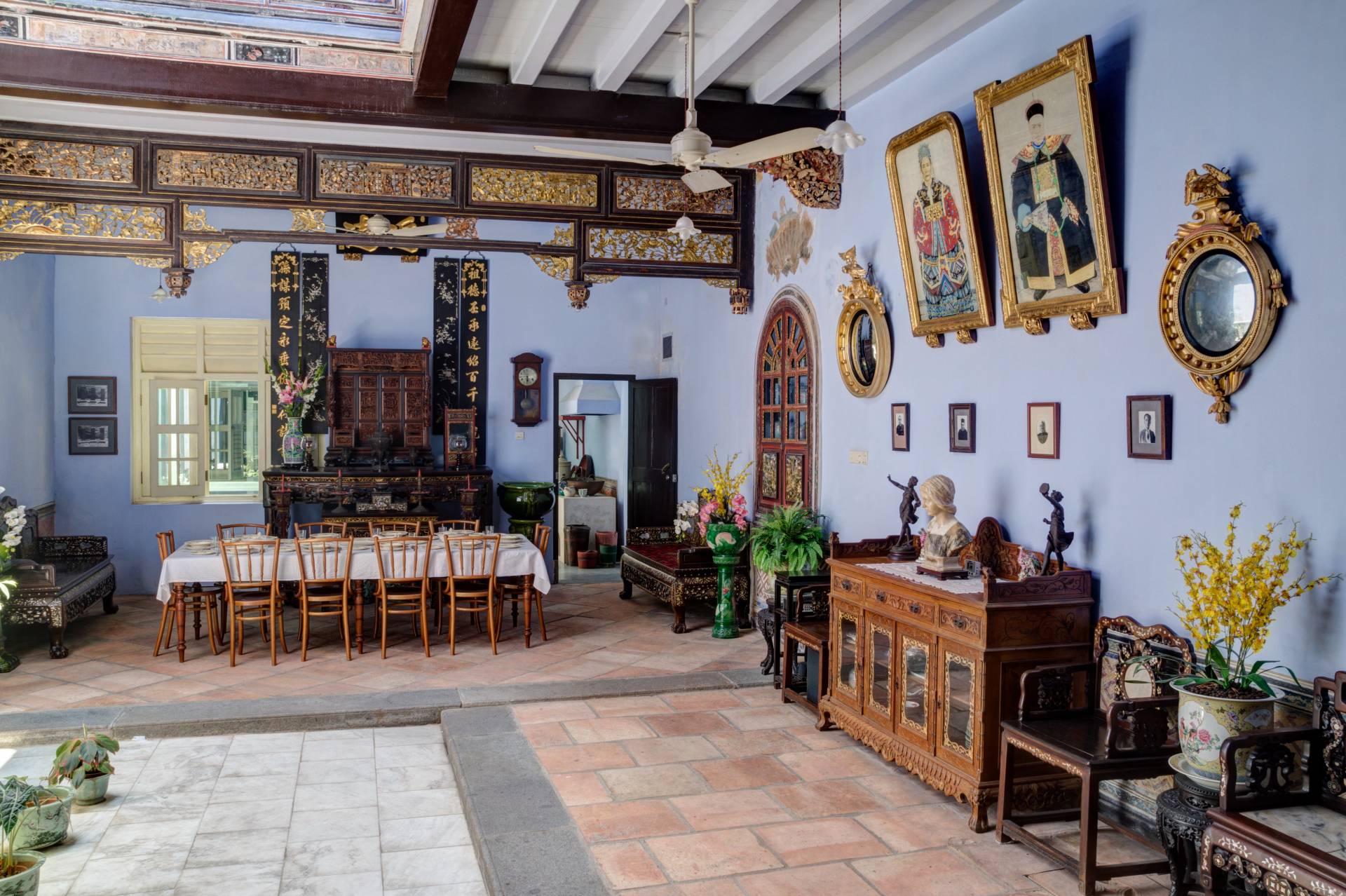
NUS Baba House to undergo two years of conservation works
Enthusiasts can look forward to a slate of programmes ahead of and during the temporary closure.
6 October 2023
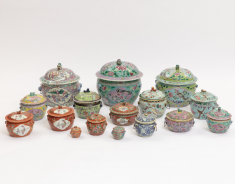
NUS Museum receives largest-ever donation of Straits Chinese artefacts
"Collected by Mrs Alice Tan over a 30-year period, the donated artefacts will contribute to a deeper study of the impact of Straits Chinese culture in Singapore and the region, and provide broadened avenues for interdisciplinary collaborations."
15 August 2023
From personal photo collection to exhibition: NUS Museum's latest showcase features visual narratives by 9 members of the NUS community
Titled Photography Journal Open Call (PJOC), the exhibition presents an eclectic collection of photographic works by nine NUS students, alumni artists and academic staff.
12 April 2021
Nurturing a creative campus through public art advocacy
The Public Art Initiative was launched to underscore NUS’ commitment to deepening the role of public art in holistic, interdisciplinary and broad-based education.

8 October 2019
October at the NUS Museum: between war and the artist, art and the tropics
This October, NUS Museum unveils two new exhibitions surveying the art historical in the region from distinct positions.

31 May 2019
New exhibition from Gilles Massot to be unveiled at NUS Museum
“…you have to lose your way to find yourself in the right place” presents the works of Singapore-based French artist, Gilles Massot. Featuring a selection of photographs, videos, sketches and writings from his extensive corpus of works.

14 February 2019
Glossaries of the Straits Chinese Homemaking
Following eleven years of giving glimpses of a Peranakan family’s domestic life in the early 20th century, NUS Baba House presents the exhibition Glossaries of the Straits Chinese Homemaking.
22 March 2018
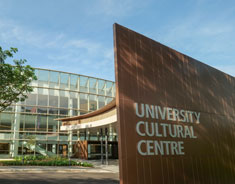
NUS' cultural icon refreshed for a new generation
The University Cultural Centre's first major renovation improves the high standard of guest comfort, efficiency and production possibilities.
3 February 2017
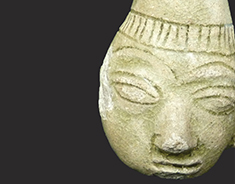
Exhibition: From the Ashes: Reviving Myanmar Celadon Ceramics
NUS Museum presents ongoing attempts to revive the technology of making ash-glazed ceramics in Myanmar.

23 November 2016
Exhibition: Between the brush lines of Lim Tze Peng
Solo exhibition at NUS Museum considers 70-year oeuvre of Singapore's oldest living artist.

1 November 2016
Book Launch: NUS Baba House launches inaugural guidebook
From architecture to social history, book reveals the myriad facets of Singapore's only restored Straits Chinese family home.
21 October 2016
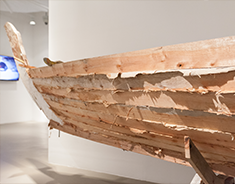
Exhibition: Looking within - What makes an exhibition?
NUS Museum presents exhibition introspecting into curatorial impulses and the exhibitionary medium.
1 July 2016
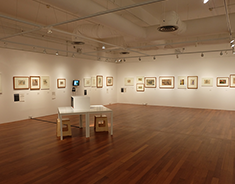
Exhibition: "Who wants to remember a war?"
NUS Museum draws on war posters, woodcuts and drawings to explore contemporary narratives of the Vietnam War.

10 May 2016
Award: NUS Museum wins inaugural award for innovative museological practice
International Committee of University Museums and Collections recognises efforts to facilitate conversation between audiences and exhibitions.
14 April 2016
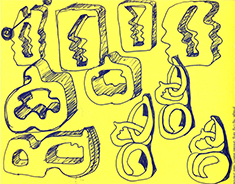
Exhibition: Figuring Ng Eng Teng
NUS Museum reveals unstudied elements and works from the late Cultural Medallion recipient’s practice.
Student Voices
Changing with the Times
In a world that has experienced drastic changes in this pandemic, how is our experience with time affected? This is the question posed by the panelists at the Critical Conversations discussion in the lead-up to NUS Arts Festival 2021: A Question of Time.
We caught up with both A/P Tracy Skelton and Dr Chin Chuan Fei to better understand their views on this fast-changing world as a sneak peek to ‘A Measure of Time in a COVID World’
In this pandemic, how has your research impacted your personal approaches to and conceptions of time?
A/P Skelton: In the context of this pandemic as well as the impact of my research, I have personally thought the most about children, young people and marginalised groups who have been held in a form of immobility and enforced stillness. Children and young people often want to rush through time, grow older, become taller, so that they can ‘enter’ the world of time where they can be active, do things, get to the next celebratory event or rite of passage and ‘be someone’ – to be a child no longer. For marginalised groups, such as the LGBTQ+ community, there is an enforced waiting as they are held outside of society and not recognised as fully made, and rather infantilised and excluded. Covid-19 has enforced time negatively in many ways and waiting negatively is more widely experienced by marginalised groups. Lockdowns, enforced dwelling, spatial restrictions, new working and studying regimes have created time as anguish, annulment, and anxiety.
Dr Chin: My new project explores how sexual minorities in Singapore experience self-compassion. It develops my interest in two modes of inquiry about ourselves: phenomenology and psychotherapy. Phenomenology examines our lived experiences in time, while psychotherapy helps us to explore how these experiences are shaped by the struggles we meet and the stories we tell. Both have encouraged me to be curious about how I measure and divide up time, how I share it with others, and how I sometimes struggle with it.
What advice would you give to those struggling with adapting to new passages of time?
A/P Skelton: Try to accept the fact that global and local time have changed and we must adapt – but we must also remember what time was, felt like and functioned prior to COVID-19. We have all become humans in waiting, held in a form of stasis but at the same time (how often we use this word ‘time’ for so many meanings) finding ourselves rushed and overburdened with new forms of labour, disruptions and deadlines. Reflecting on time we had before and how we used it is important to hold on to. Our very near pasts are still lingering, still memorable and we may be able to return to them at some point in the future – but we need to think more about how we should treasure time rather than squander it. If the world slows down notably in the new formations founded by COVID-19 then that might be a better way to realise our humanity, our responsibilities and focus on the time we should give to save our shared planet.
Dr Chin: During this period of disruption and transition, we may struggle to balance being aware of time passing and being absorbed in meaningful activity. Some counsellors and psychologists advise that we reach out for social support and create new rituals for marking time. I’ll add that we can be kinder to ourselves, by acknowledging when we’re suffering and how we’re responding creatively, even in small ways. Research on self-compassion suggests that this gentle practice can bring perspective to our pain, clarify our needs, and support us in making responsible choices.
How can we foster a more intersectional understanding of time?
A/P Skelton: We should work to recognise the multiplicity of time, learn more about how different parts of the world and the people in those places work with time rather than against time. Time means so many things to different people and it is a precious entity. We should try to reformulate what we mean by ‘waiting’ and find the positives. For many people, however, time is forced onto and out of people – inhumane working conditions, languishing in carceral spaces of control and containment, waiting endlessly for support, care, recognition. Time should not be a privilege for the wealthy it should be shared as a form of wealth across humanity – time to sleep, to eat, to care for someone, to be happy, to love and be loved, to raise a family, to create a home, to include others, to learn and to just stop for times that matter.
Dr Chin: We might begin by listening, with care, to each other’s stories of how time passes. Our experiences of time are shaped in surprising ways by individual struggles and social structures; I learnt this when I started asking people about their experiences of boredom in the pandemic.
The arts can help us to build this dialogue. Now, we have more access to films and writings that record how different populations experience time – in Singapore and elsewhere, confined in new and old ways, at home, in migrant dormitories, in refugee camps. On a relevant side note, the Singapore Art Museum curated an exhibition recently, which invites us to reflect on the time we spend together in private and public spaces. It is still online.
If “time is someone”, how would you describe the character of time?
A/P Skelton: Time as a character can be painfully slow or frighteningly fast. Time may make us wait or it may swiftly deliver something we need, feel, desire, yearn for. Impatience is a negative character of time; time spent with generous and kind characters is so valuable and worthwhile. The latter should be cherished, the former softened.
Dr Chin: Mostly my accountant, occasionally my ally. It was my friend and coach Dr Catelijne Coopmans who invited me to imagine time as an ally. I’m still discovering what else has to change in my life – my values, relationships, and expectations — to make fast this imagining.
A Measure of Time in a COVID World will be live online on 24 February, 7 PM at the NUS Arts Carnival 2021: A Question of Time. Click here to register for the webinar!


News
18 November 2025
16 May 2025
NUS Baba House to undergo two years of conservation works
Enthusiasts can look forward to a slate of programmes ahead of and during the temporary closure.
6 October 2023
NUS Museum receives largest-ever donation of Straits Chinese artefacts
"Collected by Mrs Alice Tan over a 30-year period, the donated artefacts will contribute to a deeper study of the impact of Straits Chinese culture in Singapore and the region, and provide broadened avenues for interdisciplinary collaborations."
15 August 2023
From personal photo collection to exhibition: NUS Museum's latest showcase features visual narratives by 9 members of the NUS community
Titled Photography Journal Open Call (PJOC), the exhibition presents an eclectic collection of photographic works by nine NUS students, alumni artists and academic staff.
12 April 2021
Nurturing a creative campus through public art advocacy
The Public Art Initiative was launched to underscore NUS’ commitment to deepening the role of public art in holistic, interdisciplinary and broad-based education.
8 October 2019
October at the NUS Museum: between war and the artist, art and the tropics
This October, NUS Museum unveils two new exhibitions surveying the art historical in the region from distinct positions.
31 May 2019
New exhibition from Gilles Massot to be unveiled at NUS Museum
“…you have to lose your way to find yourself in the right place” presents the works of Singapore-based French artist, Gilles Massot. Featuring a selection of photographs, videos, sketches and writings from his extensive corpus of works.
14 February 2019
Glossaries of the Straits Chinese Homemaking
Following eleven years of giving glimpses of a Peranakan family’s domestic life in the early 20th century, NUS Baba House presents the exhibition Glossaries of the Straits Chinese Homemaking.
22 March 2018
NUS' cultural icon refreshed for a new generation
The University Cultural Centre's first major renovation improves the high standard of guest comfort, efficiency and production possibilities.
3 February 2017
Exhibition: From the Ashes: Reviving Myanmar Celadon Ceramics
NUS Museum presents ongoing attempts to revive the technology of making ash-glazed ceramics in Myanmar.
23 November 2016
Exhibition: Between the brush lines of Lim Tze Peng
Solo exhibition at NUS Museum considers 70-year oeuvre of Singapore's oldest living artist.
1 November 2016
Book Launch: NUS Baba House launches inaugural guidebook
From architecture to social history, book reveals the myriad facets of Singapore's only restored Straits Chinese family home.
21 October 2016
Exhibition: Looking within - What makes an exhibition?
NUS Museum presents exhibition introspecting into curatorial impulses and the exhibitionary medium.
1 July 2016
Exhibition: "Who wants to remember a war?"
NUS Museum draws on war posters, woodcuts and drawings to explore contemporary narratives of the Vietnam War.
10 May 2016
Award: NUS Museum wins inaugural award for innovative museological practice
International Committee of University Museums and Collections recognises efforts to facilitate conversation between audiences and exhibitions.
14 April 2016
Exhibition: Figuring Ng Eng Teng
NUS Museum reveals unstudied elements and works from the late Cultural Medallion recipient’s practice.
Leave a comment