Press Enquiries
Please direct all press enquiries and image requests to museum@nus.edu.sg.
In The Spotlight
Diary of an NUS Museum Intern: Hannah Nor’Hisham
Diary of an NUS Museum Intern is a series of blog posts written by our interns about their experiences during the course of their internships. Working alongside their mentors, our interns have waded through tons of historical research, assisted in curatorial work, pitched in during exhibition installations and organised outreach events! If you would like to become our next intern, visit NUS Museum’s student development page for more information.
Hannah is currently a JC1 student at Temasek Junior college. She joined the NUS Museum for three weeks as part of Temasek Junior College’s Work Attachment Programme. During her time here as an NUS Museum intern, Hannah was tasked to assist with the cataloging of the NUS Museum’s Resource Library, she also shares with us her take on a number of artworks from our ‘Radio Malaya: Abridged Conversations about Art’ exhibition.
Through this blog, I intend to share my experiences and the skills I learned whilst being attached to the NUS Museum. I will include my tasks during the course of my attachment and more. I was able to experience many things over the period of this WOW! program, including visits to several other museums in Singapore such as the Asian Civilisation Museum and the NUS Baba House. I also got to work on the cataloguing of the NUS Museum Resource Library. I learned a variety of valuable skills such as perseverance, hard work, artwork analysis and research skills.
The two main tasks assigned to us are: Creating a gallery guide from scratch and cataloguing the resource library. For the creation of the Gallery Guide, the aim of such a task was to compile a series of quotes into a guide for visitors to be able to understand the different perspectives of the various artworks in the exhibition. On the other hand, the aim of cataloguing the resource library was to create an easily accessible classified table containing all the books, catalogues, magazines, etc. that the resource library contained.
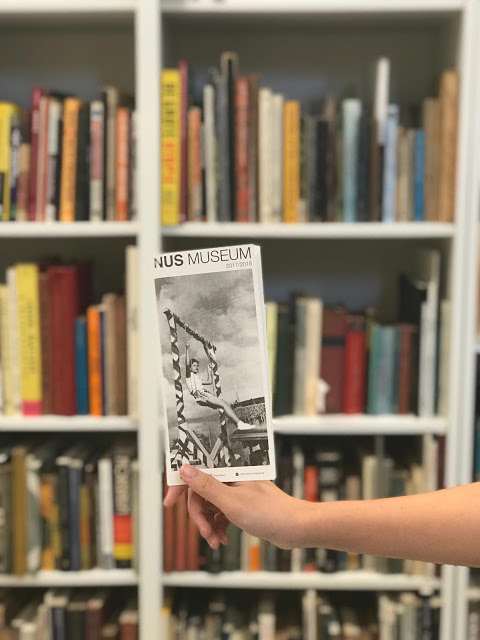
The cataloguing of the library involves a long-term aim of the museum’s management team to eventually put out this catalogue to the public through their website so that it can be easily accessed by students and others who may require the resources from the library for research and projects. At the point I joined the project, the status of the project was halfway done by the NUS interns. In order to catalogue all the books, we took down each book from the shelves and recorded key information (title, author/editor, publisher, year of publication, place of publication, language of publication, country/region and category) in an excel sheet.
Creating the gallery guide was a, generally, new experience. The gallery guide serves a way to add more content to the exhibition by provoking the thoughts of visitors. A gallery guide is a compilation of quotes with relevance to the artworks that we were to select and an overarching theme of choice.
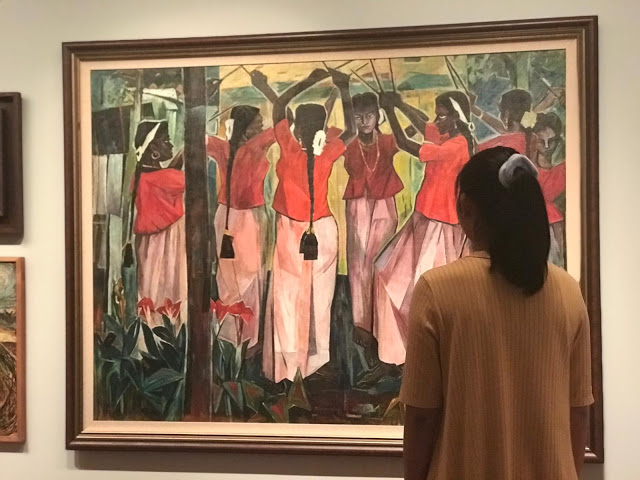
I picked five artworks that, to me, represented the various races in Singapore and the notion of community. The five artworks are: “The May 13th Incident” by Choo Keng Kwang, “Dance” by Chen Wen Hsi, “Ini Pulau Melebih (This Island is Too Much)” by Rafaat Hamzah, “A Thin Green Line” by Erika Tan and “Let’s Chat” by Amanda Heng. In my opinion, the artworks allowed me to research into the various different challenges that all the various races faced in the time when the artwork was created. For instance, with “The May 13th Incident” by Choo Keng Kwang, I looked into the challenges that the Chinese students faced with respect to the National Service Ordinance in the 1950s and the rise of Communism within their student community. With “Dance” by Chen Wen Hsi, I explored the challenges that the Indian community faced with their different languages and their struggle to be a homogenous community. I managed to research more on the various social issues that the modern Malay community faced with respect to “Ini Pulau Melebih (This Island is Too Much)” by Rafaat Hamzah. With “A Thin Green Line” by Erika Tan, I was able to look more into the topic of racial divisions and colonial settlers’ impressions of the various racial groups in colonial Singapore. Lastly, I discussed the notion of community and the romanticized kampong spirit with the topics that Amanda Heng’s “Let’s Chat”.
I find the process of creating a gallery guide extremely enriching and helpful for future use. Our task was broken into several steps. Beginning with choosing the five artworks that interest us, articulating the reason behind our choice – for the first week, we were tasked to look through the exhibition, ‘Radio Malaya: Abridged Conversations about Art’ to choose pieces in the exhibition to include in our gallery guide. We had to pick out 5 artworks that interested us and to write about why they seemed interesting and appealing to us, looking into certain aspects of Singapore’s history that may be related to the artwork. Next, we conducted research on the artists and the historical significance/relevance to Singapore’s history with respect to our main theme – we were tasked with the preliminary research into our chosen pieces. We explored the historical context and messages behind the chosen pieces. To do this, we went to the National Library to conduct research using books and journals to find out more about Singapore’s history during the period of time when the piece was created. We had to pick our related quotes from these sources found in the library or online to be paired with the art pieces in the gallery guide, and to give the reader a perspective on our point of view of the exhibition and guide them through a similar thought process. Lastly, we ended the process by selecting relevant quotes, organising the information and formatting the gallery guide.
With respect to our progress with the gallery guide, our mentor would hold progress meetings with us every Friday afternoon to check on our work and guide us towards the next step. During the meetings, I was given feedback on how to improve and what I should do next. On the first meeting, I was told to find out more about the CMIO policy in Singapore and its relation to different policies. I was recommended to look at S. Rajaratnam’s play “Radio Malaya” for sources regarding racial issues. I was also told to start compiling sources, and to look at more newspapers, academic papers, journals, etc. and to start deciding on the sequence in which the five artworks will be arranged in the gallery guide. One challenge that I faced during this week of the process was the relevance of one of the artworks, that I chose, to my theme of “Community” – that piece was “Landscape in Blue” by Ng Yak Whee. On the next meeting, I was told to look for more sources to ensure that all the various perspectives on this issue were covered. I was unable to attend the last progress meeting as I was on medical leave.
The main challenge that I faced with the gallery guide was meeting the expectations of my mentor and ensuring that the perspectives that I present are lucid and easily understandable. This academic journey has been challenging and it represented a test of my abilities and mental strength. I had to persevere and it has taught me to be more patient and thorough. I learned that the vision I have in my head has to be articulated clearly in order for someone else to see it as clearly as I do. I cannot assume that people think the way I do and I must view the issue from various perspectives to ensure clarity.
- Student Voices
18 November 2025
16 May 2025
NUS Baba House to undergo two years of conservation works
Enthusiasts can look forward to a slate of programmes ahead of and during the temporary closure.
6 October 2023
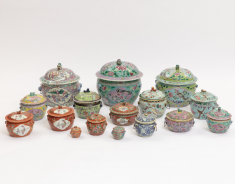
NUS Museum receives largest-ever donation of Straits Chinese artefacts
"Collected by Mrs Alice Tan over a 30-year period, the donated artefacts will contribute to a deeper study of the impact of Straits Chinese culture in Singapore and the region, and provide broadened avenues for interdisciplinary collaborations."
15 August 2023
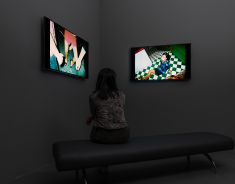
From personal photo collection to exhibition: NUS Museum's latest showcase features visual narratives by 9 members of the NUS community
Titled Photography Journal Open Call (PJOC), the exhibition presents an eclectic collection of photographic works by nine NUS students, alumni artists and academic staff.
12 April 2021
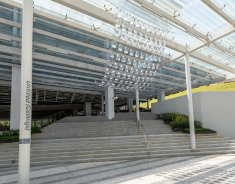
Nurturing a creative campus through public art advocacy
The Public Art Initiative was launched to underscore NUS’ commitment to deepening the role of public art in holistic, interdisciplinary and broad-based education.

8 October 2019
October at the NUS Museum: between war and the artist, art and the tropics
This October, NUS Museum unveils two new exhibitions surveying the art historical in the region from distinct positions.

31 May 2019
New exhibition from Gilles Massot to be unveiled at NUS Museum
“…you have to lose your way to find yourself in the right place” presents the works of Singapore-based French artist, Gilles Massot. Featuring a selection of photographs, videos, sketches and writings from his extensive corpus of works.

14 February 2019
Glossaries of the Straits Chinese Homemaking
Following eleven years of giving glimpses of a Peranakan family’s domestic life in the early 20th century, NUS Baba House presents the exhibition Glossaries of the Straits Chinese Homemaking.
22 March 2018
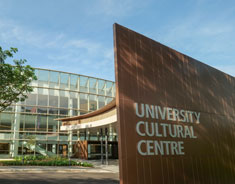
NUS' cultural icon refreshed for a new generation
The University Cultural Centre's first major renovation improves the high standard of guest comfort, efficiency and production possibilities.
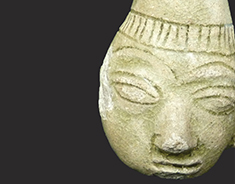
3 February 2017
Exhibition: From the Ashes: Reviving Myanmar Celadon Ceramics
NUS Museum presents ongoing attempts to revive the technology of making ash-glazed ceramics in Myanmar.

23 November 2016
Exhibition: Between the brush lines of Lim Tze Peng
Solo exhibition at NUS Museum considers 70-year oeuvre of Singapore's oldest living artist.

1 November 2016
Book Launch: NUS Baba House launches inaugural guidebook
From architecture to social history, book reveals the myriad facets of Singapore's only restored Straits Chinese family home.
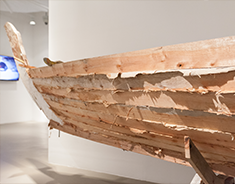
21 October 2016
Exhibition: Looking within - What makes an exhibition?
NUS Museum presents exhibition introspecting into curatorial impulses and the exhibitionary medium.
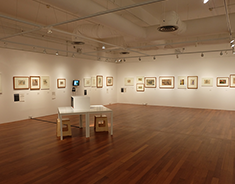
1 July 2016
Exhibition: "Who wants to remember a war?"
NUS Museum draws on war posters, woodcuts and drawings to explore contemporary narratives of the Vietnam War.

10 May 2016
Award: NUS Museum wins inaugural award for innovative museological practice
International Committee of University Museums and Collections recognises efforts to facilitate conversation between audiences and exhibitions.
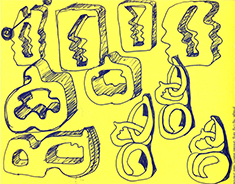
14 April 2016
Exhibition: Figuring Ng Eng Teng
NUS Museum reveals unstudied elements and works from the late Cultural Medallion recipient’s practice.
Student Voices
Diary of an NUS Museum Intern: Hannah Nor’Hisham
Diary of an NUS Museum Intern is a series of blog posts written by our interns about their experiences during the course of their internships. Working alongside their mentors, our interns have waded through tons of historical research, assisted in curatorial work, pitched in during exhibition installations and organised outreach events! If you would like to become our next intern, visit NUS Museum’s student development page for more information.
Hannah is currently a JC1 student at Temasek Junior college. She joined the NUS Museum for three weeks as part of Temasek Junior College’s Work Attachment Programme. During her time here as an NUS Museum intern, Hannah was tasked to assist with the cataloging of the NUS Museum’s Resource Library, she also shares with us her take on a number of artworks from our ‘Radio Malaya: Abridged Conversations about Art’ exhibition.
Through this blog, I intend to share my experiences and the skills I learned whilst being attached to the NUS Museum. I will include my tasks during the course of my attachment and more. I was able to experience many things over the period of this WOW! program, including visits to several other museums in Singapore such as the Asian Civilisation Museum and the NUS Baba House. I also got to work on the cataloguing of the NUS Museum Resource Library. I learned a variety of valuable skills such as perseverance, hard work, artwork analysis and research skills.
The two main tasks assigned to us are: Creating a gallery guide from scratch and cataloguing the resource library. For the creation of the Gallery Guide, the aim of such a task was to compile a series of quotes into a guide for visitors to be able to understand the different perspectives of the various artworks in the exhibition. On the other hand, the aim of cataloguing the resource library was to create an easily accessible classified table containing all the books, catalogues, magazines, etc. that the resource library contained.
The cataloguing of the library involves a long-term aim of the museum’s management team to eventually put out this catalogue to the public through their website so that it can be easily accessed by students and others who may require the resources from the library for research and projects. At the point I joined the project, the status of the project was halfway done by the NUS interns. In order to catalogue all the books, we took down each book from the shelves and recorded key information (title, author/editor, publisher, year of publication, place of publication, language of publication, country/region and category) in an excel sheet.
Creating the gallery guide was a, generally, new experience. The gallery guide serves a way to add more content to the exhibition by provoking the thoughts of visitors. A gallery guide is a compilation of quotes with relevance to the artworks that we were to select and an overarching theme of choice.
I picked five artworks that, to me, represented the various races in Singapore and the notion of community. The five artworks are: “The May 13th Incident” by Choo Keng Kwang, “Dance” by Chen Wen Hsi, “Ini Pulau Melebih (This Island is Too Much)” by Rafaat Hamzah, “A Thin Green Line” by Erika Tan and “Let’s Chat” by Amanda Heng. In my opinion, the artworks allowed me to research into the various different challenges that all the various races faced in the time when the artwork was created. For instance, with “The May 13th Incident” by Choo Keng Kwang, I looked into the challenges that the Chinese students faced with respect to the National Service Ordinance in the 1950s and the rise of Communism within their student community. With “Dance” by Chen Wen Hsi, I explored the challenges that the Indian community faced with their different languages and their struggle to be a homogenous community. I managed to research more on the various social issues that the modern Malay community faced with respect to “Ini Pulau Melebih (This Island is Too Much)” by Rafaat Hamzah. With “A Thin Green Line” by Erika Tan, I was able to look more into the topic of racial divisions and colonial settlers’ impressions of the various racial groups in colonial Singapore. Lastly, I discussed the notion of community and the romanticized kampong spirit with the topics that Amanda Heng’s “Let’s Chat”.
I find the process of creating a gallery guide extremely enriching and helpful for future use. Our task was broken into several steps. Beginning with choosing the five artworks that interest us, articulating the reason behind our choice – for the first week, we were tasked to look through the exhibition, ‘Radio Malaya: Abridged Conversations about Art’ to choose pieces in the exhibition to include in our gallery guide. We had to pick out 5 artworks that interested us and to write about why they seemed interesting and appealing to us, looking into certain aspects of Singapore’s history that may be related to the artwork. Next, we conducted research on the artists and the historical significance/relevance to Singapore’s history with respect to our main theme – we were tasked with the preliminary research into our chosen pieces. We explored the historical context and messages behind the chosen pieces. To do this, we went to the National Library to conduct research using books and journals to find out more about Singapore’s history during the period of time when the piece was created. We had to pick our related quotes from these sources found in the library or online to be paired with the art pieces in the gallery guide, and to give the reader a perspective on our point of view of the exhibition and guide them through a similar thought process. Lastly, we ended the process by selecting relevant quotes, organising the information and formatting the gallery guide.
With respect to our progress with the gallery guide, our mentor would hold progress meetings with us every Friday afternoon to check on our work and guide us towards the next step. During the meetings, I was given feedback on how to improve and what I should do next. On the first meeting, I was told to find out more about the CMIO policy in Singapore and its relation to different policies. I was recommended to look at S. Rajaratnam’s play “Radio Malaya” for sources regarding racial issues. I was also told to start compiling sources, and to look at more newspapers, academic papers, journals, etc. and to start deciding on the sequence in which the five artworks will be arranged in the gallery guide. One challenge that I faced during this week of the process was the relevance of one of the artworks, that I chose, to my theme of “Community” – that piece was “Landscape in Blue” by Ng Yak Whee. On the next meeting, I was told to look for more sources to ensure that all the various perspectives on this issue were covered. I was unable to attend the last progress meeting as I was on medical leave.
The main challenge that I faced with the gallery guide was meeting the expectations of my mentor and ensuring that the perspectives that I present are lucid and easily understandable. This academic journey has been challenging and it represented a test of my abilities and mental strength. I had to persevere and it has taught me to be more patient and thorough. I learned that the vision I have in my head has to be articulated clearly in order for someone else to see it as clearly as I do. I cannot assume that people think the way I do and I must view the issue from various perspectives to ensure clarity.
- Student Voices


News
18 November 2025
16 May 2025
NUS Baba House to undergo two years of conservation works
Enthusiasts can look forward to a slate of programmes ahead of and during the temporary closure.
6 October 2023
NUS Museum receives largest-ever donation of Straits Chinese artefacts
"Collected by Mrs Alice Tan over a 30-year period, the donated artefacts will contribute to a deeper study of the impact of Straits Chinese culture in Singapore and the region, and provide broadened avenues for interdisciplinary collaborations."
15 August 2023
From personal photo collection to exhibition: NUS Museum's latest showcase features visual narratives by 9 members of the NUS community
Titled Photography Journal Open Call (PJOC), the exhibition presents an eclectic collection of photographic works by nine NUS students, alumni artists and academic staff.
12 April 2021
Nurturing a creative campus through public art advocacy
The Public Art Initiative was launched to underscore NUS’ commitment to deepening the role of public art in holistic, interdisciplinary and broad-based education.
8 October 2019
October at the NUS Museum: between war and the artist, art and the tropics
This October, NUS Museum unveils two new exhibitions surveying the art historical in the region from distinct positions.
31 May 2019
New exhibition from Gilles Massot to be unveiled at NUS Museum
“…you have to lose your way to find yourself in the right place” presents the works of Singapore-based French artist, Gilles Massot. Featuring a selection of photographs, videos, sketches and writings from his extensive corpus of works.
14 February 2019
Glossaries of the Straits Chinese Homemaking
Following eleven years of giving glimpses of a Peranakan family’s domestic life in the early 20th century, NUS Baba House presents the exhibition Glossaries of the Straits Chinese Homemaking.
22 March 2018
NUS' cultural icon refreshed for a new generation
The University Cultural Centre's first major renovation improves the high standard of guest comfort, efficiency and production possibilities.
3 February 2017
Exhibition: From the Ashes: Reviving Myanmar Celadon Ceramics
NUS Museum presents ongoing attempts to revive the technology of making ash-glazed ceramics in Myanmar.
23 November 2016
Exhibition: Between the brush lines of Lim Tze Peng
Solo exhibition at NUS Museum considers 70-year oeuvre of Singapore's oldest living artist.
1 November 2016
Book Launch: NUS Baba House launches inaugural guidebook
From architecture to social history, book reveals the myriad facets of Singapore's only restored Straits Chinese family home.
21 October 2016
Exhibition: Looking within - What makes an exhibition?
NUS Museum presents exhibition introspecting into curatorial impulses and the exhibitionary medium.
1 July 2016
Exhibition: "Who wants to remember a war?"
NUS Museum draws on war posters, woodcuts and drawings to explore contemporary narratives of the Vietnam War.
10 May 2016
Award: NUS Museum wins inaugural award for innovative museological practice
International Committee of University Museums and Collections recognises efforts to facilitate conversation between audiences and exhibitions.
14 April 2016
Exhibition: Figuring Ng Eng Teng
NUS Museum reveals unstudied elements and works from the late Cultural Medallion recipient’s practice.
Leave a comment