SIDEBAR
Main Menu Quicklinks123

Press Enquiries


Please direct all press enquiries and image requests to museum@nus.edu.sg.

In The Spotlight

Diary of an NUS Museum Intern: Nurmiyati

Feb 4, 2026, 01:49
Title : Diary of an NUS Museum Intern: Nurmiyati
News title : Diary of an NUS Museum Intern: Nurmiyati
Publication date : Mar 14, 2019, 01:00
Nurmiyati is a third-year Political Science student from the NUS Faculty of Arts and Social Sciences. As our Baba House Outreach intern, Yati has assisted in the research of various Baba House programmes, she was also involved in the exhibition-making process for? â??Glossaries of the Straits Chinese Homemakingâ??.

Diary of an NUS Museum Intern is a series of blog posts written by our interns about their experiences during the course of their internships. Working alongside their mentors, our interns have waded through tons of historical research, assisted in curatorial work, pitched in during exhibition installations and organised outreach events! If you would like to become our next intern, visit NUS Museum’s student development page for more information.

Nurmiyati is a third-year Political Science student from the NUS Faculty of Arts and Social Sciences. As our Baba House Outreach intern, Yati has assisted in the research of various Baba House programmes, she was also involved in the exhibition-making process for ‘Glossaries of the Straits Chinese Homemaking’.

With the application form before me, it was a tough ping-pong game going between the choices of being a Collections Intern or an Outreach Intern at the NUS Baba House. Maybe it was my own intimate contact with the Peranakan Chinese culture in Singapore through my godmother and my own Penang heritage that eventually influenced my decision to choose the position over at the Baba House. Initially, I was wondering how I was going to do an internship if the house was closed to visitors for a month due to renovation works. What awaited me was undoubtedly something more than I had bargained. When my supervisor warned me that the learning curve was going to be steep, she certainly was not kidding.

Throughout my five weeks, I wore many hats as an intern at the Baba House; be it as a vendor catalogue, artefact handler and even Japanese translator! While the first two weeks were relatively less active compared to the last leg of the internship, sourcing for vendors exposed me to Singapore’s rather overlooked calligraphy scene as I scrambled to search for calligraphy masters for the Saturday Explore programmes. It also proved to be incredibly fun and daunting when I was asked to search for Baba Malay speakers who were fluent enough to give a storytelling performance. It became a test of how well I could utilise my existing contacts in Singapore’s heritage languages scene and create new ones, mostly through reading dissertations and thesis papers centred around Baba Malay. Whilst all the contacts that I had led me back to the same few sources, it was still an interesting challenge nonetheless.
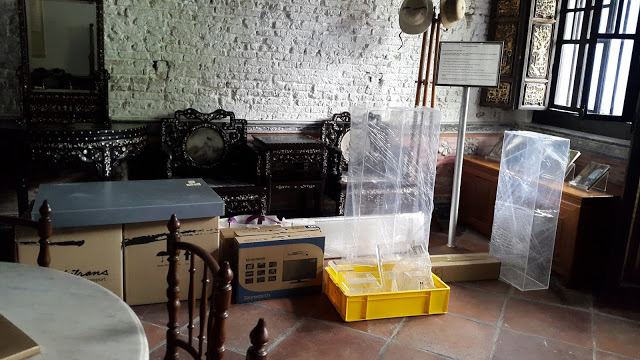
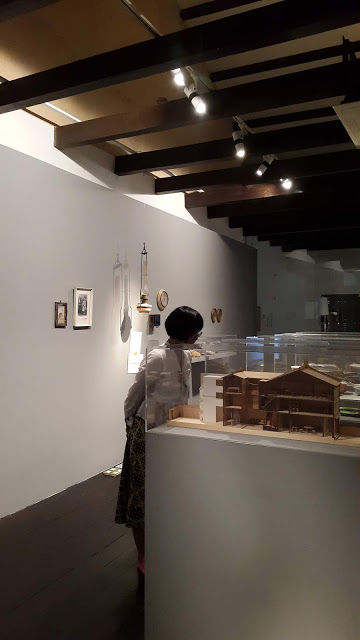
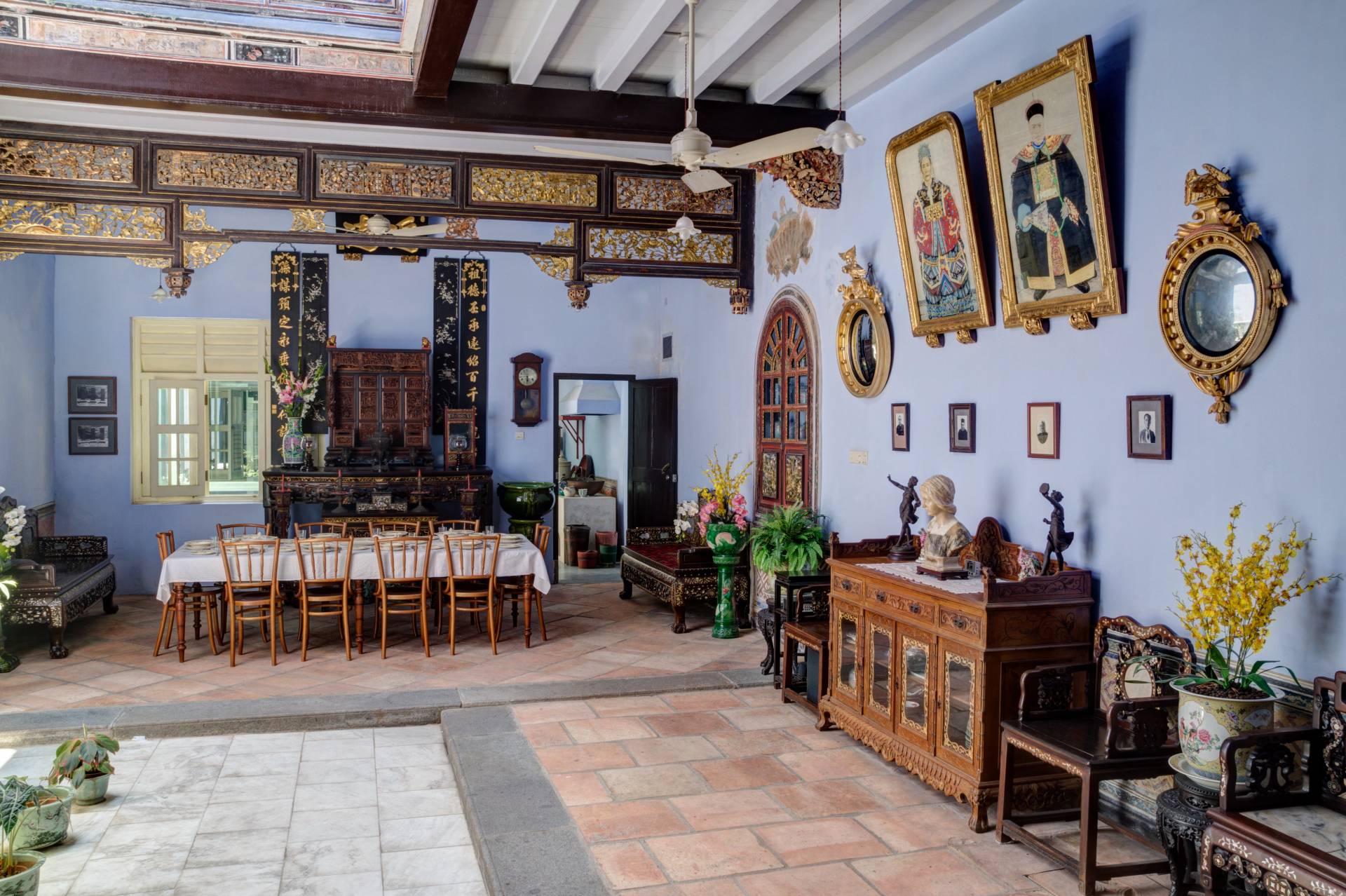
Spring-cleaning was undoubtedly one of the highlights of this internship though. As a child, I never took into consideration the less glamorous aspects of museum work, let alone for a house-museum where the artefacts are left exposed and need other considerations in an effort to maintain the original atmosphere of the house during the chosen time period. Seeing the construction of the new exhibition in level three along with being part of the spring-cleaning team allowed me to see museums from a different perspective altogether. As the collections interns also joined in halfway to assist with the new exhibition, I was able to have a better idea of what the staff on their side also did and was lucky enough to be able to assist them with some matters. These range from wiping porcelain to giving feedback on how certain things in the exhibition should be displayed. The involvement of the collections team unintentionally transformed this internship into a multi-disciplinary one and gave me the opportunity to make friends with the Baba House’s part-timers and Collections team. Not to mention the docents’ briefing that allowed me to catch a glimpse of the work that goes behind the scenes of the tours that are routinely conducted at the Baba House almost every day.

Embarking on this internship only heightened my interest in the art of storytelling as well. As an aspiring novelist myself, who also has a Nyonya as my protagonist, warden duty doubled as learning opportunities for me to hone my craft and to hear different ways of viewing the Baba House as a heritage space and a literal time capsule for some of the docents. Hearing the personal anecdotes of the docents who were Peranakan themselves allowed me to see the artefacts and the world around my character in a new light.

As I will be extending my internship, I am incredibly excited to see the finished product on level three of the gallery. In particular, I am looking forward to hearing how the docents are set to present new stories based on the artefacts and wall text above too. This short journey thus far has only strengthened my interest in Southeast Asia’s unique Peranakans, and I hope that in the future, Singapore’s museum landscape too will expand its discussion on these people and encompass lesser-known Peranakan groups too.
-Yati

Categories :
  • Student Voices

16 May 2025

NUS Baba House to undergo two years of conservation works

Enthusiasts can look forward to a slate of programmes ahead of and during the temporary closure.

6 October 2023

NUS Museum receives largest-ever donation of Straits Chinese artefacts

"Collected by Mrs Alice Tan over a 30-year period, the donated artefacts will contribute to a deeper study of the impact of Straits Chinese culture in Singapore and the region, and provide broadened avenues for interdisciplinary collaborations."

15 August 2023

From personal photo collection to exhibition: NUS Museum's latest showcase features visual narratives by 9 members of the NUS community

Titled Photography Journal Open Call (PJOC), the exhibition presents an eclectic collection of photographic works by nine NUS students, alumni artists and academic staff.

12 April 2021

Nurturing a creative campus through public art advocacy

The Public Art Initiative was launched to underscore NUS’ commitment to deepening the role of public art in holistic, interdisciplinary and broad-based education.

8 October 2019

October at the NUS Museum: between war and the artist, art and the tropics

This October, NUS Museum unveils two new exhibitions surveying the art historical in the region from distinct positions.

31 May 2019

New exhibition from Gilles Massot to be unveiled at NUS Museum

“…you have to lose your way to find yourself in the right place” presents the works of Singapore-based French artist, Gilles Massot. Featuring a selection of photographs, videos, sketches and writings from his extensive corpus of works.

14 February 2019

Glossaries of the Straits Chinese Homemaking

Following eleven years of giving glimpses of a Peranakan family’s domestic life in the early 20th century, NUS Baba House presents the exhibition Glossaries of the Straits Chinese Homemaking.

22 March 2018

NUS' cultural icon refreshed for a new generation

The University Cultural Centre's first major renovation improves the high standard of guest comfort, efficiency and production possibilities.

3 February 2017

Exhibition: From the Ashes: Reviving Myanmar Celadon Ceramics

NUS Museum presents ongoing attempts to revive the technology of making ash-glazed ceramics in Myanmar.

23 November 2016

Exhibition: Between the brush lines of Lim Tze Peng

Solo exhibition at NUS Museum considers 70-year oeuvre of Singapore's oldest living artist.

1 November 2016

Book Launch: NUS Baba House launches inaugural guidebook

From architecture to social history, book reveals the myriad facets of Singapore's only restored Straits Chinese family home.

21 October 2016

Exhibition: Looking within - What makes an exhibition?

NUS Museum presents exhibition introspecting into curatorial impulses and the exhibitionary medium.

1 July 2016

Exhibition: "Who wants to remember a war?"

NUS Museum draws on war posters, woodcuts and drawings to explore contemporary narratives of the Vietnam War.

10 May 2016

Award: NUS Museum wins inaugural award for innovative museological practice

International Committee of University Museums and Collections recognises efforts to facilitate conversation between audiences and exhibitions.

14 April 2016

Exhibition: Figuring Ng Eng Teng

NUS Museum reveals unstudied elements and works from the late Cultural Medallion recipient’s practice.

Student Voices

Diary of an NUS Museum Intern: Nurmiyati

Feb 4, 2026, 01:49
Title : Diary of an NUS Museum Intern: Nurmiyati
News title : Diary of an NUS Museum Intern: Nurmiyati
Publication date : Mar 14, 2019, 01:00
Nurmiyati is a third-year Political Science student from the NUS Faculty of Arts and Social Sciences. As our Baba House Outreach intern, Yati has assisted in the research of various Baba House programmes, she was also involved in the exhibition-making process for? â??Glossaries of the Straits Chinese Homemakingâ??.

Diary of an NUS Museum Intern is a series of blog posts written by our interns about their experiences during the course of their internships. Working alongside their mentors, our interns have waded through tons of historical research, assisted in curatorial work, pitched in during exhibition installations and organised outreach events! If you would like to become our next intern, visit NUS Museum’s student development page for more information.

Nurmiyati is a third-year Political Science student from the NUS Faculty of Arts and Social Sciences. As our Baba House Outreach intern, Yati has assisted in the research of various Baba House programmes, she was also involved in the exhibition-making process for ‘Glossaries of the Straits Chinese Homemaking’.

With the application form before me, it was a tough ping-pong game going between the choices of being a Collections Intern or an Outreach Intern at the NUS Baba House. Maybe it was my own intimate contact with the Peranakan Chinese culture in Singapore through my godmother and my own Penang heritage that eventually influenced my decision to choose the position over at the Baba House. Initially, I was wondering how I was going to do an internship if the house was closed to visitors for a month due to renovation works. What awaited me was undoubtedly something more than I had bargained. When my supervisor warned me that the learning curve was going to be steep, she certainly was not kidding.

Throughout my five weeks, I wore many hats as an intern at the Baba House; be it as a vendor catalogue, artefact handler and even Japanese translator! While the first two weeks were relatively less active compared to the last leg of the internship, sourcing for vendors exposed me to Singapore’s rather overlooked calligraphy scene as I scrambled to search for calligraphy masters for the Saturday Explore programmes. It also proved to be incredibly fun and daunting when I was asked to search for Baba Malay speakers who were fluent enough to give a storytelling performance. It became a test of how well I could utilise my existing contacts in Singapore’s heritage languages scene and create new ones, mostly through reading dissertations and thesis papers centred around Baba Malay. Whilst all the contacts that I had led me back to the same few sources, it was still an interesting challenge nonetheless.
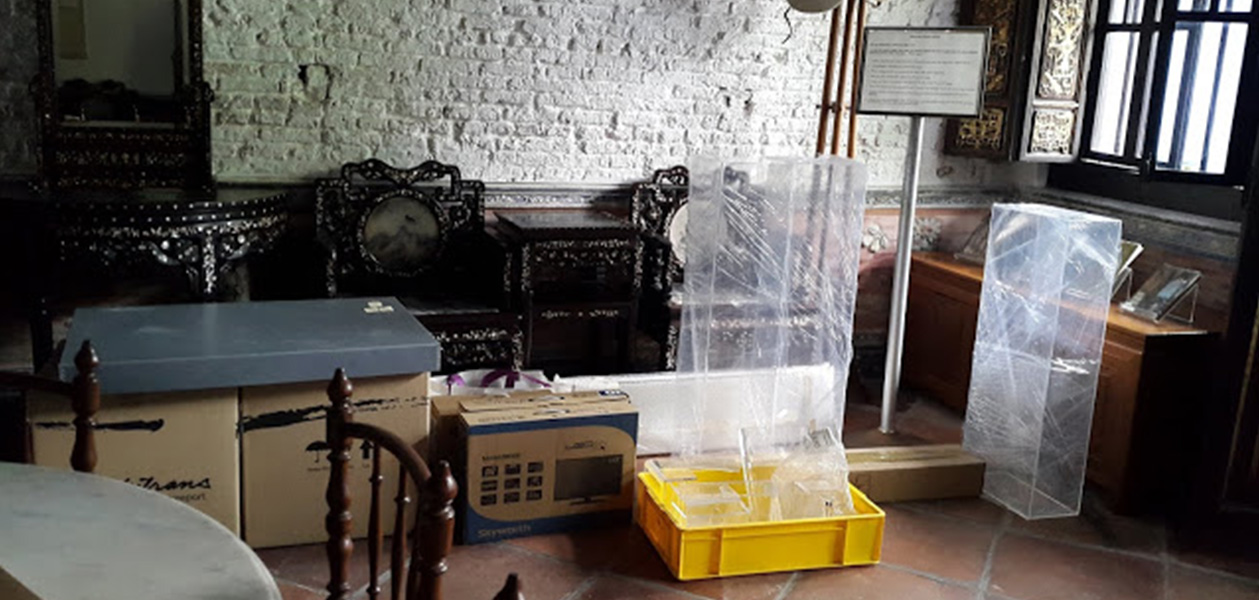
Spring-cleaning was undoubtedly one of the highlights of this internship though. As a child, I never took into consideration the less glamorous aspects of museum work, let alone for a house-museum where the artefacts are left exposed and need other considerations in an effort to maintain the original atmosphere of the house during the chosen time period. Seeing the construction of the new exhibition in level three along with being part of the spring-cleaning team allowed me to see museums from a different perspective altogether. As the collections interns also joined in halfway to assist with the new exhibition, I was able to have a better idea of what the staff on their side also did and was lucky enough to be able to assist them with some matters. These range from wiping porcelain to giving feedback on how certain things in the exhibition should be displayed. The involvement of the collections team unintentionally transformed this internship into a multi-disciplinary one and gave me the opportunity to make friends with the Baba House’s part-timers and Collections team. Not to mention the docents’ briefing that allowed me to catch a glimpse of the work that goes behind the scenes of the tours that are routinely conducted at the Baba House almost every day.

Embarking on this internship only heightened my interest in the art of storytelling as well. As an aspiring novelist myself, who also has a Nyonya as my protagonist, warden duty doubled as learning opportunities for me to hone my craft and to hear different ways of viewing the Baba House as a heritage space and a literal time capsule for some of the docents. Hearing the personal anecdotes of the docents who were Peranakan themselves allowed me to see the artefacts and the world around my character in a new light.

As I will be extending my internship, I am incredibly excited to see the finished product on level three of the gallery. In particular, I am looking forward to hearing how the docents are set to present new stories based on the artefacts and wall text above too. This short journey thus far has only strengthened my interest in Southeast Asia’s unique Peranakans, and I hope that in the future, Singapore’s museum landscape too will expand its discussion on these people and encompass lesser-known Peranakan groups too.
-Yati

Categories :
  • Student Voices

News

16 May 2025

NUS Baba House to undergo two years of conservation works

Enthusiasts can look forward to a slate of programmes ahead of and during the temporary closure.

6 October 2023

NUS Museum receives largest-ever donation of Straits Chinese artefacts

"Collected by Mrs Alice Tan over a 30-year period, the donated artefacts will contribute to a deeper study of the impact of Straits Chinese culture in Singapore and the region, and provide broadened avenues for interdisciplinary collaborations."

15 August 2023

From personal photo collection to exhibition: NUS Museum's latest showcase features visual narratives by 9 members of the NUS community

Titled Photography Journal Open Call (PJOC), the exhibition presents an eclectic collection of photographic works by nine NUS students, alumni artists and academic staff.

12 April 2021

Nurturing a creative campus through public art advocacy

The Public Art Initiative was launched to underscore NUS’ commitment to deepening the role of public art in holistic, interdisciplinary and broad-based education.

8 October 2019

October at the NUS Museum: between war and the artist, art and the tropics

This October, NUS Museum unveils two new exhibitions surveying the art historical in the region from distinct positions.

31 May 2019

New exhibition from Gilles Massot to be unveiled at NUS Museum

“…you have to lose your way to find yourself in the right place” presents the works of Singapore-based French artist, Gilles Massot. Featuring a selection of photographs, videos, sketches and writings from his extensive corpus of works.

14 February 2019

Glossaries of the Straits Chinese Homemaking

Following eleven years of giving glimpses of a Peranakan family’s domestic life in the early 20th century, NUS Baba House presents the exhibition Glossaries of the Straits Chinese Homemaking.

22 March 2018

NUS' cultural icon refreshed for a new generation

The University Cultural Centre's first major renovation improves the high standard of guest comfort, efficiency and production possibilities.

3 February 2017

Exhibition: From the Ashes: Reviving Myanmar Celadon Ceramics

NUS Museum presents ongoing attempts to revive the technology of making ash-glazed ceramics in Myanmar.

23 November 2016

Exhibition: Between the brush lines of Lim Tze Peng

Solo exhibition at NUS Museum considers 70-year oeuvre of Singapore's oldest living artist.

1 November 2016

Book Launch: NUS Baba House launches inaugural guidebook

From architecture to social history, book reveals the myriad facets of Singapore's only restored Straits Chinese family home.

21 October 2016

Exhibition: Looking within - What makes an exhibition?

NUS Museum presents exhibition introspecting into curatorial impulses and the exhibitionary medium.

1 July 2016

Exhibition: "Who wants to remember a war?"

NUS Museum draws on war posters, woodcuts and drawings to explore contemporary narratives of the Vietnam War.

10 May 2016

Award: NUS Museum wins inaugural award for innovative museological practice

International Committee of University Museums and Collections recognises efforts to facilitate conversation between audiences and exhibitions.

14 April 2016

Exhibition: Figuring Ng Eng Teng

NUS Museum reveals unstudied elements and works from the late Cultural Medallion recipient’s practice.