Press Enquiries
Please direct all press enquiries and image requests to museum@nus.edu.sg.
In The Spotlight
Diary of an NUS Museum Intern: Sin Melia
Diary of an NUS Museum Intern is a series of blog posts written by our interns about their experiences during the course of their internships. Working alongside their mentors, our interns have waded through tons of historical research, assisted in curatorial work, pitched in during exhibition installations and organised outreach events! If you would like to become our next intern, visit NUS Museum’s student development page for more information.
Sin Melia is a third-year Sociology major and Southeast Asian minor at the NUS Faculty of Arts and Social Sciences. Working as an Exhibitions Interns for the South & Southeast Asian Collection, Melia was involved in the curatorial processes of the on-going exhibition another diorama.
The shock I experienced when I was informed that I had been accepted into this programme was quickly followed by anxieties of what exactly this internship would entail. Of course, having applied for the program, I, like many of my fellow interns (and I’m sure many before us), began with an interest in art, curation, and just the preservation of heritage in general. However, this interest can manifest in many different ways―as I’ve learned during the course of this internship.

Our batch of interns was lucky enough to enter this programme during a rather exciting period of time in the international museum community. As the International Council of Museums (ICOM) had recently postponed their vote on a new museum definition, we took the opportunity to critically evaluate the current and proposed definitions. This discourse was supplemented by field trips to institutions such as the NUS Baba House, Golden Mile Complex, the Asian Civilisations Museum and the Singapore Science Centre (and accompanied by relevant readings). From these field trips emerged dynamic conversations about how we could go about conceptualising these institutions―institutions that for so long have simply been passive receptacles of artefacts and art.
Naturally, these conversations and excursions got me thinking about what a museum was supposed to be―based on the definition (current or proposed), what would the ideal museum look like? Could there ever be such thing? If not, why bother with a museum definition at all?
Personally, I was struck by a phrase from an article by Alfonse Chiu: “the negotiation of remembrance”. The idea that the act of preserving, of safeguarding―of remembering―is, in itself, a process and we have to treat it as such. With that being said, I think the proposed museum definition is correct in bringing specific attention to the “polyphonic” nature of our social world. Furthermore, we have established that museums have and should make a conscious move away from traditional museological conventions―specifically the imperialistic practices that promote passive transmission of knowledge and intellectual dominion.
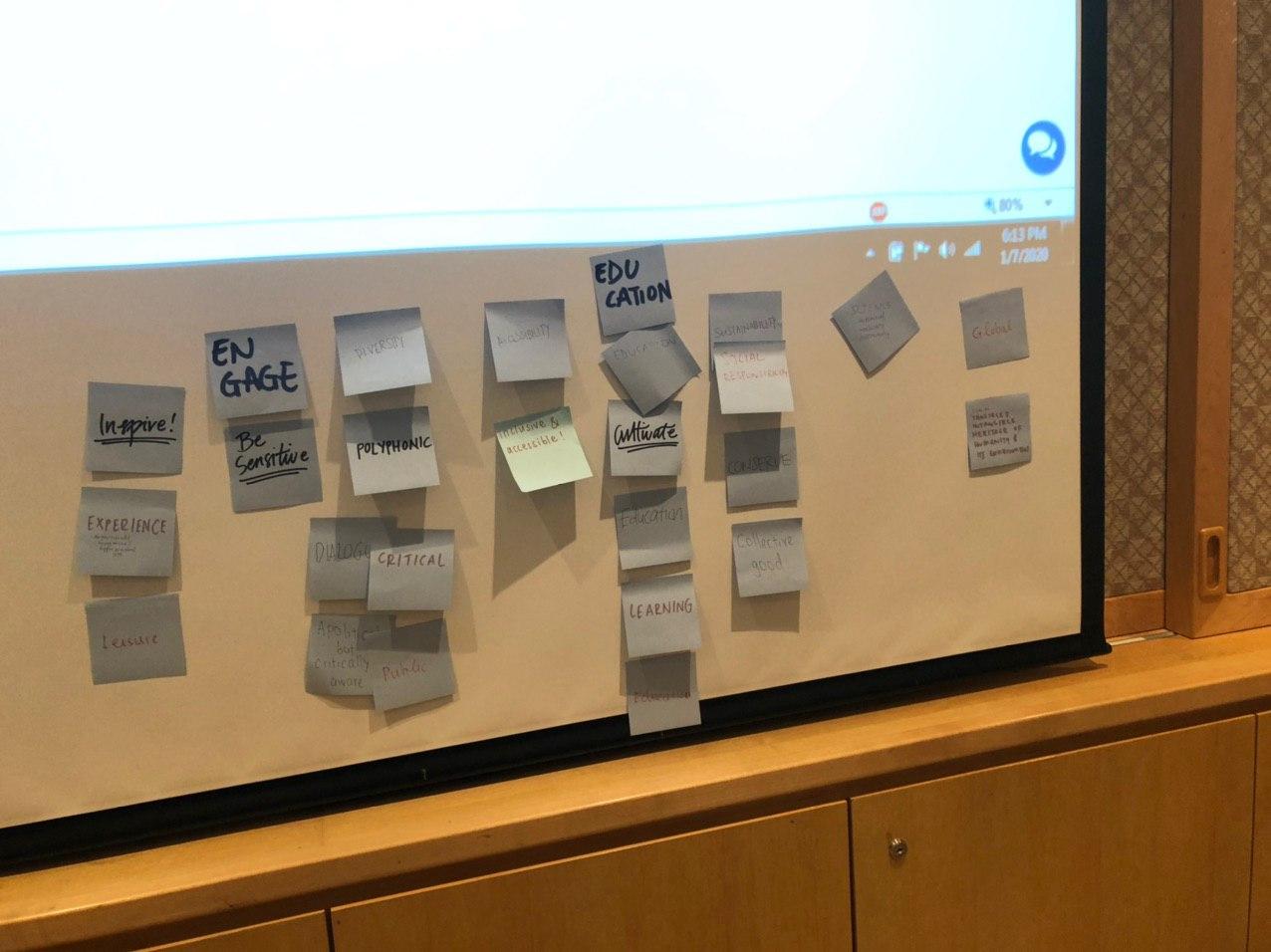
The official internship period ended with a final workshop where we came together to properly consolidate our thoughts and perspectives. Here, we were able to further probe the role and contributions of museums in contemporary society as well as the values that should be reflected in the new museum definition moving forward. Needless to say, the workshop ended on a pretty open-ended note, but with the consensus that further discourse had to continue in some way, shape or form in order to ensure that we can eventually get closer to a museum definition that more appropriately encapsulates modern-day goals of heritage conservation and narrative building.
During my time at the museum, I was given a variety of tasks that all revolved around the Coordinates Project by Shanghainese artist Hu Yun titled another diorama. The first of these tasks was to put together an exhibition kit, where I consolidated all the materials related to the exhibition, which required me to compose the artist biographies for both Shui Tit Sing and Hu Yun. This relatively straightforward task was followed by a meeting with Sidd, my supervisor, where she gave me prompts and potential research areas to look into with regards to dioramas, Shui Tit Sing, and Hu Yun. I was then given a week to consolidate my research and present my findings to her. This is Sidd’s way of teaching―providing us with a selection of material and leaving it to us to decide what to do with that information. “Tell me what interests you,” she said. “If nothing about dioramas interests you, that’s perfectly fine too!”.
Little did I know, that presentation turned out to be a mere teaser to the most formidable assignment that was set for me, which came towards the end of the internship. Sidd asked me to use what I had learnt from preparing my presentation to put together a zine for another diorama. This zine was meant to be an extension of the exhibition, allowing anyone who picked it up to engage in a more critical dialogue about the works on display and its context. I had never embarked on a project of this nature or scale before and knowing that I would be doing it largely by myself made me both extremely eager and anxious.
This apprehension led me to approach this task rather methodologically. After a few meetings with Sidd, I found that my initial ideas made it seem like I was tasked to create a textbook and not a zine! However, with Sidd’s guidance, I was able to adjust my focus and think deeper about how to probe readers meaningfully―how to moderate their contemplations rather than impose a set narrative, how to find a balance between sufficient contextual knowledge and complete digression. More than anything, I think this project has given me the first proper taste of curation as I attempt to amalgamate my research material with the appropriate intellectual intervention. My internship has been extended as I continue to tackle these issues and challenges, and I can only hope that the final product provides decent supplementary materials and prompts for future visitors to the exhibition. Fingers crossed!
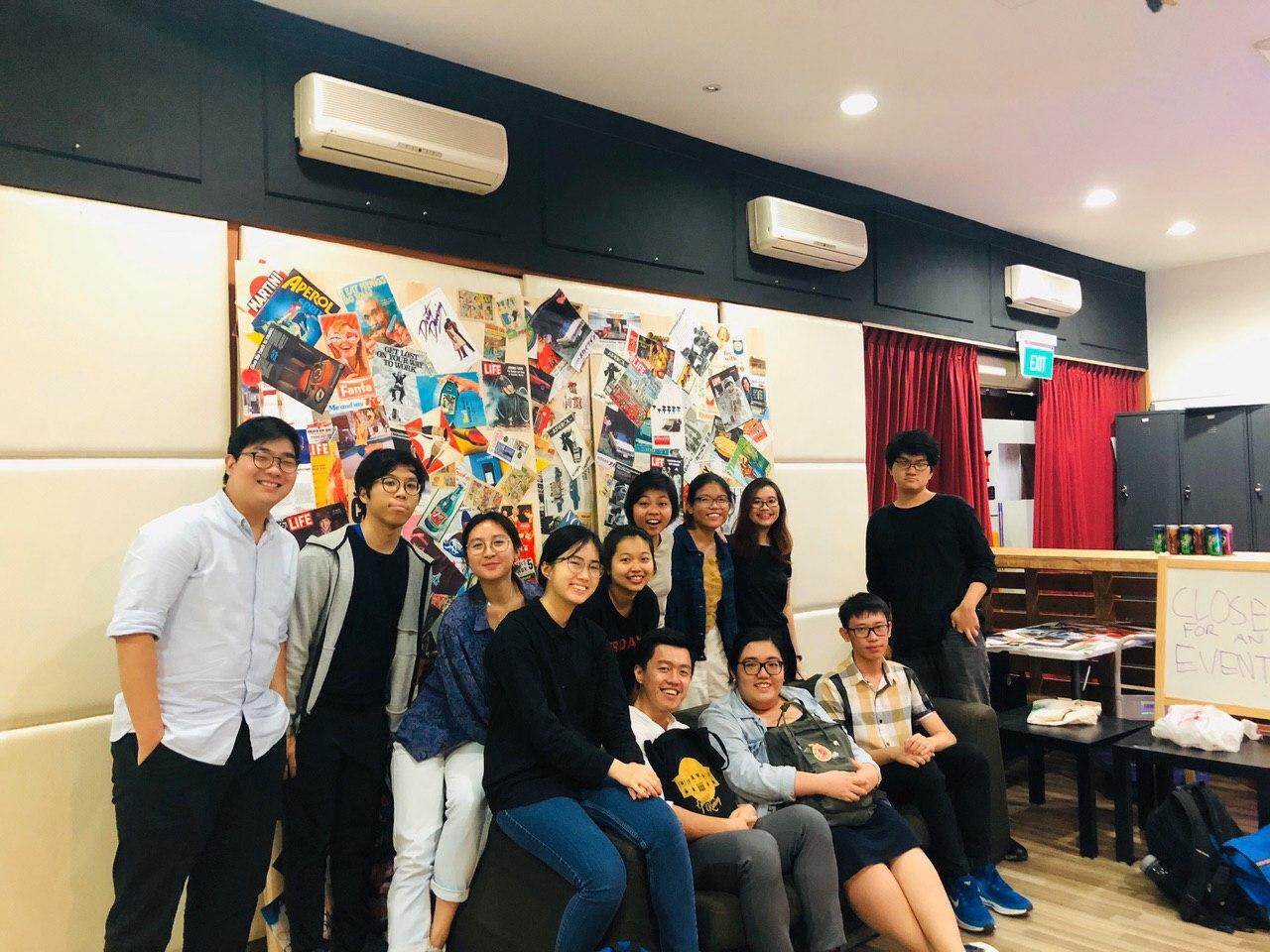
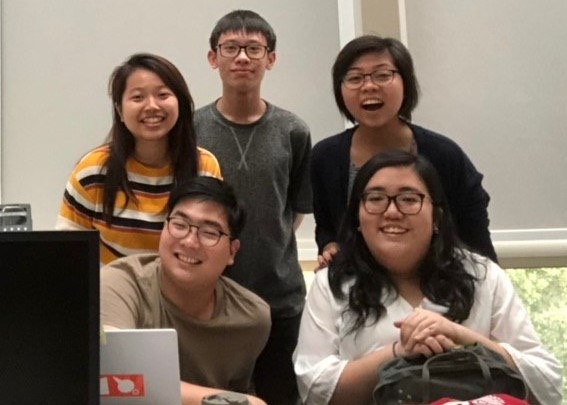
I’d like to end off by expressing my immense gratitude to my mentor-supervisor, Sidd Perez for her eloquence, profound insights and patience with me throughout this internship, and to Michelle for planning out such a wonderful programme that definitely maximised our learning and reflection. Lastly, I’d like to give the biggest shout out to my fellow interns―thank you for all the lunch shenanigans, for the discourses (the academic and not-so-academic) and for an unforgettable end to the decade. Cheers!
- Student Voices
18 November 2025
16 May 2025
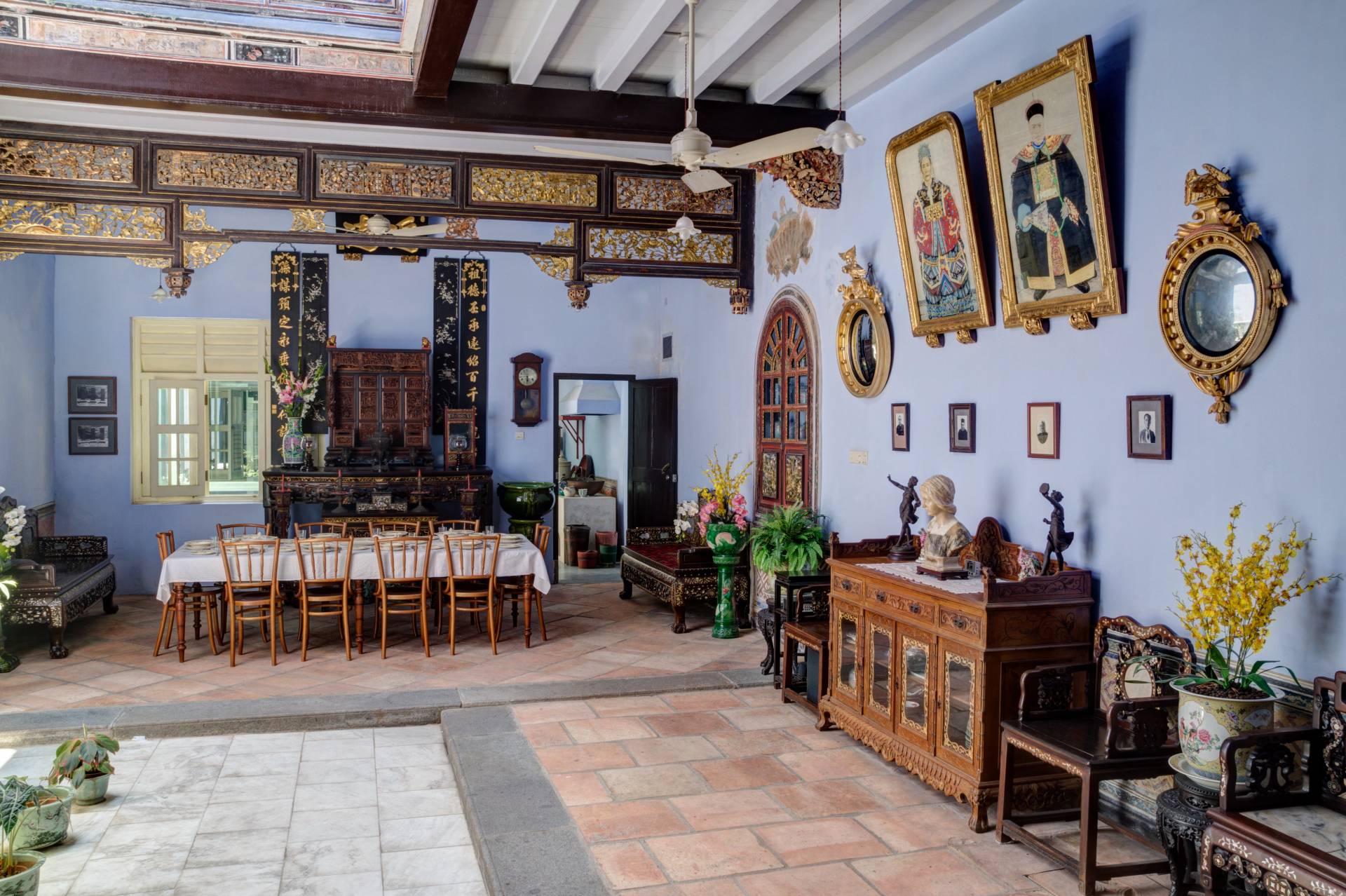
NUS Baba House to undergo two years of conservation works
Enthusiasts can look forward to a slate of programmes ahead of and during the temporary closure.
6 October 2023
NUS Museum receives largest-ever donation of Straits Chinese artefacts
"Collected by Mrs Alice Tan over a 30-year period, the donated artefacts will contribute to a deeper study of the impact of Straits Chinese culture in Singapore and the region, and provide broadened avenues for interdisciplinary collaborations."
15 August 2023
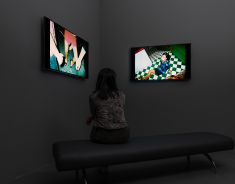
From personal photo collection to exhibition: NUS Museum's latest showcase features visual narratives by 9 members of the NUS community
Titled Photography Journal Open Call (PJOC), the exhibition presents an eclectic collection of photographic works by nine NUS students, alumni artists and academic staff.
12 April 2021
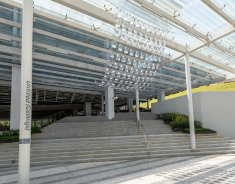
Nurturing a creative campus through public art advocacy
The Public Art Initiative was launched to underscore NUS’ commitment to deepening the role of public art in holistic, interdisciplinary and broad-based education.

8 October 2019
October at the NUS Museum: between war and the artist, art and the tropics
This October, NUS Museum unveils two new exhibitions surveying the art historical in the region from distinct positions.

31 May 2019
New exhibition from Gilles Massot to be unveiled at NUS Museum
“…you have to lose your way to find yourself in the right place” presents the works of Singapore-based French artist, Gilles Massot. Featuring a selection of photographs, videos, sketches and writings from his extensive corpus of works.

14 February 2019
Glossaries of the Straits Chinese Homemaking
Following eleven years of giving glimpses of a Peranakan family’s domestic life in the early 20th century, NUS Baba House presents the exhibition Glossaries of the Straits Chinese Homemaking.
22 March 2018
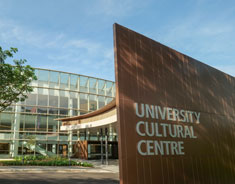
NUS' cultural icon refreshed for a new generation
The University Cultural Centre's first major renovation improves the high standard of guest comfort, efficiency and production possibilities.
3 February 2017
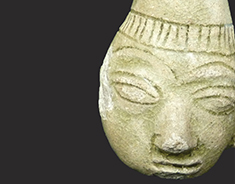
Exhibition: From the Ashes: Reviving Myanmar Celadon Ceramics
NUS Museum presents ongoing attempts to revive the technology of making ash-glazed ceramics in Myanmar.

23 November 2016
Exhibition: Between the brush lines of Lim Tze Peng
Solo exhibition at NUS Museum considers 70-year oeuvre of Singapore's oldest living artist.

1 November 2016
Book Launch: NUS Baba House launches inaugural guidebook
From architecture to social history, book reveals the myriad facets of Singapore's only restored Straits Chinese family home.
21 October 2016
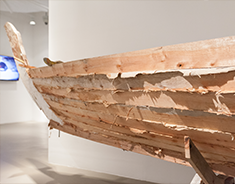
Exhibition: Looking within - What makes an exhibition?
NUS Museum presents exhibition introspecting into curatorial impulses and the exhibitionary medium.
1 July 2016
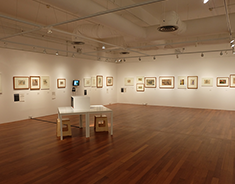
Exhibition: "Who wants to remember a war?"
NUS Museum draws on war posters, woodcuts and drawings to explore contemporary narratives of the Vietnam War.

10 May 2016
Award: NUS Museum wins inaugural award for innovative museological practice
International Committee of University Museums and Collections recognises efforts to facilitate conversation between audiences and exhibitions.
14 April 2016
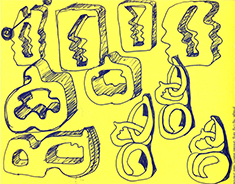
Exhibition: Figuring Ng Eng Teng
NUS Museum reveals unstudied elements and works from the late Cultural Medallion recipient’s practice.
Student Voices
Diary of an NUS Museum Intern: Sin Melia
Diary of an NUS Museum Intern is a series of blog posts written by our interns about their experiences during the course of their internships. Working alongside their mentors, our interns have waded through tons of historical research, assisted in curatorial work, pitched in during exhibition installations and organised outreach events! If you would like to become our next intern, visit NUS Museum’s student development page for more information.
Sin Melia is a third-year Sociology major and Southeast Asian minor at the NUS Faculty of Arts and Social Sciences. Working as an Exhibitions Interns for the South & Southeast Asian Collection, Melia was involved in the curatorial processes of the on-going exhibition another diorama.
The shock I experienced when I was informed that I had been accepted into this programme was quickly followed by anxieties of what exactly this internship would entail. Of course, having applied for the program, I, like many of my fellow interns (and I’m sure many before us), began with an interest in art, curation, and just the preservation of heritage in general. However, this interest can manifest in many different ways―as I’ve learned during the course of this internship.
Our batch of interns was lucky enough to enter this programme during a rather exciting period of time in the international museum community. As the International Council of Museums (ICOM) had recently postponed their vote on a new museum definition, we took the opportunity to critically evaluate the current and proposed definitions. This discourse was supplemented by field trips to institutions such as the NUS Baba House, Golden Mile Complex, the Asian Civilisations Museum and the Singapore Science Centre (and accompanied by relevant readings). From these field trips emerged dynamic conversations about how we could go about conceptualising these institutions―institutions that for so long have simply been passive receptacles of artefacts and art.
Naturally, these conversations and excursions got me thinking about what a museum was supposed to be―based on the definition (current or proposed), what would the ideal museum look like? Could there ever be such thing? If not, why bother with a museum definition at all?
Personally, I was struck by a phrase from an article by Alfonse Chiu: “the negotiation of remembrance”. The idea that the act of preserving, of safeguarding―of remembering―is, in itself, a process and we have to treat it as such. With that being said, I think the proposed museum definition is correct in bringing specific attention to the “polyphonic” nature of our social world. Furthermore, we have established that museums have and should make a conscious move away from traditional museological conventions―specifically the imperialistic practices that promote passive transmission of knowledge and intellectual dominion.
The official internship period ended with a final workshop where we came together to properly consolidate our thoughts and perspectives. Here, we were able to further probe the role and contributions of museums in contemporary society as well as the values that should be reflected in the new museum definition moving forward. Needless to say, the workshop ended on a pretty open-ended note, but with the consensus that further discourse had to continue in some way, shape or form in order to ensure that we can eventually get closer to a museum definition that more appropriately encapsulates modern-day goals of heritage conservation and narrative building.
During my time at the museum, I was given a variety of tasks that all revolved around the Coordinates Project by Shanghainese artist Hu Yun titled another diorama. The first of these tasks was to put together an exhibition kit, where I consolidated all the materials related to the exhibition, which required me to compose the artist biographies for both Shui Tit Sing and Hu Yun. This relatively straightforward task was followed by a meeting with Sidd, my supervisor, where she gave me prompts and potential research areas to look into with regards to dioramas, Shui Tit Sing, and Hu Yun. I was then given a week to consolidate my research and present my findings to her. This is Sidd’s way of teaching―providing us with a selection of material and leaving it to us to decide what to do with that information. “Tell me what interests you,” she said. “If nothing about dioramas interests you, that’s perfectly fine too!”.
Little did I know, that presentation turned out to be a mere teaser to the most formidable assignment that was set for me, which came towards the end of the internship. Sidd asked me to use what I had learnt from preparing my presentation to put together a zine for another diorama. This zine was meant to be an extension of the exhibition, allowing anyone who picked it up to engage in a more critical dialogue about the works on display and its context. I had never embarked on a project of this nature or scale before and knowing that I would be doing it largely by myself made me both extremely eager and anxious.
This apprehension led me to approach this task rather methodologically. After a few meetings with Sidd, I found that my initial ideas made it seem like I was tasked to create a textbook and not a zine! However, with Sidd’s guidance, I was able to adjust my focus and think deeper about how to probe readers meaningfully―how to moderate their contemplations rather than impose a set narrative, how to find a balance between sufficient contextual knowledge and complete digression. More than anything, I think this project has given me the first proper taste of curation as I attempt to amalgamate my research material with the appropriate intellectual intervention. My internship has been extended as I continue to tackle these issues and challenges, and I can only hope that the final product provides decent supplementary materials and prompts for future visitors to the exhibition. Fingers crossed!
I’d like to end off by expressing my immense gratitude to my mentor-supervisor, Sidd Perez for her eloquence, profound insights and patience with me throughout this internship, and to Michelle for planning out such a wonderful programme that definitely maximised our learning and reflection. Lastly, I’d like to give the biggest shout out to my fellow interns―thank you for all the lunch shenanigans, for the discourses (the academic and not-so-academic) and for an unforgettable end to the decade. Cheers!
- Student Voices


News
18 November 2025
16 May 2025
NUS Baba House to undergo two years of conservation works
Enthusiasts can look forward to a slate of programmes ahead of and during the temporary closure.
6 October 2023
NUS Museum receives largest-ever donation of Straits Chinese artefacts
"Collected by Mrs Alice Tan over a 30-year period, the donated artefacts will contribute to a deeper study of the impact of Straits Chinese culture in Singapore and the region, and provide broadened avenues for interdisciplinary collaborations."
15 August 2023
From personal photo collection to exhibition: NUS Museum's latest showcase features visual narratives by 9 members of the NUS community
Titled Photography Journal Open Call (PJOC), the exhibition presents an eclectic collection of photographic works by nine NUS students, alumni artists and academic staff.
12 April 2021
Nurturing a creative campus through public art advocacy
The Public Art Initiative was launched to underscore NUS’ commitment to deepening the role of public art in holistic, interdisciplinary and broad-based education.
8 October 2019
October at the NUS Museum: between war and the artist, art and the tropics
This October, NUS Museum unveils two new exhibitions surveying the art historical in the region from distinct positions.
31 May 2019
New exhibition from Gilles Massot to be unveiled at NUS Museum
“…you have to lose your way to find yourself in the right place” presents the works of Singapore-based French artist, Gilles Massot. Featuring a selection of photographs, videos, sketches and writings from his extensive corpus of works.
14 February 2019
Glossaries of the Straits Chinese Homemaking
Following eleven years of giving glimpses of a Peranakan family’s domestic life in the early 20th century, NUS Baba House presents the exhibition Glossaries of the Straits Chinese Homemaking.
22 March 2018
NUS' cultural icon refreshed for a new generation
The University Cultural Centre's first major renovation improves the high standard of guest comfort, efficiency and production possibilities.
3 February 2017
Exhibition: From the Ashes: Reviving Myanmar Celadon Ceramics
NUS Museum presents ongoing attempts to revive the technology of making ash-glazed ceramics in Myanmar.
23 November 2016
Exhibition: Between the brush lines of Lim Tze Peng
Solo exhibition at NUS Museum considers 70-year oeuvre of Singapore's oldest living artist.
1 November 2016
Book Launch: NUS Baba House launches inaugural guidebook
From architecture to social history, book reveals the myriad facets of Singapore's only restored Straits Chinese family home.
21 October 2016
Exhibition: Looking within - What makes an exhibition?
NUS Museum presents exhibition introspecting into curatorial impulses and the exhibitionary medium.
1 July 2016
Exhibition: "Who wants to remember a war?"
NUS Museum draws on war posters, woodcuts and drawings to explore contemporary narratives of the Vietnam War.
10 May 2016
Award: NUS Museum wins inaugural award for innovative museological practice
International Committee of University Museums and Collections recognises efforts to facilitate conversation between audiences and exhibitions.
14 April 2016
Exhibition: Figuring Ng Eng Teng
NUS Museum reveals unstudied elements and works from the late Cultural Medallion recipient’s practice.
Leave a comment