Press Enquiries
Please direct all press enquiries and image requests to museum@nus.edu.sg.
In The Spotlight
Diary of an NUS Museum Intern: Stephanie Lauw
Diary of an NUS Museum Intern is a series of blog posts written by our interns about their experiences during the course of their internships. Working alongside their mentors, our interns have waded through tons of historical research, assisted in curatorial work, pitched in during exhibition installations and organised outreach events! If you would like to become our next intern, visit NUS Museum’s student development page for more information.
Stephanie Lauw is a fourth-year English Literature student at the NUS Faculty of Arts and Social Sciences. During her time here as our Museum Outreach intern, Stephanie assisted in research and execution of various outreach projects.
As one of the museum’s outreach interns, my job scope for the 5-week stint revolved around three main tasks. The first of these was to work on NUS Museum’s Anniversary Lecture publication. Earlier in April, the museum had hosted Mr Kwa Chong Guan, who delivered a lecture titled “William Willetts and the Practice of Asian Art History”. Essentially, my tasks included short transcription work and preparing documents that would aid the publication of the lecture. On paper this admittedly, may sound rather mundane, however, the actual task proved to be really interesting. Listening and working on Mr Kwa’s lecture, I found that it enriched my understanding of the museum’s history, as well as the values of art history, extending upon the content I had briefly engaged with in some modules that I had previously done in school. Preparing the documents also gave me insight to other programmes and forms of work the museum did, beyond the front-facing exhibitions that I was familiar with.
Another task I had involved creating a gallery guide for the museum’s Radio Malaya exhibition. This involved selecting artwork from the show and choosing secondary texts to be read alongside the art, as a kind of supplement, contrast, or otherwise. With my plebeian background dabbling in music, my gallery guide dealt with Singapore/Malaya’s music history from the 1950s-90s. This exercise was particularly meaningful for me as it allowed me to further my own interest through tracing the developments of music in the country, researching sources with salient quotes that characterised each stage. Pairing these texts with the exhibition’s artwork then allowed me to use my readings to construct possible avenues for conversation, intersecting Radio Malaya’s art with the thematic concern of music from such a dynamic, defining time period in Singapore’s history.
My final task as an outreach intern considered the different functions of museum libraries and the various outreach approaches that could possibly be employed as NUS Museum further develops its own Resource Library. I researched existing strategies used by other (museum) libraries, and also considered the idea of books as cultural artefacts. Working in the library itself cataloguing old books, magazines, and other art resources, it was basically a treasure trove for the book-loving literature major I am. Dealing with the resources, again, gave me added awareness of art history and the workings of the museum, which included the research material used directly to conceive some of the museum’s shows.
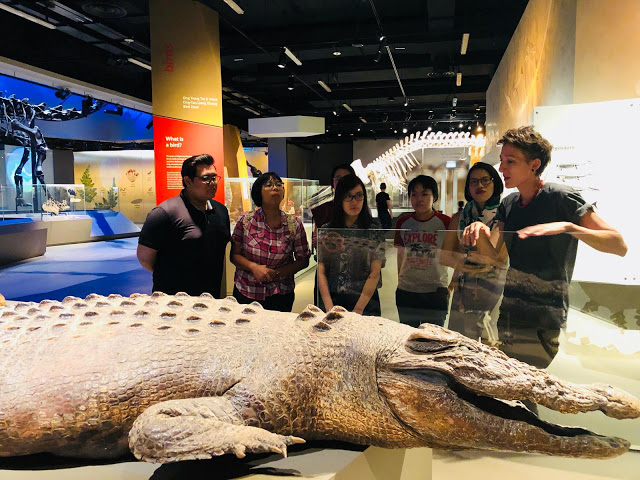
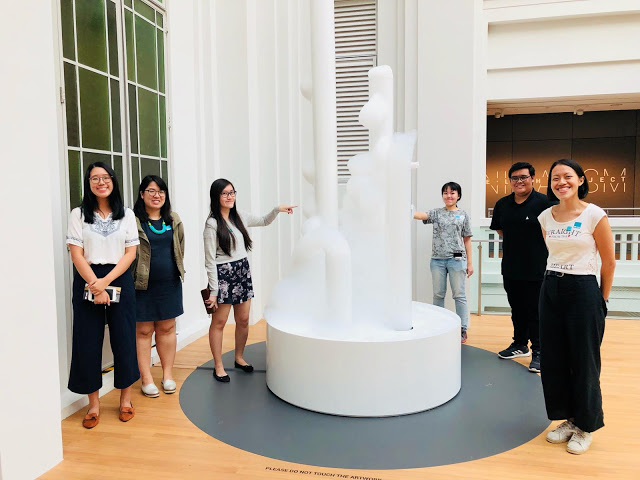
As part of the internship programme, we also visited three other museum institutions – Lee Kong Chian Natural History Museum, National Gallery Singapore, and the Asian Civilisation Museum. This was particularly insightful comparing the varying methods employed unique to each museum. For instance, the LKCNHM had a strong focus on educating younger children, making their exhibits accessible to them, as compared to NUS Museum which was clearly targeted at an older, more matured audience. These visits helped generate many rhetorical questions, food for thought, such as the function of a museum and authorial intentions, that altogether allowed for an even greater appreciation for the local museum industry. We also attended a conservation workshop to really get behind the scenes of an aspect of museum work which I felt was often taken for granted. We learnt of the basic practices involved in conservation work, and considered questions dealing with the ethics of conservation practices as well as the authenticity of artwork.
On one level, this internship definitely answered the basic questions I had and exceeded my abstract expectations of the programme. On another level, it opened up even more confounding questions about museums, museology, art history, questions that I don’t believe are answerable, yet definitely productive and essential to think about. This idea, I feel, may be one of the greater takeaways from my experience as outreach intern with the NUS Museum.
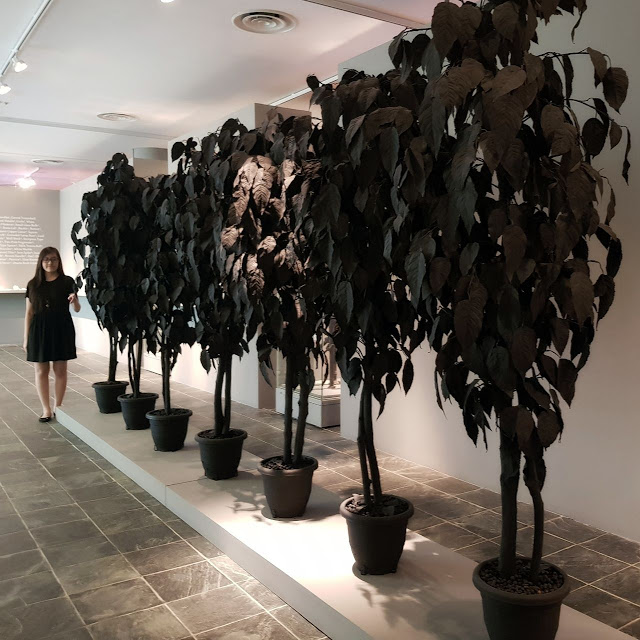
Me trying to touch a Radio Malaya artwork, captured by fellow outreach intern Nichole
- Student Voices
18 November 2025
16 May 2025
NUS Baba House to undergo two years of conservation works
Enthusiasts can look forward to a slate of programmes ahead of and during the temporary closure.
6 October 2023
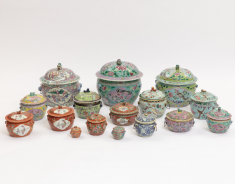
NUS Museum receives largest-ever donation of Straits Chinese artefacts
"Collected by Mrs Alice Tan over a 30-year period, the donated artefacts will contribute to a deeper study of the impact of Straits Chinese culture in Singapore and the region, and provide broadened avenues for interdisciplinary collaborations."
15 August 2023
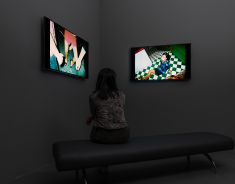
From personal photo collection to exhibition: NUS Museum's latest showcase features visual narratives by 9 members of the NUS community
Titled Photography Journal Open Call (PJOC), the exhibition presents an eclectic collection of photographic works by nine NUS students, alumni artists and academic staff.
12 April 2021
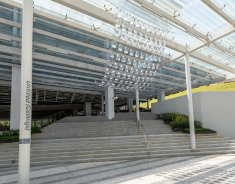
Nurturing a creative campus through public art advocacy
The Public Art Initiative was launched to underscore NUS’ commitment to deepening the role of public art in holistic, interdisciplinary and broad-based education.

8 October 2019
October at the NUS Museum: between war and the artist, art and the tropics
This October, NUS Museum unveils two new exhibitions surveying the art historical in the region from distinct positions.

31 May 2019
New exhibition from Gilles Massot to be unveiled at NUS Museum
“…you have to lose your way to find yourself in the right place” presents the works of Singapore-based French artist, Gilles Massot. Featuring a selection of photographs, videos, sketches and writings from his extensive corpus of works.

14 February 2019
Glossaries of the Straits Chinese Homemaking
Following eleven years of giving glimpses of a Peranakan family’s domestic life in the early 20th century, NUS Baba House presents the exhibition Glossaries of the Straits Chinese Homemaking.
22 March 2018
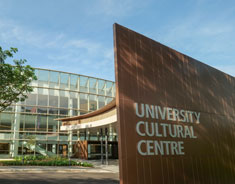
NUS' cultural icon refreshed for a new generation
The University Cultural Centre's first major renovation improves the high standard of guest comfort, efficiency and production possibilities.
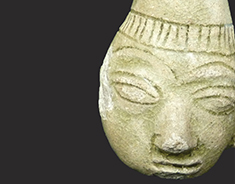
3 February 2017
Exhibition: From the Ashes: Reviving Myanmar Celadon Ceramics
NUS Museum presents ongoing attempts to revive the technology of making ash-glazed ceramics in Myanmar.

23 November 2016
Exhibition: Between the brush lines of Lim Tze Peng
Solo exhibition at NUS Museum considers 70-year oeuvre of Singapore's oldest living artist.

1 November 2016
Book Launch: NUS Baba House launches inaugural guidebook
From architecture to social history, book reveals the myriad facets of Singapore's only restored Straits Chinese family home.
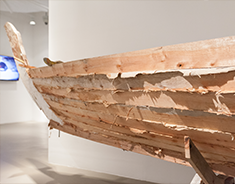
21 October 2016
Exhibition: Looking within - What makes an exhibition?
NUS Museum presents exhibition introspecting into curatorial impulses and the exhibitionary medium.
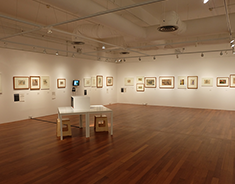
1 July 2016
Exhibition: "Who wants to remember a war?"
NUS Museum draws on war posters, woodcuts and drawings to explore contemporary narratives of the Vietnam War.

10 May 2016
Award: NUS Museum wins inaugural award for innovative museological practice
International Committee of University Museums and Collections recognises efforts to facilitate conversation between audiences and exhibitions.
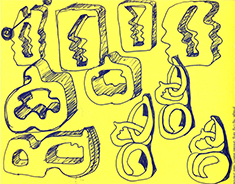
14 April 2016
Exhibition: Figuring Ng Eng Teng
NUS Museum reveals unstudied elements and works from the late Cultural Medallion recipient’s practice.
Student Voices
Diary of an NUS Museum Intern: Stephanie Lauw
Diary of an NUS Museum Intern is a series of blog posts written by our interns about their experiences during the course of their internships. Working alongside their mentors, our interns have waded through tons of historical research, assisted in curatorial work, pitched in during exhibition installations and organised outreach events! If you would like to become our next intern, visit NUS Museum’s student development page for more information.
Stephanie Lauw is a fourth-year English Literature student at the NUS Faculty of Arts and Social Sciences. During her time here as our Museum Outreach intern, Stephanie assisted in research and execution of various outreach projects.
As one of the museum’s outreach interns, my job scope for the 5-week stint revolved around three main tasks. The first of these was to work on NUS Museum’s Anniversary Lecture publication. Earlier in April, the museum had hosted Mr Kwa Chong Guan, who delivered a lecture titled “William Willetts and the Practice of Asian Art History”. Essentially, my tasks included short transcription work and preparing documents that would aid the publication of the lecture. On paper this admittedly, may sound rather mundane, however, the actual task proved to be really interesting. Listening and working on Mr Kwa’s lecture, I found that it enriched my understanding of the museum’s history, as well as the values of art history, extending upon the content I had briefly engaged with in some modules that I had previously done in school. Preparing the documents also gave me insight to other programmes and forms of work the museum did, beyond the front-facing exhibitions that I was familiar with.
Another task I had involved creating a gallery guide for the museum’s Radio Malaya exhibition. This involved selecting artwork from the show and choosing secondary texts to be read alongside the art, as a kind of supplement, contrast, or otherwise. With my plebeian background dabbling in music, my gallery guide dealt with Singapore/Malaya’s music history from the 1950s-90s. This exercise was particularly meaningful for me as it allowed me to further my own interest through tracing the developments of music in the country, researching sources with salient quotes that characterised each stage. Pairing these texts with the exhibition’s artwork then allowed me to use my readings to construct possible avenues for conversation, intersecting Radio Malaya’s art with the thematic concern of music from such a dynamic, defining time period in Singapore’s history.
My final task as an outreach intern considered the different functions of museum libraries and the various outreach approaches that could possibly be employed as NUS Museum further develops its own Resource Library. I researched existing strategies used by other (museum) libraries, and also considered the idea of books as cultural artefacts. Working in the library itself cataloguing old books, magazines, and other art resources, it was basically a treasure trove for the book-loving literature major I am. Dealing with the resources, again, gave me added awareness of art history and the workings of the museum, which included the research material used directly to conceive some of the museum’s shows.
As part of the internship programme, we also visited three other museum institutions – Lee Kong Chian Natural History Museum, National Gallery Singapore, and the Asian Civilisation Museum. This was particularly insightful comparing the varying methods employed unique to each museum. For instance, the LKCNHM had a strong focus on educating younger children, making their exhibits accessible to them, as compared to NUS Museum which was clearly targeted at an older, more matured audience. These visits helped generate many rhetorical questions, food for thought, such as the function of a museum and authorial intentions, that altogether allowed for an even greater appreciation for the local museum industry. We also attended a conservation workshop to really get behind the scenes of an aspect of museum work which I felt was often taken for granted. We learnt of the basic practices involved in conservation work, and considered questions dealing with the ethics of conservation practices as well as the authenticity of artwork.
On one level, this internship definitely answered the basic questions I had and exceeded my abstract expectations of the programme. On another level, it opened up even more confounding questions about museums, museology, art history, questions that I don’t believe are answerable, yet definitely productive and essential to think about. This idea, I feel, may be one of the greater takeaways from my experience as outreach intern with the NUS Museum.
Me trying to touch a Radio Malaya artwork, captured by fellow outreach intern Nichole
- Student Voices


News
18 November 2025
16 May 2025
NUS Baba House to undergo two years of conservation works
Enthusiasts can look forward to a slate of programmes ahead of and during the temporary closure.
6 October 2023
NUS Museum receives largest-ever donation of Straits Chinese artefacts
"Collected by Mrs Alice Tan over a 30-year period, the donated artefacts will contribute to a deeper study of the impact of Straits Chinese culture in Singapore and the region, and provide broadened avenues for interdisciplinary collaborations."
15 August 2023
From personal photo collection to exhibition: NUS Museum's latest showcase features visual narratives by 9 members of the NUS community
Titled Photography Journal Open Call (PJOC), the exhibition presents an eclectic collection of photographic works by nine NUS students, alumni artists and academic staff.
12 April 2021
Nurturing a creative campus through public art advocacy
The Public Art Initiative was launched to underscore NUS’ commitment to deepening the role of public art in holistic, interdisciplinary and broad-based education.
8 October 2019
October at the NUS Museum: between war and the artist, art and the tropics
This October, NUS Museum unveils two new exhibitions surveying the art historical in the region from distinct positions.
31 May 2019
New exhibition from Gilles Massot to be unveiled at NUS Museum
“…you have to lose your way to find yourself in the right place” presents the works of Singapore-based French artist, Gilles Massot. Featuring a selection of photographs, videos, sketches and writings from his extensive corpus of works.
14 February 2019
Glossaries of the Straits Chinese Homemaking
Following eleven years of giving glimpses of a Peranakan family’s domestic life in the early 20th century, NUS Baba House presents the exhibition Glossaries of the Straits Chinese Homemaking.
22 March 2018
NUS' cultural icon refreshed for a new generation
The University Cultural Centre's first major renovation improves the high standard of guest comfort, efficiency and production possibilities.
3 February 2017
Exhibition: From the Ashes: Reviving Myanmar Celadon Ceramics
NUS Museum presents ongoing attempts to revive the technology of making ash-glazed ceramics in Myanmar.
23 November 2016
Exhibition: Between the brush lines of Lim Tze Peng
Solo exhibition at NUS Museum considers 70-year oeuvre of Singapore's oldest living artist.
1 November 2016
Book Launch: NUS Baba House launches inaugural guidebook
From architecture to social history, book reveals the myriad facets of Singapore's only restored Straits Chinese family home.
21 October 2016
Exhibition: Looking within - What makes an exhibition?
NUS Museum presents exhibition introspecting into curatorial impulses and the exhibitionary medium.
1 July 2016
Exhibition: "Who wants to remember a war?"
NUS Museum draws on war posters, woodcuts and drawings to explore contemporary narratives of the Vietnam War.
10 May 2016
Award: NUS Museum wins inaugural award for innovative museological practice
International Committee of University Museums and Collections recognises efforts to facilitate conversation between audiences and exhibitions.
14 April 2016
Exhibition: Figuring Ng Eng Teng
NUS Museum reveals unstudied elements and works from the late Cultural Medallion recipient’s practice.
Leave a comment