Press Enquiries
Please direct all press enquiries and image requests to museum@nus.edu.sg.
In The Spotlight
Evolution and protection of Baba Malay through changing times
Language, like many other aspects of culture, continually evolves over time and in response to the needs and landscapes of an era. Singapore, too, has undergone multiple linguistic shifts over the years. Wang Gungwu, in his chapter “Before Nation: Chinese Peranakan,” suggested that languages in early Singapore were pre-national – they observed no national borders.
Eventually, however, Malay became the language of communication in the Malay Archipelago, and was used by individuals independent of their country of origin.
Before Nation-state
An indicator of such language change was in how Singapore was known by many names before adopting the moniker of Lion City. “I was surprised and fascinated by the former names of Singapore such as “Po Luo Chung”, “Pulau Ujong”, “Tung-Ya-Men”, “Temasek”, “Singapura”, et cetera,” shares Dr. Phyllis G. L. Chew, a former professor at the National Institute of Education.
Observing this phenomenon spurred her to embark on research surrounding language and identities in early Singapore. “[My] instincts told me [that] there must be layers of stories behind such colourful names, especially as what was sold to us in our history textbooks were the fact that we were a deserted island until the British “found” us.”
Evolution of Baba Malay
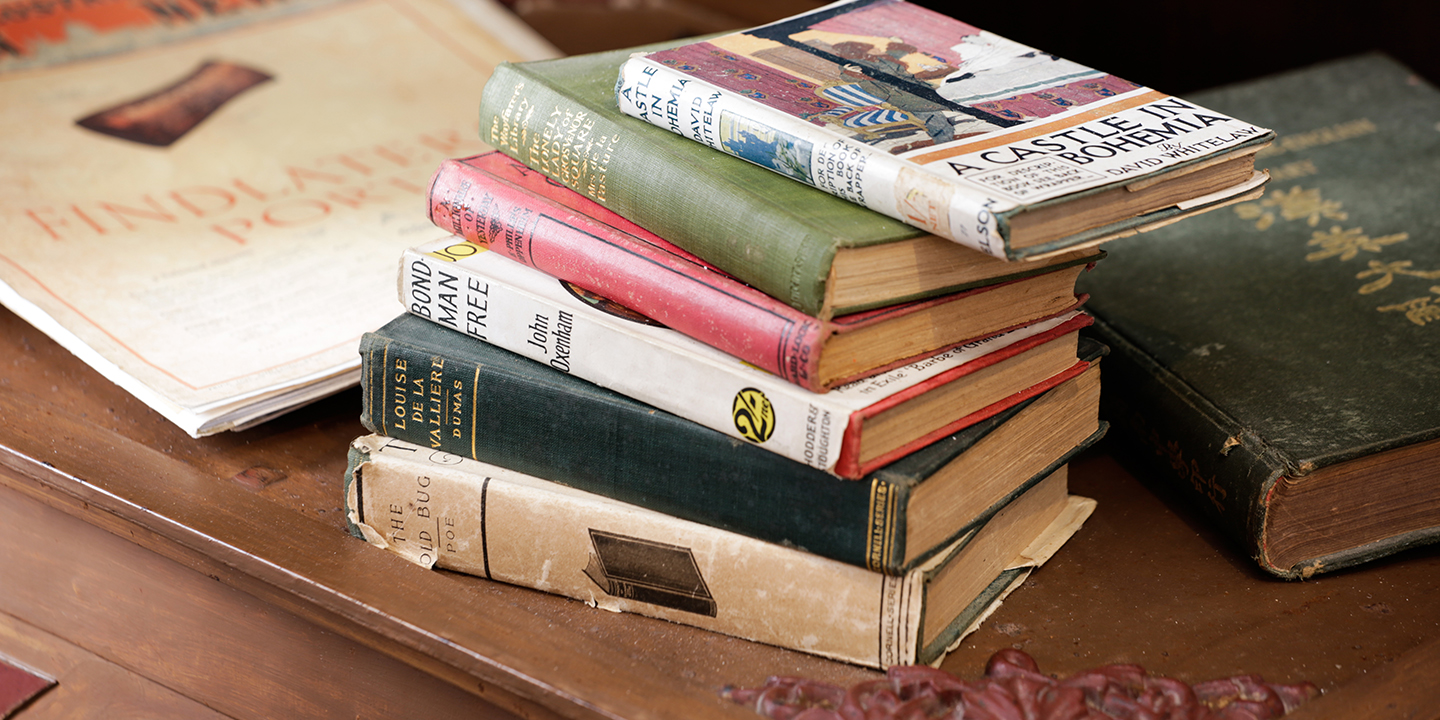
In particular relation to the Straits Chinese, Dr. Azhar Ibrahim, a lecturer at the Department of Malay Studies at National University of Singapore, observed that the language used by the Peranakan community played a role in various significant contributions to the intellectual culture that had developed in Southeast Asia.
“I often encounter the contributions of the Peranakan Chinese in the realms of press, literature, and politics. In the late 19th and early 20th century, syair (rhymed narrative poem) has been one genre that was also a favourite medium of expression. Peranakan writers were no exception. Reading through the syair written by Peranakan writers could provide insights into the poetics and ideational dynamics within the community, and their relations with the larger context of the Malay world.”
Singapore has thus experienced multiple shifts in the local landscape of language, ranging from the use of Bazaar Malay and dialects as lingua franca, to the widespread push to use English in the post-independence era. This push has brought new challenges to preserving the linguistic heritage of the Peranakans.
Preserving the culture through language
Despite the prominence of the language in influencing early Singapore identity and culture, this is no longer the case today as its usage continues to dwindle amongst the increased use of English today. Addressing this urgent need to document and preserve these elements are academics like Asst. Prof Nala H. Lee and authors like Kenneth Y. K. Chan.
“I have always been drawn as a researcher to the topic of language endangerment, given its pressing nature and the magnitude of its consequences,” shares Asst. Prof Lee of the Linguistics Department at the National University of Singapore. Responsible for seminal works like a treatise on grammar of Baba Malay, her work in the field fulfils a personal purpose as well; “as a Peranakan, the more I learn about Baba Malay, the more I find myself connected to my heritage.”
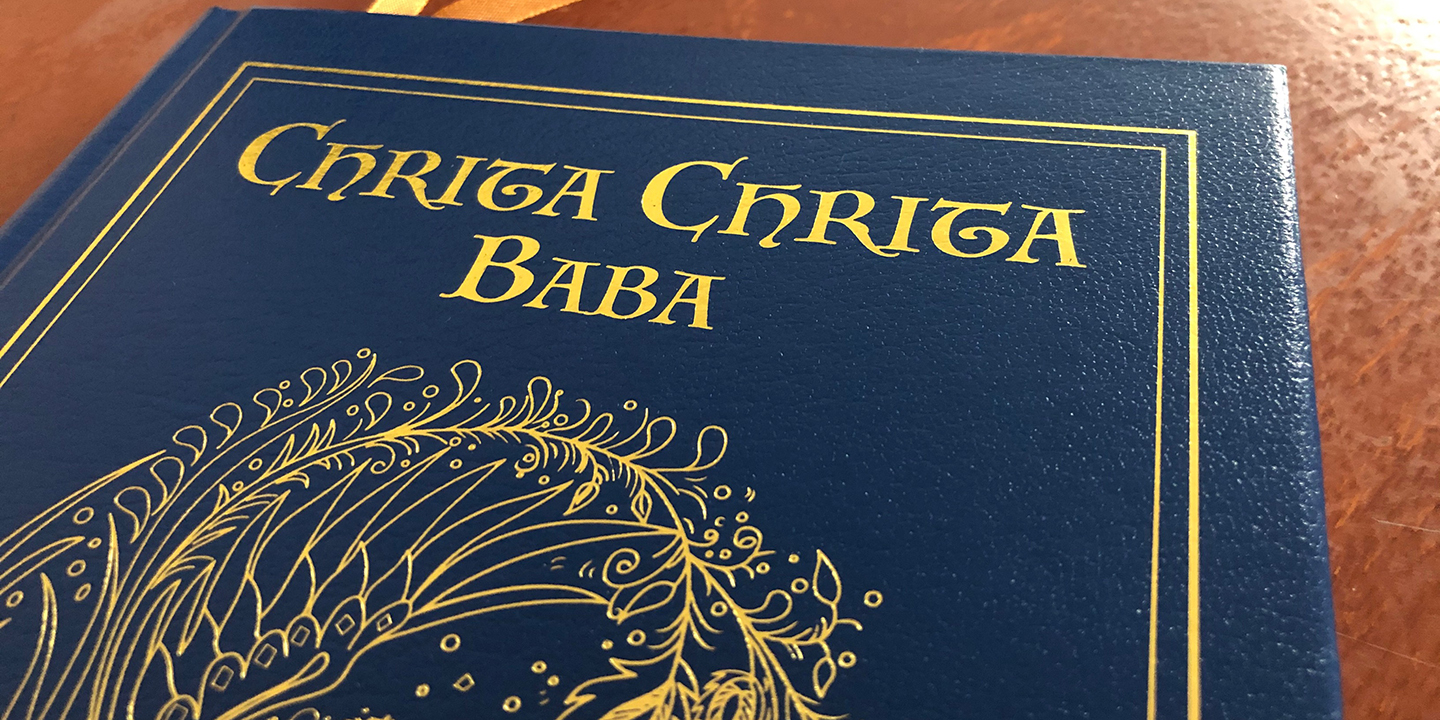
Similarly, Chan embraced the task of creating accessible reading materials for new Baba Malay learners in his community. “Learners of Baba Malay were faced with the daunting task of finding resources to practise their newly acquired language. Without sufficient resources or avenues to use the language, the endangered Baba language would soon be lost,” explained Kenneth Y. K. Chan, author of the book Chrita-Chrita Baba.
Written as a compilation of short stories, his book captures various elements of not only Baba Malay, but also various traditions, folklore, rituals, and beliefs that were once commonplace to any Peranakan person. “[The book] was written in hopes that it would serve as a resource for learners and also in hopes that others would come forward to publish other works in Baba.”
Learn more from these speakers
The four individuals featured in this article will be sharing more over a series of talks organised by NUS Baba House from 9 September to 6 October 2020. The talks will cover a range of topics under the theme Dialects & Dialogues: Languages and Identities Before the Nation-state and will be held on Zoom to allow active audience participation.
To register for the talks and read their synopses, please visit: https://dialectsanddialogues.peatix.com/
18 November 2025
16 May 2025
NUS Baba House to undergo two years of conservation works
Enthusiasts can look forward to a slate of programmes ahead of and during the temporary closure.
6 October 2023
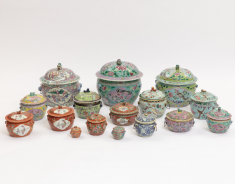
NUS Museum receives largest-ever donation of Straits Chinese artefacts
"Collected by Mrs Alice Tan over a 30-year period, the donated artefacts will contribute to a deeper study of the impact of Straits Chinese culture in Singapore and the region, and provide broadened avenues for interdisciplinary collaborations."
15 August 2023
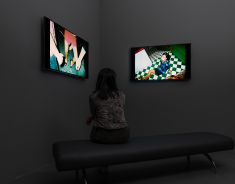
From personal photo collection to exhibition: NUS Museum's latest showcase features visual narratives by 9 members of the NUS community
Titled Photography Journal Open Call (PJOC), the exhibition presents an eclectic collection of photographic works by nine NUS students, alumni artists and academic staff.
12 April 2021
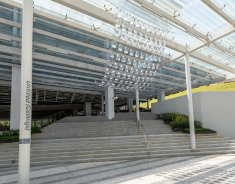
Nurturing a creative campus through public art advocacy
The Public Art Initiative was launched to underscore NUS’ commitment to deepening the role of public art in holistic, interdisciplinary and broad-based education.

8 October 2019
October at the NUS Museum: between war and the artist, art and the tropics
This October, NUS Museum unveils two new exhibitions surveying the art historical in the region from distinct positions.

31 May 2019
New exhibition from Gilles Massot to be unveiled at NUS Museum
“…you have to lose your way to find yourself in the right place” presents the works of Singapore-based French artist, Gilles Massot. Featuring a selection of photographs, videos, sketches and writings from his extensive corpus of works.

14 February 2019
Glossaries of the Straits Chinese Homemaking
Following eleven years of giving glimpses of a Peranakan family’s domestic life in the early 20th century, NUS Baba House presents the exhibition Glossaries of the Straits Chinese Homemaking.
22 March 2018
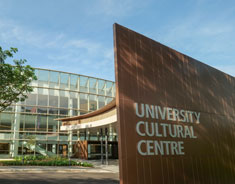
NUS' cultural icon refreshed for a new generation
The University Cultural Centre's first major renovation improves the high standard of guest comfort, efficiency and production possibilities.
3 February 2017
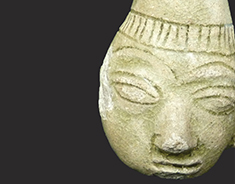
Exhibition: From the Ashes: Reviving Myanmar Celadon Ceramics
NUS Museum presents ongoing attempts to revive the technology of making ash-glazed ceramics in Myanmar.

23 November 2016
Exhibition: Between the brush lines of Lim Tze Peng
Solo exhibition at NUS Museum considers 70-year oeuvre of Singapore's oldest living artist.

1 November 2016
Book Launch: NUS Baba House launches inaugural guidebook
From architecture to social history, book reveals the myriad facets of Singapore's only restored Straits Chinese family home.
21 October 2016
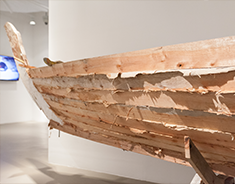
Exhibition: Looking within - What makes an exhibition?
NUS Museum presents exhibition introspecting into curatorial impulses and the exhibitionary medium.
1 July 2016
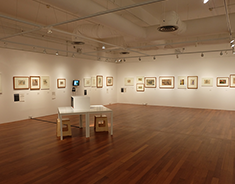
Exhibition: "Who wants to remember a war?"
NUS Museum draws on war posters, woodcuts and drawings to explore contemporary narratives of the Vietnam War.

10 May 2016
Award: NUS Museum wins inaugural award for innovative museological practice
International Committee of University Museums and Collections recognises efforts to facilitate conversation between audiences and exhibitions.
14 April 2016
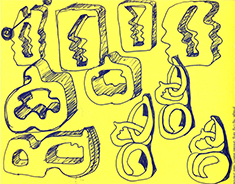
Exhibition: Figuring Ng Eng Teng
NUS Museum reveals unstudied elements and works from the late Cultural Medallion recipient’s practice.
Student Voices
Evolution and protection of Baba Malay through changing times
Language, like many other aspects of culture, continually evolves over time and in response to the needs and landscapes of an era. Singapore, too, has undergone multiple linguistic shifts over the years. Wang Gungwu, in his chapter “Before Nation: Chinese Peranakan,” suggested that languages in early Singapore were pre-national – they observed no national borders.
Eventually, however, Malay became the language of communication in the Malay Archipelago, and was used by individuals independent of their country of origin.
Before Nation-state
An indicator of such language change was in how Singapore was known by many names before adopting the moniker of Lion City. “I was surprised and fascinated by the former names of Singapore such as “Po Luo Chung”, “Pulau Ujong”, “Tung-Ya-Men”, “Temasek”, “Singapura”, et cetera,” shares Dr. Phyllis G. L. Chew, a former professor at the National Institute of Education.
Observing this phenomenon spurred her to embark on research surrounding language and identities in early Singapore. “[My] instincts told me [that] there must be layers of stories behind such colourful names, especially as what was sold to us in our history textbooks were the fact that we were a deserted island until the British “found” us.”
Evolution of Baba Malay
In particular relation to the Straits Chinese, Dr. Azhar Ibrahim, a lecturer at the Department of Malay Studies at National University of Singapore, observed that the language used by the Peranakan community played a role in various significant contributions to the intellectual culture that had developed in Southeast Asia.
“I often encounter the contributions of the Peranakan Chinese in the realms of press, literature, and politics. In the late 19th and early 20th century, syair (rhymed narrative poem) has been one genre that was also a favourite medium of expression. Peranakan writers were no exception. Reading through the syair written by Peranakan writers could provide insights into the poetics and ideational dynamics within the community, and their relations with the larger context of the Malay world.”
Singapore has thus experienced multiple shifts in the local landscape of language, ranging from the use of Bazaar Malay and dialects as lingua franca, to the widespread push to use English in the post-independence era. This push has brought new challenges to preserving the linguistic heritage of the Peranakans.
Preserving the culture through language
Despite the prominence of the language in influencing early Singapore identity and culture, this is no longer the case today as its usage continues to dwindle amongst the increased use of English today. Addressing this urgent need to document and preserve these elements are academics like Asst. Prof Nala H. Lee and authors like Kenneth Y. K. Chan.
“I have always been drawn as a researcher to the topic of language endangerment, given its pressing nature and the magnitude of its consequences,” shares Asst. Prof Lee of the Linguistics Department at the National University of Singapore. Responsible for seminal works like a treatise on grammar of Baba Malay, her work in the field fulfils a personal purpose as well; “as a Peranakan, the more I learn about Baba Malay, the more I find myself connected to my heritage.”
Similarly, Chan embraced the task of creating accessible reading materials for new Baba Malay learners in his community. “Learners of Baba Malay were faced with the daunting task of finding resources to practise their newly acquired language. Without sufficient resources or avenues to use the language, the endangered Baba language would soon be lost,” explained Kenneth Y. K. Chan, author of the book Chrita-Chrita Baba.
Written as a compilation of short stories, his book captures various elements of not only Baba Malay, but also various traditions, folklore, rituals, and beliefs that were once commonplace to any Peranakan person. “[The book] was written in hopes that it would serve as a resource for learners and also in hopes that others would come forward to publish other works in Baba.”
Learn more from these speakers
The four individuals featured in this article will be sharing more over a series of talks organised by NUS Baba House from 9 September to 6 October 2020. The talks will cover a range of topics under the theme Dialects & Dialogues: Languages and Identities Before the Nation-state and will be held on Zoom to allow active audience participation.
To register for the talks and read their synopses, please visit: https://dialectsanddialogues.peatix.com/


News
18 November 2025
16 May 2025
NUS Baba House to undergo two years of conservation works
Enthusiasts can look forward to a slate of programmes ahead of and during the temporary closure.
6 October 2023
NUS Museum receives largest-ever donation of Straits Chinese artefacts
"Collected by Mrs Alice Tan over a 30-year period, the donated artefacts will contribute to a deeper study of the impact of Straits Chinese culture in Singapore and the region, and provide broadened avenues for interdisciplinary collaborations."
15 August 2023
From personal photo collection to exhibition: NUS Museum's latest showcase features visual narratives by 9 members of the NUS community
Titled Photography Journal Open Call (PJOC), the exhibition presents an eclectic collection of photographic works by nine NUS students, alumni artists and academic staff.
12 April 2021
Nurturing a creative campus through public art advocacy
The Public Art Initiative was launched to underscore NUS’ commitment to deepening the role of public art in holistic, interdisciplinary and broad-based education.
8 October 2019
October at the NUS Museum: between war and the artist, art and the tropics
This October, NUS Museum unveils two new exhibitions surveying the art historical in the region from distinct positions.
31 May 2019
New exhibition from Gilles Massot to be unveiled at NUS Museum
“…you have to lose your way to find yourself in the right place” presents the works of Singapore-based French artist, Gilles Massot. Featuring a selection of photographs, videos, sketches and writings from his extensive corpus of works.
14 February 2019
Glossaries of the Straits Chinese Homemaking
Following eleven years of giving glimpses of a Peranakan family’s domestic life in the early 20th century, NUS Baba House presents the exhibition Glossaries of the Straits Chinese Homemaking.
22 March 2018
NUS' cultural icon refreshed for a new generation
The University Cultural Centre's first major renovation improves the high standard of guest comfort, efficiency and production possibilities.
3 February 2017
Exhibition: From the Ashes: Reviving Myanmar Celadon Ceramics
NUS Museum presents ongoing attempts to revive the technology of making ash-glazed ceramics in Myanmar.
23 November 2016
Exhibition: Between the brush lines of Lim Tze Peng
Solo exhibition at NUS Museum considers 70-year oeuvre of Singapore's oldest living artist.
1 November 2016
Book Launch: NUS Baba House launches inaugural guidebook
From architecture to social history, book reveals the myriad facets of Singapore's only restored Straits Chinese family home.
21 October 2016
Exhibition: Looking within - What makes an exhibition?
NUS Museum presents exhibition introspecting into curatorial impulses and the exhibitionary medium.
1 July 2016
Exhibition: "Who wants to remember a war?"
NUS Museum draws on war posters, woodcuts and drawings to explore contemporary narratives of the Vietnam War.
10 May 2016
Award: NUS Museum wins inaugural award for innovative museological practice
International Committee of University Museums and Collections recognises efforts to facilitate conversation between audiences and exhibitions.
14 April 2016
Exhibition: Figuring Ng Eng Teng
NUS Museum reveals unstudied elements and works from the late Cultural Medallion recipient’s practice.
Leave a comment