Press Enquiries
Please direct all press enquiries and image requests to museum@nus.edu.sg.
In The Spotlight
The two ‘C’s of the NUS Museum
What work goes into creating the beautiful displays in the NUS Museum’s exhibitions? Often hidden from the public eye, collections and conservation are both crucial arms of any museum that work in tandem to support the museum’s visible efforts in exhibitions and programmes. Mary Ann Lim, Outreach Executive at the NUS Museum shares more about the hard work that goes behind caring for each and every artefact to ensure their longevity for generations after to enjoy.
What work goes into creating the beautiful displays in the NUS Museum’s exhibitions? Often hidden from the public eye, collections and conservation are both crucial arms of any museum that work in tandem to support the museum’s visible efforts in exhibitions and programmes. Mary Ann Lim, Outreach Executive at the NUS Museum shares more about the hard work that goes behind caring for each and every artefact to ensure their longevity for generations after to enjoy.
Like any art institution, a cornerstone of the NUS Museum’s scaffolding is its vast collection. Exceptional to the NUS Museum however, is its status as a university museum which has shaped its collections and collecting strategies over the years. Consisting of over 8,000 artefacts and artworks across four categories, the Museum finds deep roots in its history spanning over 60 years. Inaugurated in 1955 as the University Art Museum at the then-University of Malaya located in Singapore, the first curator Michael Sullivan introduced the collections as a teaching collection. In an early 1959 document titled University of Malaya Art Museum, Sullivan outlined the aims of the museum and its collections, which were to provide “a centre for the study and enjoyment of art”, facilitate “research into the art and archaeology of Southeast Asia”, complementing the art history programme and gathering a “representative collection of art of those civilisations that have chiefly contributed to the creation of Malayan culture”1.
Since then, the Museum and its collections have undergone many changes: divided, transferred temporarily, recalled, integrated and separated, amalgamated with other collections, and eventually expanded into its current form2. Two significant moments in its history are worth mentioning here. The first, was Singapore’s separation from Malaysia in 1965, after which the collection was divided between the two universities across national lines. The second, is the merger of the post-separation University of Singapore with Nanyang University in 1980 which saw the Lee Kong Chian Collection consisting of materials from Chinese art history being adjoined to the NUS Museum’s collections.
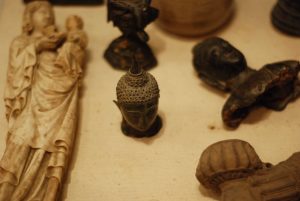
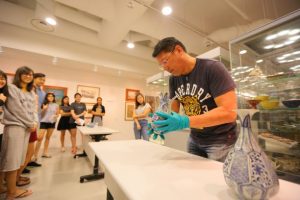
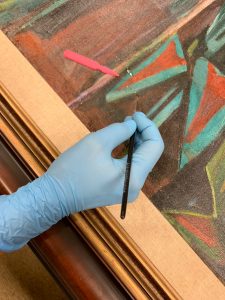
A colossal collection also means that significant attention is required to ensure the works’ longevity – no mean feat if one considers the range of artefact types that the museum possesses, from ceramics and oil paintings, to stoneware and fabrics. Set up in 2008, the Conservation Studio currently supports the necessary preventive conservation work for the museum’s collections, which also includes consultation work on the Museum’s maintenance and various environmental conditions. Working in tandem with the Conservations teams is the Collections arm of the Museum whose labour involves documenting, accessioning, and managing the cycles of storage and display.
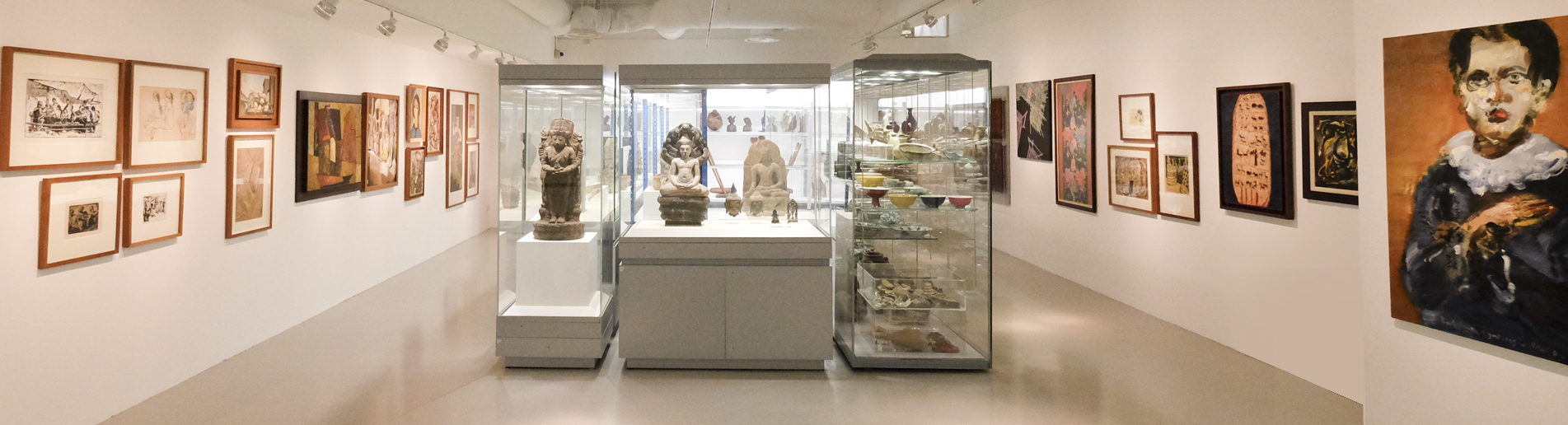
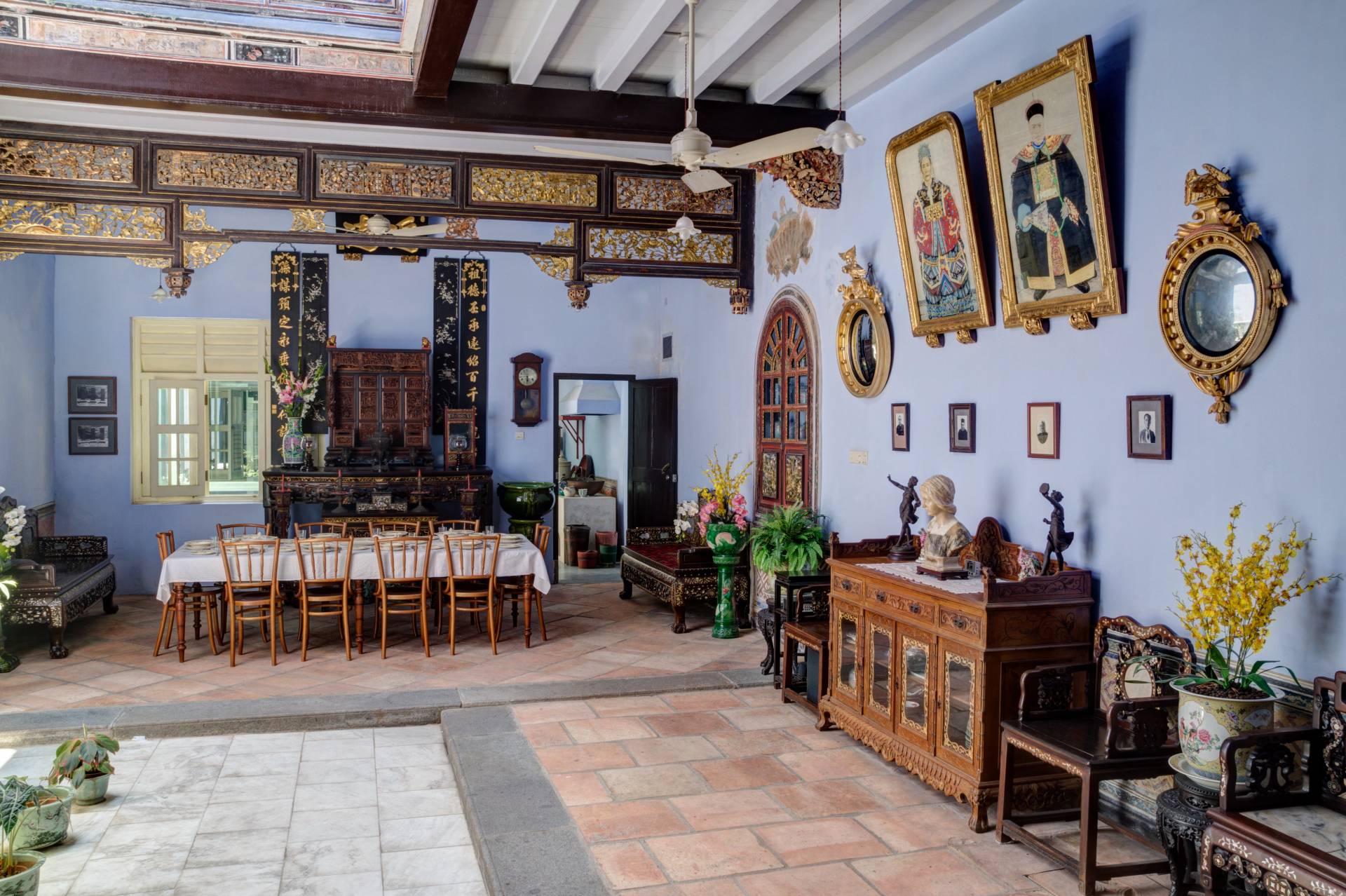
All this is, of course, not immediately obvious when one approaches the museum for the first time. To reference an equally established British television show a mere eight years younger than the museum: it’s bigger on the inside3. The collections are spread across the various levels (and over to the NUS Baba House located at 157 Neil Road), corresponding to their respective permanent exhibitions – the South and Southeast Asian collection in Radio Malaya, Lee Kong Chian collection in the eponymous Lee Kong Chian Gallery, Ng Eng Teng’s collection in the show 1 + 1 = 1, and the Straits Chinese collection at the Baba House – and are also housed in storage within the museum and externally. Tucked at a corner on the top floor of the museum is also the aforementioned Conservation Studio opposite an impressive mural by Ng Eng Teng titled Asian Symphony, that serves as a crucial exemplification of the Studio’s innovative research and work.
Material objects and spaces are also not the only things obscured from the public’s eye. Much of the work that preps the foundation for other crucial museological efforts, particularly in the areas of exhibitions, curation and therefore programmes, occurs behind-the-scenes. For instance, the elegant displays of valuable Cheong Soo Piengs and Jaafar Latiffs in the Radio Malaya exhibition conceal months of preparation before its presentation. If pictures could talk, these would speak of the painstaking and meticulous undertakings of both the Collections and Conservations teams, where the former would manage and keep track of artwork movements from storage to gallery space, and the latter would proceed to assess each work for damage, or to judge if the pieces have rested sufficiently away from the disturbances of light, dust, humidity and dirt.
This is not to say that the other capacities of the Museum slumber while this happens. All at once, the different roles in the Museum, from the Curatorial, to Outreach and Operations departments, work simultaneously with Collections and Conservations like a deftly constructed loom to weave intricate and complex tapestries of exhibitions, prep-rooms and programmes. Intensive coordination, but also layers of reflexivity, invisible relationships and pointed criticality fasten the threads and bind the trajectories and aims of the Museum firmly. Perhaps where the two Cs of the NUS Museum form its bulwark, behind them is one more equally obscured but no less embedded C that pervades every aspect of what constitutes the Museum’s labour; these are exercises of great care (cf. curare) and a starting point from which all of museological work flows.
[1] Michael Sullivan. ‘Art & the University Malay’, in The Singapore Artist, Journal of the Singapore Art Society, vol. 1, no. 3, March 1955 (Singapore: Singapore Art Society, 1955), pp. 4, 6.
[2] Ahmad Mashadi. ‘A University Museum: Contexts and Practice’, in Camping and Tramping Through the Colonial Archive: The Museum in Malaya (NUS Museum, 2011), p. 6.
[3] Of course, harking to Doctor Who which premiered on BBC in 1963.
18 November 2025
16 May 2025
NUS Baba House to undergo two years of conservation works
Enthusiasts can look forward to a slate of programmes ahead of and during the temporary closure.
6 October 2023
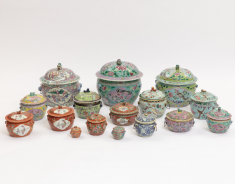
NUS Museum receives largest-ever donation of Straits Chinese artefacts
"Collected by Mrs Alice Tan over a 30-year period, the donated artefacts will contribute to a deeper study of the impact of Straits Chinese culture in Singapore and the region, and provide broadened avenues for interdisciplinary collaborations."
15 August 2023
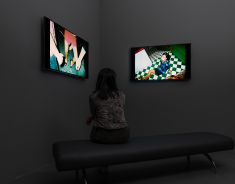
From personal photo collection to exhibition: NUS Museum's latest showcase features visual narratives by 9 members of the NUS community
Titled Photography Journal Open Call (PJOC), the exhibition presents an eclectic collection of photographic works by nine NUS students, alumni artists and academic staff.
12 April 2021
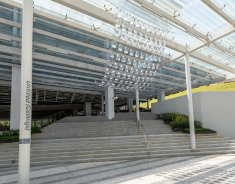
Nurturing a creative campus through public art advocacy
The Public Art Initiative was launched to underscore NUS’ commitment to deepening the role of public art in holistic, interdisciplinary and broad-based education.

8 October 2019
October at the NUS Museum: between war and the artist, art and the tropics
This October, NUS Museum unveils two new exhibitions surveying the art historical in the region from distinct positions.

31 May 2019
New exhibition from Gilles Massot to be unveiled at NUS Museum
“…you have to lose your way to find yourself in the right place” presents the works of Singapore-based French artist, Gilles Massot. Featuring a selection of photographs, videos, sketches and writings from his extensive corpus of works.

14 February 2019
Glossaries of the Straits Chinese Homemaking
Following eleven years of giving glimpses of a Peranakan family’s domestic life in the early 20th century, NUS Baba House presents the exhibition Glossaries of the Straits Chinese Homemaking.
22 March 2018
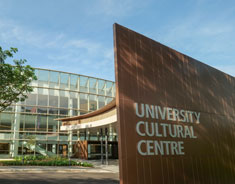
NUS' cultural icon refreshed for a new generation
The University Cultural Centre's first major renovation improves the high standard of guest comfort, efficiency and production possibilities.
3 February 2017
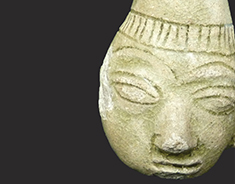
Exhibition: From the Ashes: Reviving Myanmar Celadon Ceramics
NUS Museum presents ongoing attempts to revive the technology of making ash-glazed ceramics in Myanmar.

23 November 2016
Exhibition: Between the brush lines of Lim Tze Peng
Solo exhibition at NUS Museum considers 70-year oeuvre of Singapore's oldest living artist.

1 November 2016
Book Launch: NUS Baba House launches inaugural guidebook
From architecture to social history, book reveals the myriad facets of Singapore's only restored Straits Chinese family home.
21 October 2016
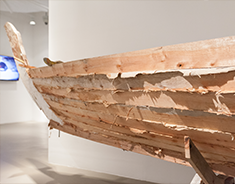
Exhibition: Looking within - What makes an exhibition?
NUS Museum presents exhibition introspecting into curatorial impulses and the exhibitionary medium.
1 July 2016
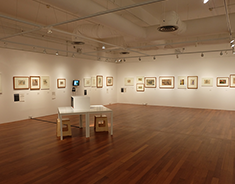
Exhibition: "Who wants to remember a war?"
NUS Museum draws on war posters, woodcuts and drawings to explore contemporary narratives of the Vietnam War.

10 May 2016
Award: NUS Museum wins inaugural award for innovative museological practice
International Committee of University Museums and Collections recognises efforts to facilitate conversation between audiences and exhibitions.
14 April 2016
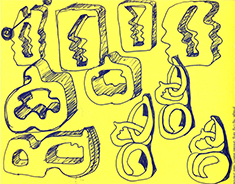
Exhibition: Figuring Ng Eng Teng
NUS Museum reveals unstudied elements and works from the late Cultural Medallion recipient’s practice.
Student Voices
The two ‘C’s of the NUS Museum
What work goes into creating the beautiful displays in the NUS Museum’s exhibitions? Often hidden from the public eye, collections and conservation are both crucial arms of any museum that work in tandem to support the museum’s visible efforts in exhibitions and programmes. Mary Ann Lim, Outreach Executive at the NUS Museum shares more about the hard work that goes behind caring for each and every artefact to ensure their longevity for generations after to enjoy.
What work goes into creating the beautiful displays in the NUS Museum’s exhibitions? Often hidden from the public eye, collections and conservation are both crucial arms of any museum that work in tandem to support the museum’s visible efforts in exhibitions and programmes. Mary Ann Lim, Outreach Executive at the NUS Museum shares more about the hard work that goes behind caring for each and every artefact to ensure their longevity for generations after to enjoy.
Like any art institution, a cornerstone of the NUS Museum’s scaffolding is its vast collection. Exceptional to the NUS Museum however, is its status as a university museum which has shaped its collections and collecting strategies over the years. Consisting of over 8,000 artefacts and artworks across four categories, the Museum finds deep roots in its history spanning over 60 years. Inaugurated in 1955 as the University Art Museum at the then-University of Malaya located in Singapore, the first curator Michael Sullivan introduced the collections as a teaching collection. In an early 1959 document titled University of Malaya Art Museum, Sullivan outlined the aims of the museum and its collections, which were to provide “a centre for the study and enjoyment of art”, facilitate “research into the art and archaeology of Southeast Asia”, complementing the art history programme and gathering a “representative collection of art of those civilisations that have chiefly contributed to the creation of Malayan culture”1.
Since then, the Museum and its collections have undergone many changes: divided, transferred temporarily, recalled, integrated and separated, amalgamated with other collections, and eventually expanded into its current form2. Two significant moments in its history are worth mentioning here. The first, was Singapore’s separation from Malaysia in 1965, after which the collection was divided between the two universities across national lines. The second, is the merger of the post-separation University of Singapore with Nanyang University in 1980 which saw the Lee Kong Chian Collection consisting of materials from Chinese art history being adjoined to the NUS Museum’s collections.
A colossal collection also means that significant attention is required to ensure the works’ longevity – no mean feat if one considers the range of artefact types that the museum possesses, from ceramics and oil paintings, to stoneware and fabrics. Set up in 2008, the Conservation Studio currently supports the necessary preventive conservation work for the museum’s collections, which also includes consultation work on the Museum’s maintenance and various environmental conditions. Working in tandem with the Conservations teams is the Collections arm of the Museum whose labour involves documenting, accessioning, and managing the cycles of storage and display.
All this is, of course, not immediately obvious when one approaches the museum for the first time. To reference an equally established British television show a mere eight years younger than the museum: it’s bigger on the inside3. The collections are spread across the various levels (and over to the NUS Baba House located at 157 Neil Road), corresponding to their respective permanent exhibitions – the South and Southeast Asian collection in Radio Malaya, Lee Kong Chian collection in the eponymous Lee Kong Chian Gallery, Ng Eng Teng’s collection in the show 1 + 1 = 1, and the Straits Chinese collection at the Baba House – and are also housed in storage within the museum and externally. Tucked at a corner on the top floor of the museum is also the aforementioned Conservation Studio opposite an impressive mural by Ng Eng Teng titled Asian Symphony, that serves as a crucial exemplification of the Studio’s innovative research and work.
Material objects and spaces are also not the only things obscured from the public’s eye. Much of the work that preps the foundation for other crucial museological efforts, particularly in the areas of exhibitions, curation and therefore programmes, occurs behind-the-scenes. For instance, the elegant displays of valuable Cheong Soo Piengs and Jaafar Latiffs in the Radio Malaya exhibition conceal months of preparation before its presentation. If pictures could talk, these would speak of the painstaking and meticulous undertakings of both the Collections and Conservations teams, where the former would manage and keep track of artwork movements from storage to gallery space, and the latter would proceed to assess each work for damage, or to judge if the pieces have rested sufficiently away from the disturbances of light, dust, humidity and dirt.
This is not to say that the other capacities of the Museum slumber while this happens. All at once, the different roles in the Museum, from the Curatorial, to Outreach and Operations departments, work simultaneously with Collections and Conservations like a deftly constructed loom to weave intricate and complex tapestries of exhibitions, prep-rooms and programmes. Intensive coordination, but also layers of reflexivity, invisible relationships and pointed criticality fasten the threads and bind the trajectories and aims of the Museum firmly. Perhaps where the two Cs of the NUS Museum form its bulwark, behind them is one more equally obscured but no less embedded C that pervades every aspect of what constitutes the Museum’s labour; these are exercises of great care (cf. curare) and a starting point from which all of museological work flows.
[1] Michael Sullivan. ‘Art & the University Malay’, in The Singapore Artist, Journal of the Singapore Art Society, vol. 1, no. 3, March 1955 (Singapore: Singapore Art Society, 1955), pp. 4, 6.
[2] Ahmad Mashadi. ‘A University Museum: Contexts and Practice’, in Camping and Tramping Through the Colonial Archive: The Museum in Malaya (NUS Museum, 2011), p. 6.
[3] Of course, harking to Doctor Who which premiered on BBC in 1963.


News
18 November 2025
16 May 2025
NUS Baba House to undergo two years of conservation works
Enthusiasts can look forward to a slate of programmes ahead of and during the temporary closure.
6 October 2023
NUS Museum receives largest-ever donation of Straits Chinese artefacts
"Collected by Mrs Alice Tan over a 30-year period, the donated artefacts will contribute to a deeper study of the impact of Straits Chinese culture in Singapore and the region, and provide broadened avenues for interdisciplinary collaborations."
15 August 2023
From personal photo collection to exhibition: NUS Museum's latest showcase features visual narratives by 9 members of the NUS community
Titled Photography Journal Open Call (PJOC), the exhibition presents an eclectic collection of photographic works by nine NUS students, alumni artists and academic staff.
12 April 2021
Nurturing a creative campus through public art advocacy
The Public Art Initiative was launched to underscore NUS’ commitment to deepening the role of public art in holistic, interdisciplinary and broad-based education.
8 October 2019
October at the NUS Museum: between war and the artist, art and the tropics
This October, NUS Museum unveils two new exhibitions surveying the art historical in the region from distinct positions.
31 May 2019
New exhibition from Gilles Massot to be unveiled at NUS Museum
“…you have to lose your way to find yourself in the right place” presents the works of Singapore-based French artist, Gilles Massot. Featuring a selection of photographs, videos, sketches and writings from his extensive corpus of works.
14 February 2019
Glossaries of the Straits Chinese Homemaking
Following eleven years of giving glimpses of a Peranakan family’s domestic life in the early 20th century, NUS Baba House presents the exhibition Glossaries of the Straits Chinese Homemaking.
22 March 2018
NUS' cultural icon refreshed for a new generation
The University Cultural Centre's first major renovation improves the high standard of guest comfort, efficiency and production possibilities.
3 February 2017
Exhibition: From the Ashes: Reviving Myanmar Celadon Ceramics
NUS Museum presents ongoing attempts to revive the technology of making ash-glazed ceramics in Myanmar.
23 November 2016
Exhibition: Between the brush lines of Lim Tze Peng
Solo exhibition at NUS Museum considers 70-year oeuvre of Singapore's oldest living artist.
1 November 2016
Book Launch: NUS Baba House launches inaugural guidebook
From architecture to social history, book reveals the myriad facets of Singapore's only restored Straits Chinese family home.
21 October 2016
Exhibition: Looking within - What makes an exhibition?
NUS Museum presents exhibition introspecting into curatorial impulses and the exhibitionary medium.
1 July 2016
Exhibition: "Who wants to remember a war?"
NUS Museum draws on war posters, woodcuts and drawings to explore contemporary narratives of the Vietnam War.
10 May 2016
Award: NUS Museum wins inaugural award for innovative museological practice
International Committee of University Museums and Collections recognises efforts to facilitate conversation between audiences and exhibitions.
14 April 2016
Exhibition: Figuring Ng Eng Teng
NUS Museum reveals unstudied elements and works from the late Cultural Medallion recipient’s practice.
Leave a comment