Hands-on Object-based learning with Artefacts
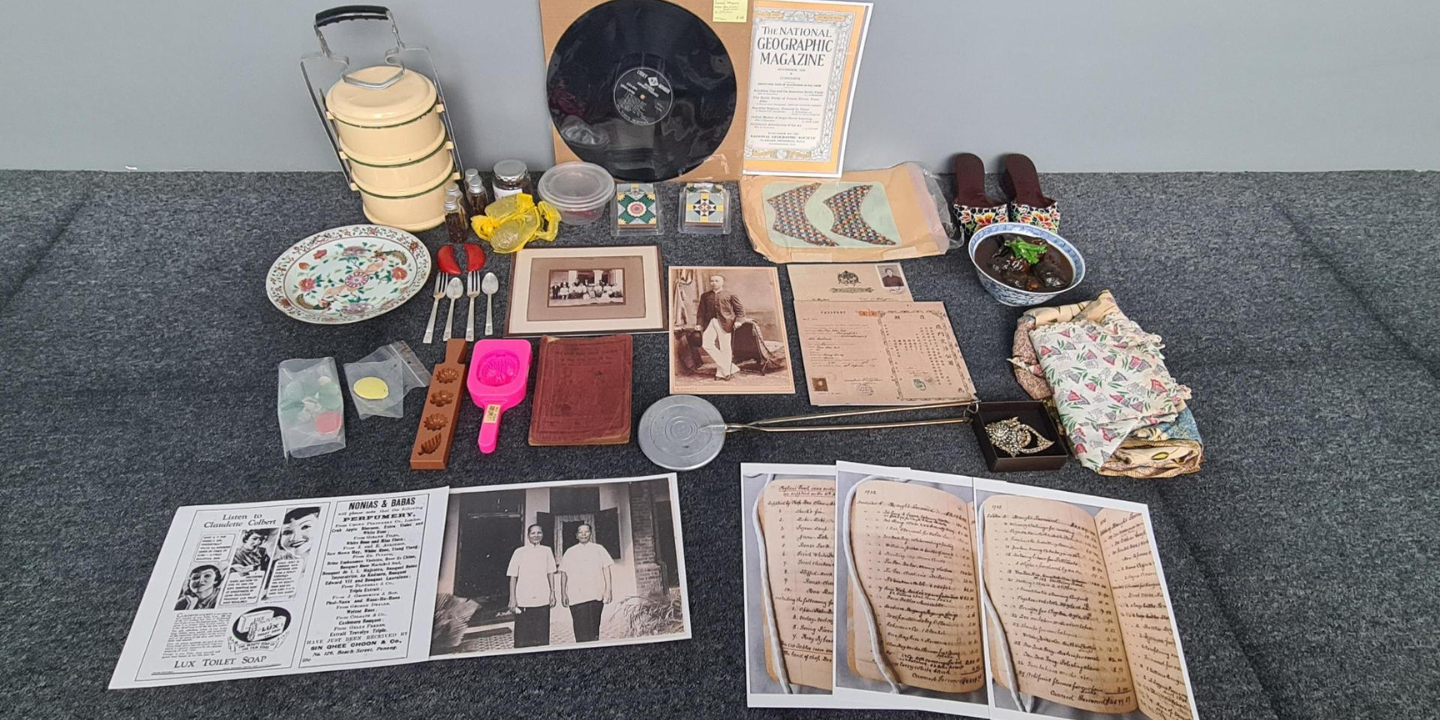
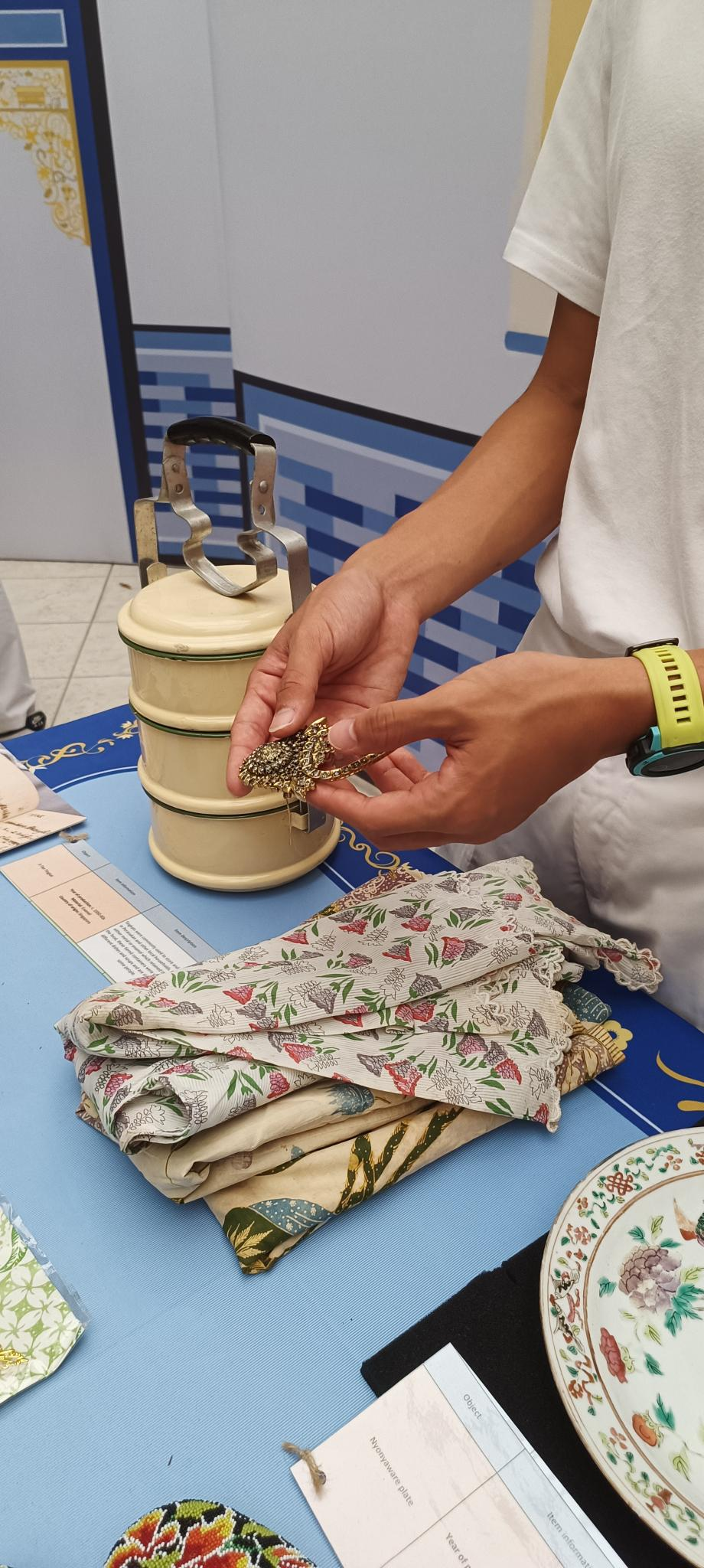
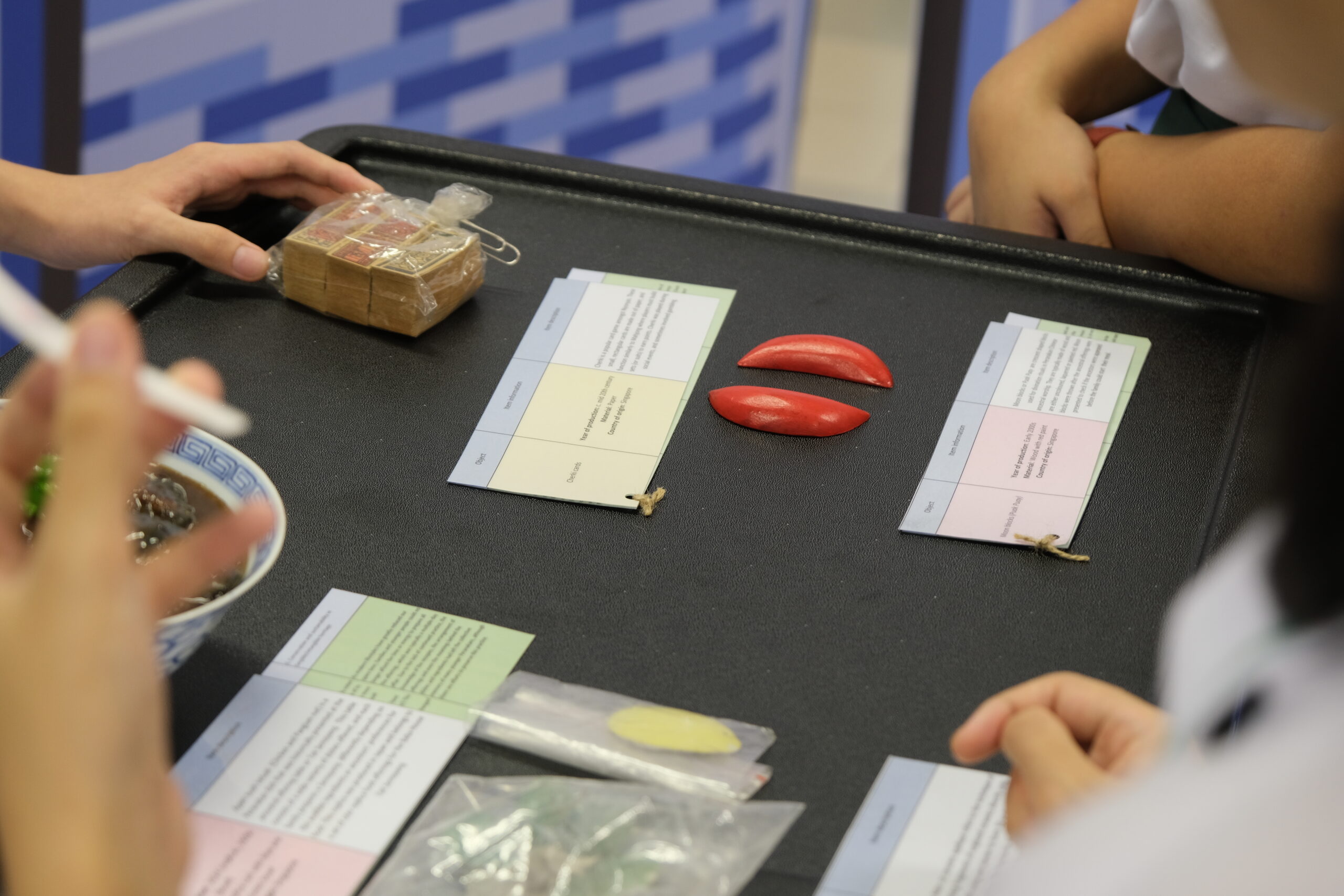
One unique aspect of the programme was the opportunity to interact with artefacts from the Travelling Museum Box. Under supervision, students got the rare opportunity to handle antiques and discovered how object analysis can help them understand culture and history in new ways.
Following a 3-step methodology of formal, interpretive and critical analysis, the students practiced how to conduct their own object analysis and more importantly, forming their own interpretations about these artefacts and their relationship with historical and contemporary Peranakan Chinese life.
Diversifying from the material splendor and glamour synonymous with the Peranakan Chinese, the travelling
collection emphasizes the importance of humble, everyday objects and documents such as books, financial records
and even soap advertisements in understanding the complex multicultural influences and tensions amongst
Peranakans of the 19th century, and how these factors impacted their material and immaterial culture.
This experience has taught me a lot especially since I didn't
really have much knowledge on it to begin with. It was really
fun because the whole experience was very interesting being set
in a museum vibe, also more interactive as we got to touch some
of the artefacts there, while in regular museums, that's
impossible. So, the interactive part really helped me to learn
more about the Straits Chinese culture and heritage.
Afrina, Secondary 2, Zhonghua Secondary
The NUS Baba House Student Ambassador Programme has helped me to
understand more about Straits Chinese culture and heritage. It
has really opened my eyes to the depth and extent about the rich
culture and heritage of the Straits-born Chinese and led me to
understand about their origins and intangible heritage that is
worth conserving.
Richard, Secondary 2, Raffles Institution
Gamifying Museum Learning: Heritage Havoc
Alongside object-based learning, students were engaged through gamified learning by playing Heritage Havoc, a curatorial card game developed in-house by the Baba House team.
The goal of the game is to acquire artefacts and locate them in Baba House to form their own themed tours or exhibitions. Along the way, students would face challenges ranging from other players ‘stealing’ their artefacts to ‘havocs’: events based on real environmental threats to artefacts such as flooding and termites that could potentially force them to discard large portions of their objects.
The game sought to recap the students’ knowledge within a friendly but competitive environment.
Players were
encouraged to think strategically, creatively and spontaneously as their object selections changed
unpredictably, and the game was remarked as the most popular and memorable activity for the students.
My favourite thing about this program were the thoughtful and entertaining programs and games put up by
NUS Baba House, such as their meticulously designed card game (Heritage Havoc) and the presentation with
the artefacts.
Heng Li, Secondary 2, Zhonghua Secondary

Sharing Knowledge as Student Guides
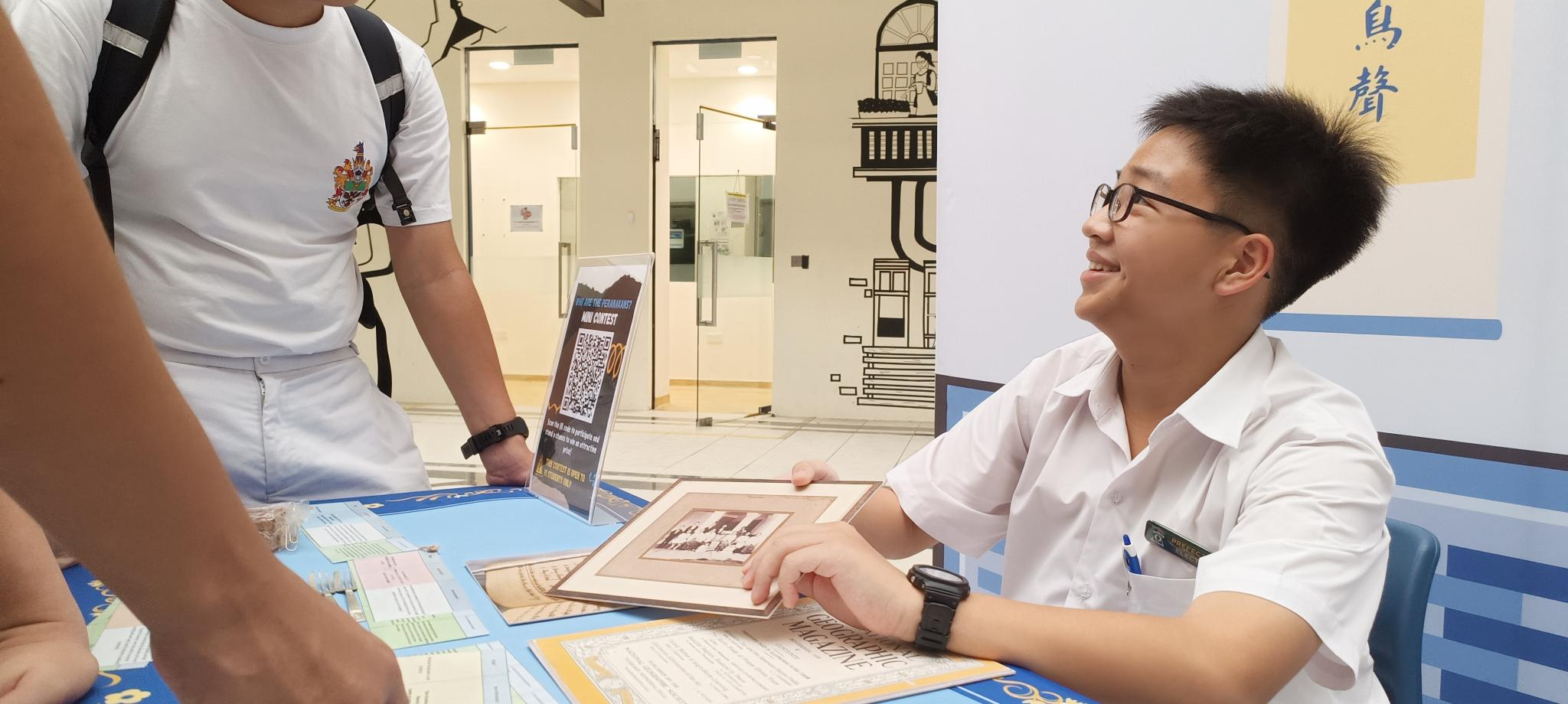
These sessions culminated in student-led tours utilizing the Travelling Museum Box and Travelling Straits Saloon, a mobile exhibition space based off the NUS Baba House’s Reception Hall. The Travelling Straits Saloon helped provide an immersive setting and dedicated space for the student ambassadors to conduct their tours and grounded the objects in the context of the house. The students crafted their own tour scripts covering the different objects and presented them to their respective institutions.
Students from Zhonghua Secondary School presented their objects to peers, teachers and parents at their annual Racial Harmony Day event, speaking about the multicultural origins and influences of the artefacts and community in line with the occasion. Likewise, the Raffles Institution students presented the artefacts as part of the Marco Polo Programme, focusing on the impacts of commercialization and commodification through their object presentations as part of the programme’s aim to delve deeper into history and social studies.
I enjoyed imparting the valuable knowledge that I learnt during my time at NUS Baba House and seeing the
look on people’s faces when they’ve been enlightened on the topic of the Peranakans
Christoph, Secondary 2, Raffles Institution

NUS and Community Involvement
Beyond the secondary school community, this programme also engaged with 8 selected NUS Student Facilitators and the Baba House Docents who provided important support during the sessions.
Undergoing training from January to February 2024, these NUS students helped facilitate the discussions
and
activities between the secondary school learners whilst providing their own knowledge on the culture and
subject.
Alongside them, the NUS Baba House docents also shared their experiences with the culture, many of whom
are
Peranakan Chinese, and gave the students tips and tricks on conducting informative but engaging presentations
from their many years of experience.
My favourite thing about the programme was the board game we played together with the facilitators on the
2nd session of the learning journey. The game was to place the artefacts, somewhere where it usually
wouldn’t be, and the reason why we would want to place it there. It was really interesting, and
every
pair was being so competitive, so it was really memorable and fun! Hence why it was my favourite!
Afrina, Secondary 2, Zhonghua Secondary
Of course it’s the enthusiastic docents at Baba House! They were at once welcoming and engaging,
and they
sustained my attention span!
Hongkai, Secondary 2, Raffles Institution , in response to
“What was
your favourite part about the programme?”
What’s Next?
Keep an eye out for our next special feature spotlighting the student voices who have been featured in this edition on our socials and newsletter.
The NUS Baba House is actively seeking for participants who are interested in this programme. While the full programme is only for upper secondary and pre-university institutions, faculty members interested in using specific parts of this programme for their classes are welcome to reach out to the team.
If you would like to learn more or are interested in this programme, feel free to reach out to us at
babahouse@nus.edu.sg
The Baba House Student Ambassador Programme is supported by the Cultural Matching Fund.