Post-Script, a moving image and conversation series, invites audiences to think of the archive as a living, shifting space. Across three sessions, it extends the inquires seeded in the Museum’s ongoing exhibition, Radio Malaya: abridged conversations about art, and associated prep-room projects.
The prep-room is a space for experimentation where ideas are tested, archives are revisited, and exhibition-making becomes an open, process-driven dialogue. Many of these projects now find renewed life in the Radio Malaya permanent exhibition, where traces of their research continue to resonate beyond their conclusions.
Post-Script returns to these projects in a new form, using the moving image as a medium to revisit and reframe their themes. Each session is co-programmed with past prep-room collaborators, engaging with the central concerns of the original research—from the fluidity of identity and the movement of bodies across borders, to feminist re-readings of the archive, to the remixing and re-contextualisation of cultural memory.
Session 1: The Body, An Ocean: Revisiting the Jimmy Ong Archive
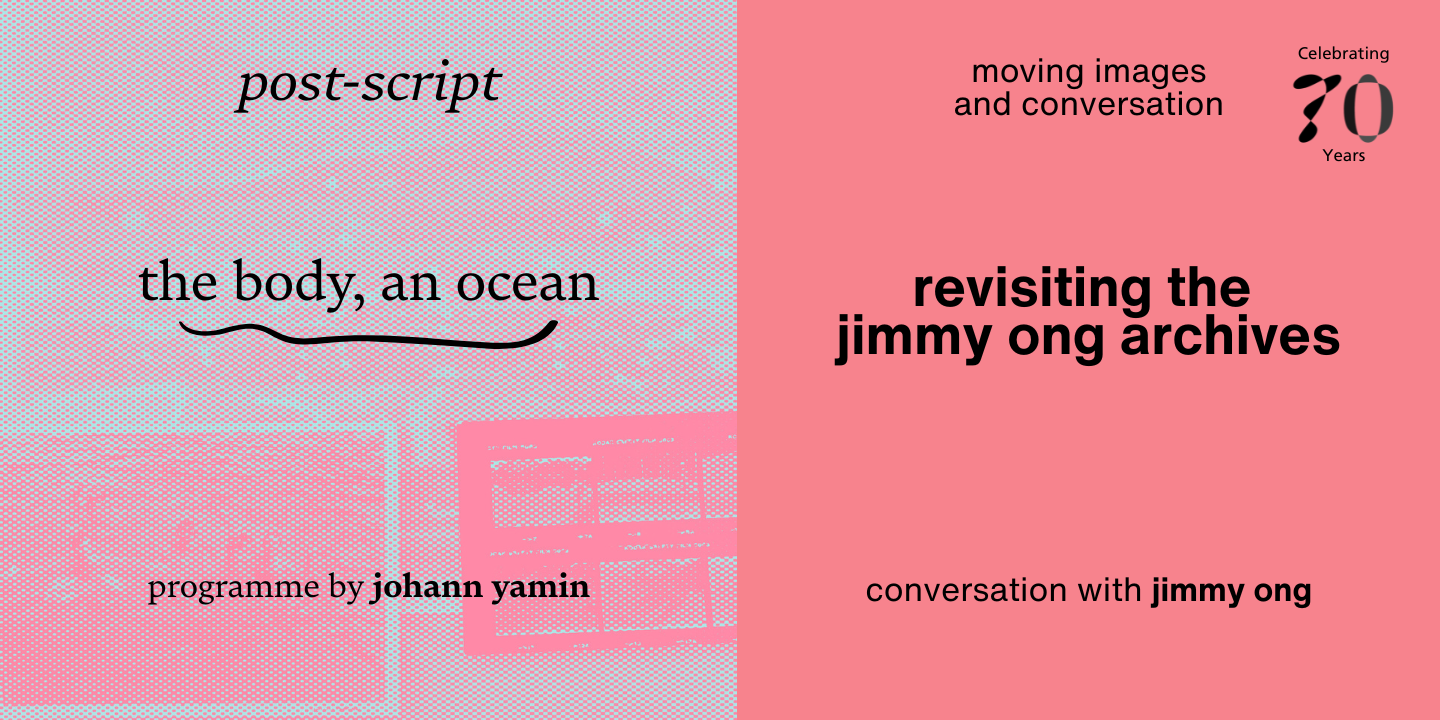 Programme by Johann Yamin
Date: 2 Sept 2025, Tuesday
Time: 7pm – 8.30pm
Venue: NUS Museum
Free with registration
Prelude
In Visual Notes: Actions and Imaginings (2019-2022), prep-room collaborator Johann Yamin closely examines the work of modern and contemporary artist Jimmy Ong, whose practice interrogates the fluidity of gender, persona, and identity. Archival materials from Ong are currently situated in Radio Malaya: abridged conversations about art in the form of photographs—Shoebox series (Excerpt). It offers a glimpse into the artist’s life during the 1980s and 1990s, and is nestled amongst traces of performance art pieces such as Amanda Heng’s Let’s Chat (1996 – Present) and Jose Tence Ruiz’s Without It, I Am Invisible (1993). In this section of the exhibition, intimate memories are made public through physical and photographic documentation. The body is a site of exploration, and the viewer, its explorer.
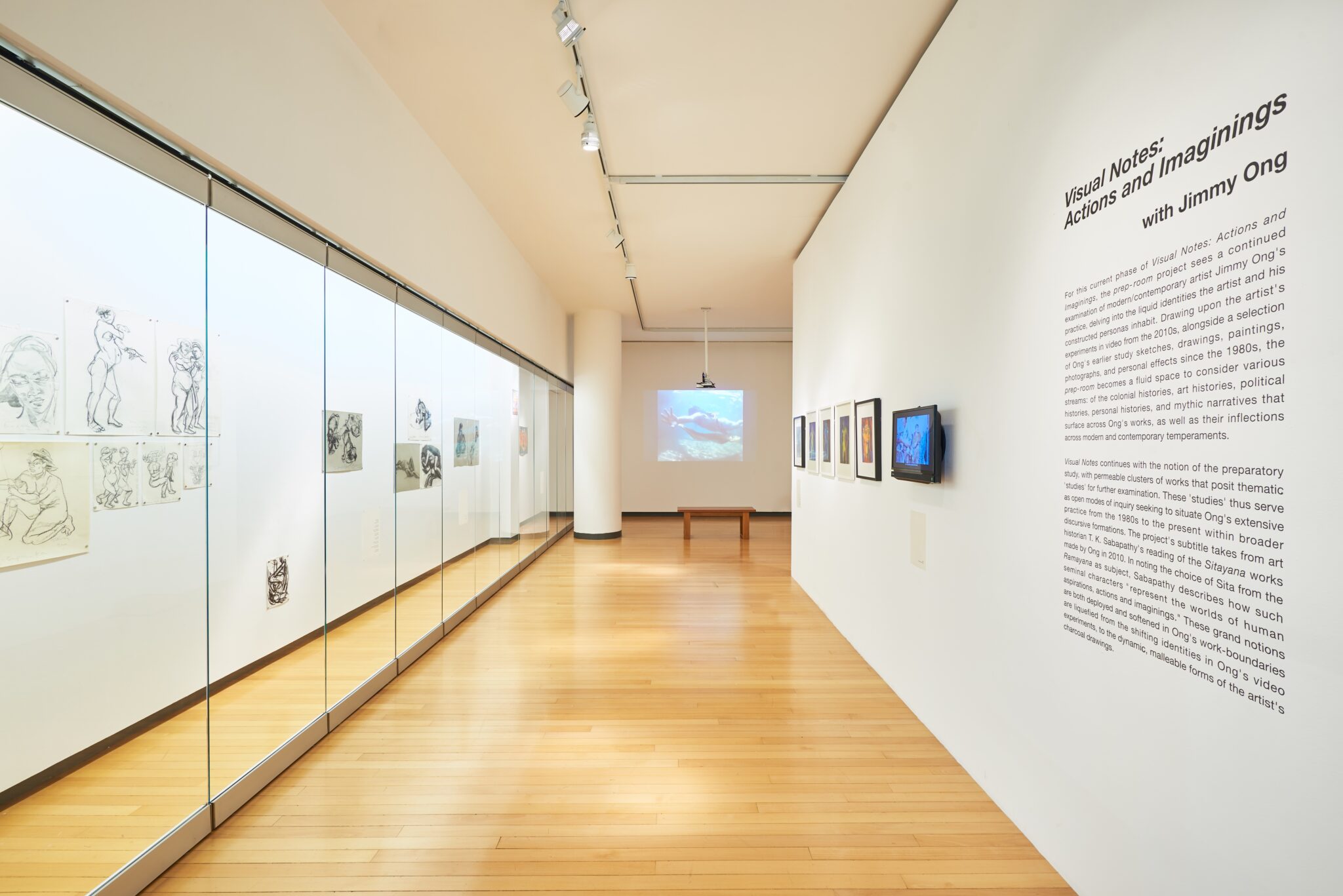
Installation view, prep-room: Visual Notes: Actions and Imaginings, NUS Museum, 2020.
The Body, An Ocean
In this spirit, the first Post-Script session titled The Body, An Ocean navigates the intersections of identity, migration, and embodiment, further exploring key threads in Jimmy Ong’s artistic practice. The selected works more broadly contend with the movement of bodies in relation to political and spatial constraints, considering abstraction as a tactic for both sharing and obscuring knowledge. Here, fluidity is explored through the body in multiple forms: the choreography of the human body, the artist’s evolving body of work, and flows of migration across the body of water between Singapore and Indonesia, where Ong’s practice has been based.
These themes unfold through video art and moving images, Umbilical (2012) and Melas (2012) by Jimmy Ong, Lazarus (2023) by Kang Seung Lee and B.A.T.A.M (Bila Anda Tiba Anda Menyesal) – When You Arrive You’ll Regret (2020) by Tita Salina and Irwan Ahmett, drawing connections between personal identity and geographic, political, and spatial borders.
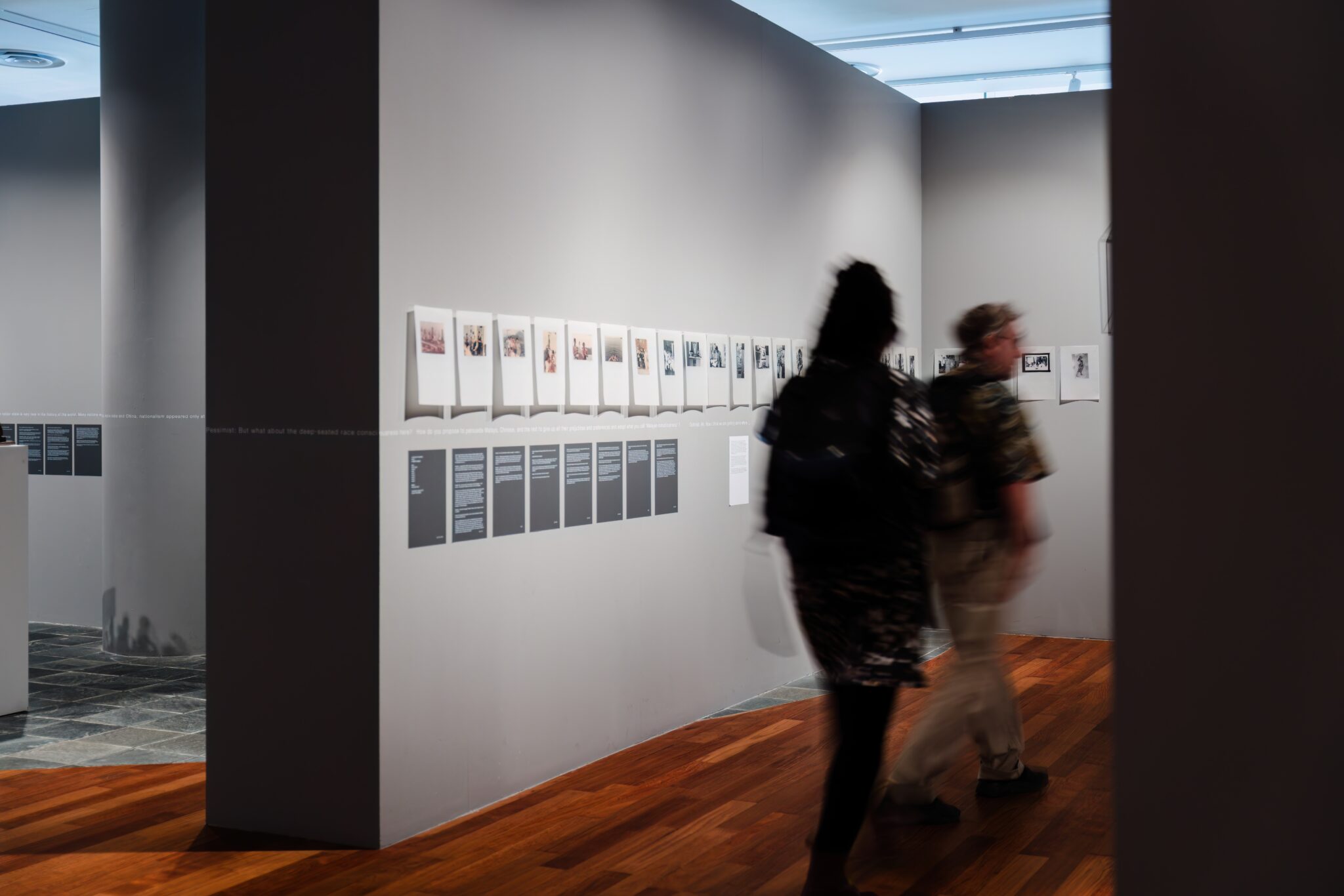
Installation view, Radio Malaya: abridged conversations about art, NUS Museum, 2024. Featured: Jimmy Ong, Shoebox series (Excerpt), c.1983 – 1988; Photographs, various sizes.
Commissioned Essay
The Body, An Ocean by Johann Yamin
*The opinions expressed in this essay are the author’s own and do not reflect the views of NUS Museum.
About the Speakers
Johann Yamin’s (he/they) current research and writing focus on digital cultures from the contexts of Singapore and its broader region of Southeast Asia, with an emphasis on the materiality of communication infrastructures and their entanglements with colonial histories. He holds an MA in Media Studies from The New School, New York with a graduate minor in Transmedia & Digital Storytelling, and a BSocSci in Communications and New Media from the National University of Singapore with undergraduate minors in Art History and Film Production.
As an art worker, he was a 2020 Rapid Response for a Better Digital Future Fellow at Eyebeam for co-organising the online project Pulau Something, a Curatorial & Research Resident at the Singapore Art Museum in 2021, and the recipient of a Rhizome Microgrant in 2023. Johann was a Curatorial Intern with NUS Museum in 2017-2018, and a part-time Curatorial Assistant in 2019-2020.
Jimmy Ong (b. 1964, Singapore) graduated from the Pennsylvania Academy of Fine Arts in Philadelphia, USA in 1992, and is regarded as one of the pre-eminent artists of his generation.
Since the 1980s, Ong has been recognised for his monumental figurative charcoal works on paper. His drawings often focus on traditional Confucian philosophical themes like filial piety, ancestral worship, his own complex familial relationships and struggles with accepted gender identities and roles (Chinatown Suite, c.1980-1990). In recent years, he has started to explore historical political figures and events, focusing on the colonial history in Southeast Asia (Sitayana, 2010). He has exhibited extensively locally and internationally. His artworks are in the permanent collections of NUS Museum and the National Gallery Singapore, Deutsche Bank AG, amongst other private and corporate collections.
Ong currently works between Yogyakarta and Singapore.
Session 2: after After Ballads: Errant Footnotes
 Programme by Fyerool Darma
Date: 1 Oct 2025, Wednesday
Time: 7pm – 8pm
Venue: NUS Museum
Free with registration
Prelude
In After Ballads (2016–2018), artist Fyerool Darma explored the fluid boundaries between fact and fiction, and how narratives shape contemporary consciousness. Conceived as an evolving prep-room project, it unfolded in multiple phases where objects, texts, and images were continually introduced, withdrawn, and remixed.
Drawing on literary foundations, museological artefacts, and allegorical displays, Fyerool treated the exhibition itself as a space of performance—one that unsettled the authority of historical accounts while proposing alternative, more fragmentary ways of reading. Rather than offering closure, After Ballads foregrounded translation, misidentification, and glitching as tactics for thinking through the legacies of (de)coloniality. Visitors encountered shifting constellations of material, where absence was as significant as presence, and where the line between the archive and imagination was deliberately blurred.
Today, traces of this inquiry remain in the Museum’s ongoing exhibition, Radio Malaya: abridged conversations about art through Fyerool’s P♥rtraire Familiya (2023). Positioned among fragments of other histories, it stands as a reminder of the gaps that persist in our knowledge of archival material, prompting us to ask: where do these materials come from, and how have their cultural representations been re-contextualised, remixed, or estranged over time?
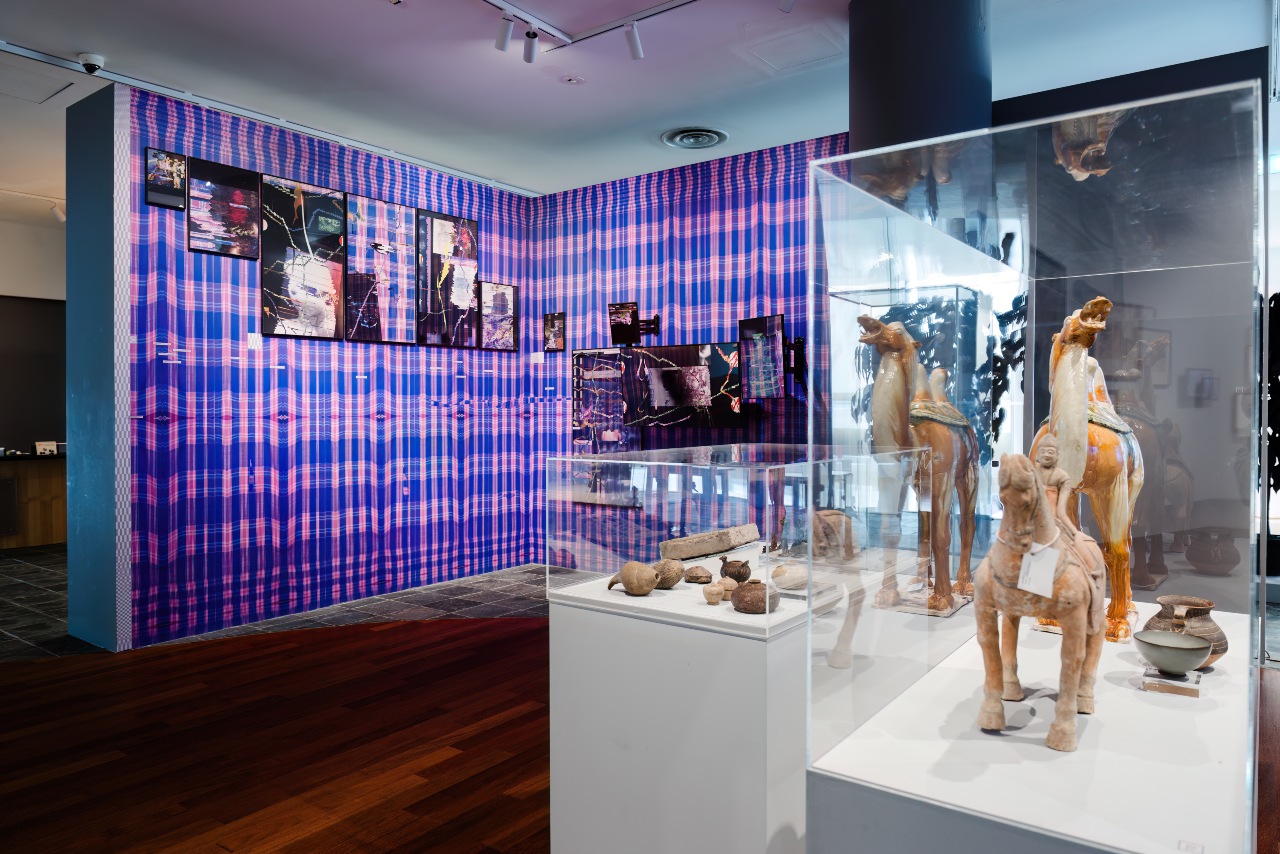
(Background) Fyerool Darma, P♥rtraire Familiya, 2023; Polymethyl methacrylate (Acrylic Tiger), epoxy resin (NicPro), chameleon carbon fibre polyvinylchloride and polyacrylate adhesive (Vvivid XPO) on anodized aluminium alloy, polyurethane varnish on digital print on polyethylene vinyl (Oracle), honeycomb retroreflective tape (Grip-On), non metalized reflective tape (Steve & Leif) on polymethyl methacrylate (Acrylic Tiger), 400 x 300 cm.
Commissioned Essay
after After Ballads: Errant Footnotes
In every archive, there are notes that slip the page, citations that wander off, and annotations that refuse to resolve. This session gathers four such “errant footnotes,” videos that speak from the margins of history rather than its main text.
Khairullah Rahim’s Terang Benderang (Clear and Vivid) (2024, 12 min 30 sec) opens in overexposed opacity, where survival dissolves into pixelated light. From this rupture, Fyerool Darma’s The Poseur (2019, 5 min 43 sec) emerges: citation becomes embodied, a figure misperforming cultural scripts until mimicry turns into refusal. P4thf!nd3r (2023-2024, 17 min 19 sec) follows, fragmenting terrain into corrupted searches, mapping a landscape of digital errancy and lost metadata. Finally, Priyageetha Dia’s Night Shift(2025,15 min 35 sec) closes in spectral quietude: a nocturnal drift across unseen infrastructures where labour and shadow blur.
These films do not annotate the archive—they haunt it, wandering across atmosphere, code, body, and screen until nothing remains but the errant glow of what escapes.
About the Artist
Fyerool Darma (b. 1987, Singapore) integrates sound, video, new media, sculpture, texts and craft practices into his object and material experimentations, which juxtapose the aesthetics and ideology of modernism alongside Southeast Asian cultures, histories, aesthetics, and politics. He has gradually developed a complex visual vocabulary that draws from sources including tangible and intangible Malay heritage, archives, the Internet, literature, popular culture, the history of craft, visual arts, manufacturing, and manual labour.
Darma’s works have been exhibited at the Centre of Heritage Art and Textiles, Hong Kong (2024); La Trobe Art Institute, Australia (2023); NTU ADM Gallery, Singapore (2023); Seoul MediaCity Biennale, Seoul Art Museum (2023); Singapore Art Museum (2023); National Gallery Singapore (2022-23), among others.
Session 3: Jemput…Tengok: Revisiting Yang Tidak Lupa
 Programme by Nurul Kaiyisah
Date: 22 Oct 2025, Wednesday
Time: 7pm – 8.30pm
Venue: NUS Museum
Free with registration
Prelude
In Yang Tidak Lupa, prep-room collaborator Nurul Kaiyisah revisits archival material through feminist lenses, tracing feminine identities in Malaya’s art world from the 1960s to 1990s. Intimate letters between women artists are framed as sites where broader cultural erasures and silences surface, revealing how official histories often overlook their artistic and intellectual contributions. The interventions developed through this take inspiration from Radio Malaya: abridged conversations about art as a way to reinterpret portrayals of women’s bodies and female artistry left out of national narratives. It confronts archival absence not by lamenting it, but by creatively re-inscribing memory, critically fabulating alternative narratives, and questioning the structures that dictate historical amnesia.
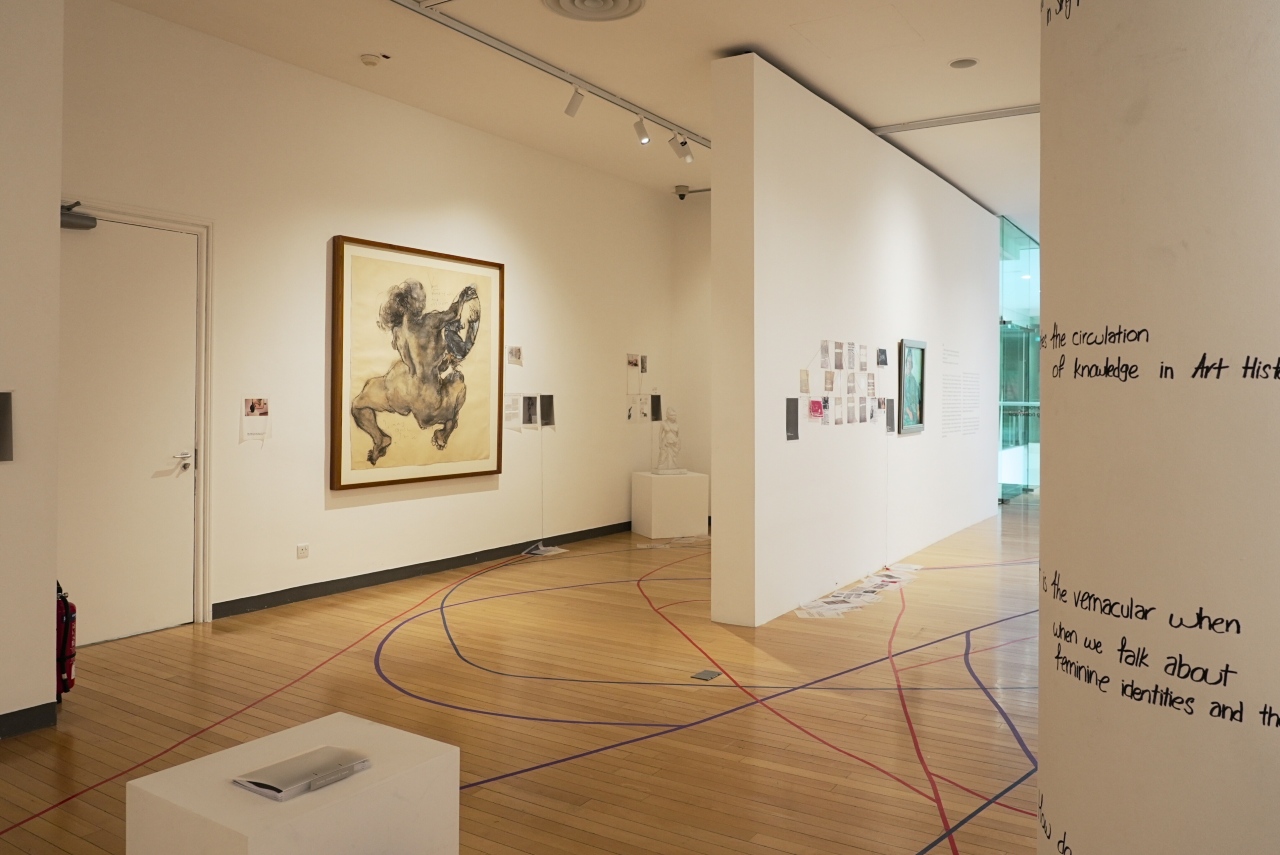
Installation view, prep-room: Yang Tidak Lupa, NUS Museum, 2022.
Commissioned Essay
Jemput…Tengok (Welcome…Look)
Related Pages
Always On / Past Events