Creating Space, Shaping Futures: How Women at NUS are Driving Change in Tech
Led by students like Vanessa Kin, Women in Tech at NUS Computing is reshaping tech culture and building a stronger, more inclusive future for women in STEM.
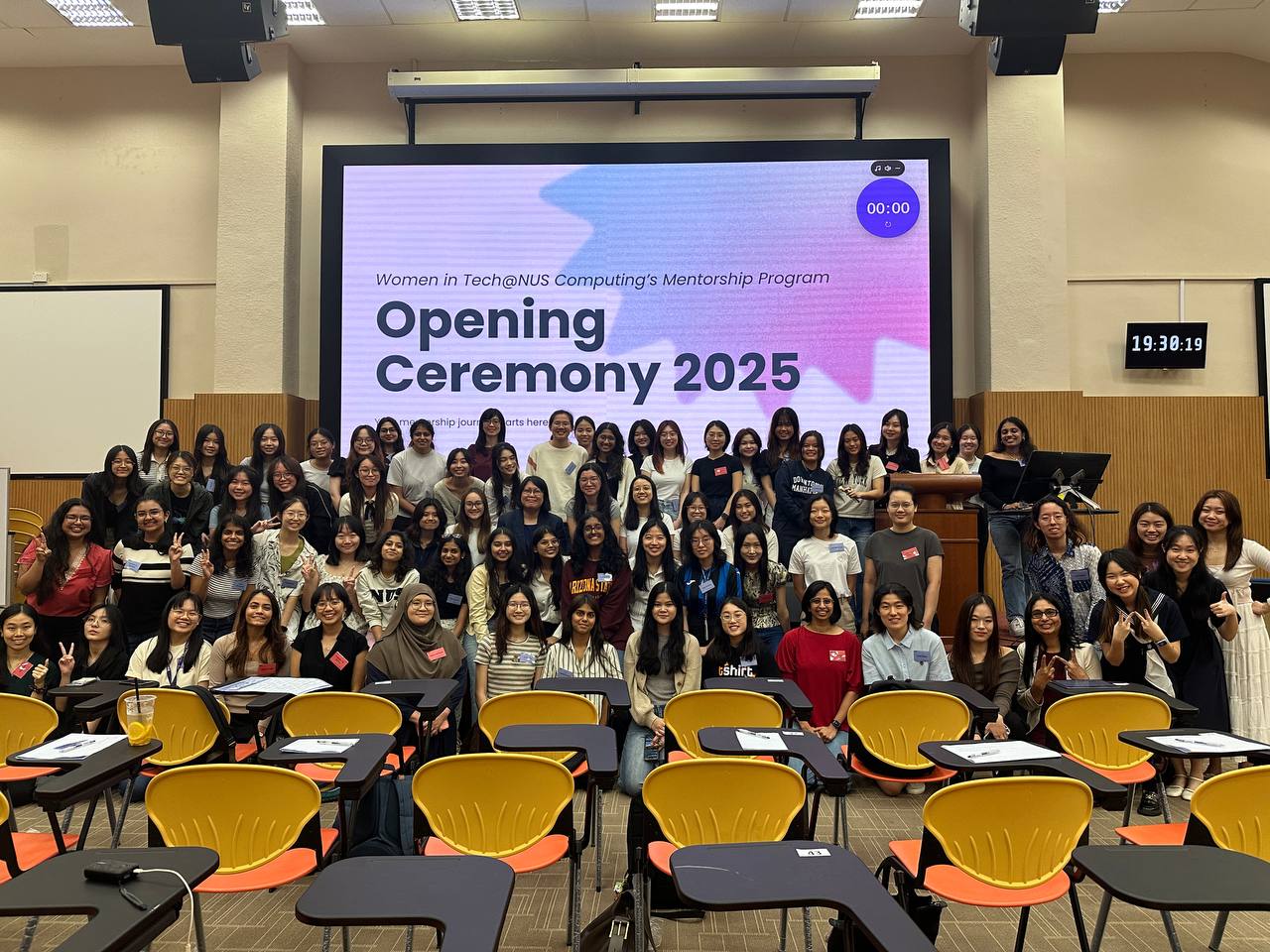
In a lecture hall at the National University of Singapore (NUS) School of Computing, final-year Computing student Ms Vanessa Kin sits among a handful of women in a sea of predominantly male faces.
This is a scene that repeats itself in classrooms and offices across the technology sector globally, but Vanessa and her peers are not ready to accept the status quo.
Through Women in Tech (WiT) @NUS Computing, a student-led initiative supported by the University’s NUS for Women programme, these women are quietly engineering a transformation in how the next generation of female technologists sees itself and its future.
Fostering Community and Belonging
At her first WiT event, Vanessa was immediately welcomed by accomplished senior female Computing students. “I instantly forged meaningful connections and friendships with other women,” she recounted.
This strong atmosphere of genuine support soon motivated her to join WiT, where she eventually took up the position of co-president.
One of the biggest challenges for female computer science students in universities worldwide is the feeling of isolation. Without visible peers around, it is easy for self-doubt to create a psychological toll. This insight sits at the heart of WiT’s mission to address both the practical and psychological dimensions of women’s participation in tech.

As co-president of WiT, Vanessa (first row, first from right) hopes to foster a growing culture of belonging among female computing students at NUS.
Inspired by her positive experience with WiT, Vanessa now aims to bring the sense of belonging she felt to more female computing students at NUS. The interest group hosts several events for these women to connect meaningfully, offering a wide range of casual, skill-building, and social activities that include everything from hiking and badminton to women’s self-defence and crocheting workshops. They also organise gatherings for alumni to share their journeys.
“We hope that everyone who participates in WiT events can find a supportive community of friends who understand their experiences, and with whom they can navigate their academic journey,” Vanessa shared.
Mentoring the Next Generation
Beyond current cohorts, WiT also reaches out to future generations of female technologists. JuneJams, a cybersecurity bootcamp for pre-university girls, offers a unique opportunity to explore the world of cybersecurity, a domain often perceived as particularly male-dominated.
By introducing specialised, practical knowledge early, the programme seeds genuine interest in Science, Technology, Engineering and Mathematics (STEM) pathways, while the young women are still deciding on future career paths. Through hands-on activities, opportunities to learn from professional instructors and the chance to connect with like-minded peers, participants emerge with tangible confidence in their ability to explore STEM areas further.
Pre-university participants at WiT’s JuneJams experienced a preview of the cybersecurity sphere through hands-on activities and opportunities to connect with like-minded peers.
WiT’s career pillar events further reveal how strategic their initiatives are. WiT connects female students with industry professionals across leading firms and sectors – but these are not perfunctory coffee meetings.
“Interacting with successful female role models in STEM through initiatives like the Human Library and industry visits provides students with real-life inspiration and a tangible sense of what’s possible,” shared Ritvi Agarwal, WiT’s Career Pillar Lead. “These encounters help break down stereotypes and foster a deeper belief that success in tech is achievable, regardless of gender.”
The second-year Computing student emphasised how the personal stories shared by established female leaders bring renewed motivation to young women in her faculty.
“These authentic conversations foster a sense of solidarity and reassurance, reminding students that they are not alone—and that a strong, supportive community exists to empower them in their journey,” Ritvi added.

Ritvi (front row, third from left) and Vanessa (second from right) with the WiT Career Pillar Team at the International Women’s Day Celebration 2025.
Through networking opportunities, students can build meaningful connections with professionals across the STEM landscape, including software engineers in FAANG (Facebook [now Meta], Amazon, Apple, Netflix and Google) companies and tech leaders in major banks. These relationships have opened tangible doors to internships, job opportunities and industry collaborations, giving students both the confidence and network needed to thrive in STEM careers.
Taking Future Impact Further
For a generation of women confronting an industry not yet designed with them in mind, WiT is building both the infrastructure and the cultural permission structure for success. Just like Vanessa, many participants of WiT events have gone on to join its organising team, multiplying the organisation’s reach.
As WiT continues to find ways to scale its impact, Vanessa hopes that more partners will come onboard to empower the next generation of women in technology and foster a more inclusive and equitable tech ecosystem.
“Financial support from donors and institutional partners enables us to expand the reach and impact of our programmes,” Vanessa said. “We will be able to accommodate more participants, secure better resources, and organise more impactful events.”

With the right support, Vanessa and the WiT team hope to expand their impact to even more women exploring tech paths and careers.
Beyond funding, partners can also contribute their expertise as speakers and mentors. “You can directly inspire and educate our participants about diverse career paths, industry trends and the realities of working in tech,” she encouraged.
As more women step forward to lift one another up, WiT’s growing movement is going beyond just shaping individual journeys. It’s redefining what the future of tech can be.
Your support can help build a supportive, empowering community for more women in computing at NUS. Make a gift to NUS For Women initiatives and open doors for the next generation of female leaders in technology.