29 May 2025
Friendship Reimagined: How Three NUS Alumni Are Helping Young Adults Build Meaningful Connections
Inspired by campus life, the founders of Friendzone are creating safe spaces for conversations and friendships—one neighbourhood and industry at a time.
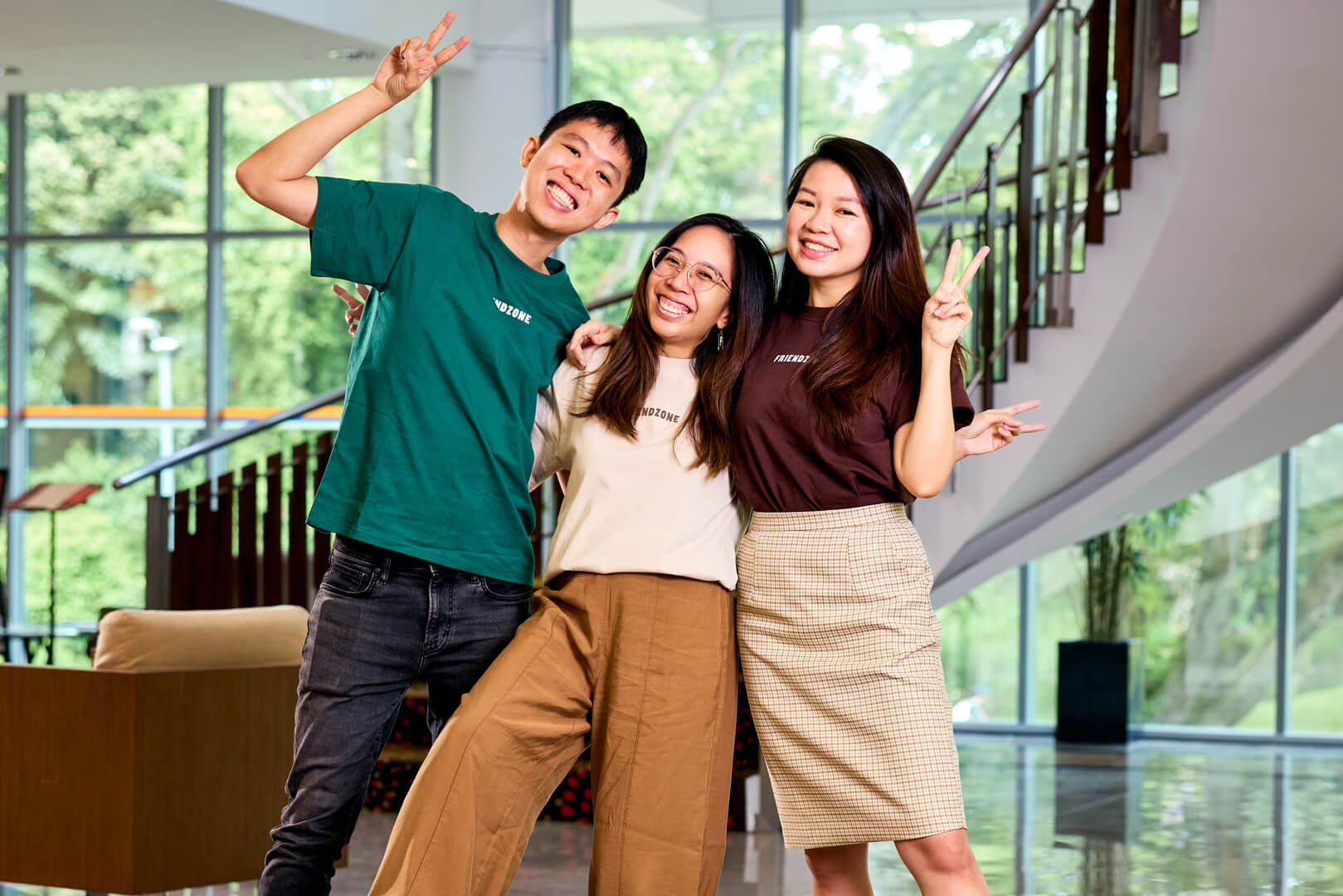
Friendzone founders (from left) Mr Tham Jun Han, Ms Grace Ann Chua, and Ms Valencia Wong
It began with a simple observation. After enjoying the warmth and camaraderie of campus life at NUS Residential Colleges, Ms Grace Ann Chua (Arts & Social Sciences ’16), Mr Tham Jun Han (Engineering + USP ’18) and Ms Valencia Wong (Business ’17) noticed a stark contrast when they moved back to their HDB neighbourhoods after graduation. The friendly chats at the lift lobby, spontaneous study sessions and shared meals they had once cherished had all but disappeared.
“We experienced how special it was to have that sense of community at the National University of Singapore (NUS),” shared Mr Tham. “But when we returned home, it was rare to even know the names of other young people in our blocks.”
That longing for connection planted the seed for something bigger. In 2018, the trio co-founded Friendzone, a social enterprise dedicated to helping young adults forge meaningful friendships within their communities. What began as ground-up gatherings at HDB void decks has since evolved into a nationwide movement, with curated friendship-building events held across neighbourhoods, industries, and hobbies.
BRINGING STRANGERS TOGETHER, ONE CONVERSATION AT A TIME
Despite its playful name, Friendzone is not a dating agency — a misconception the founders often address upfront. The name was chosen to reclaim the negative connotation of being ‘friend-zoned’ into something positive. “We want people to see the ‘zones’ they’re in — whether it’s their neighbourhood, industry or hobbies — as spaces where they can build genuine friendships,” explained Ms Wong.
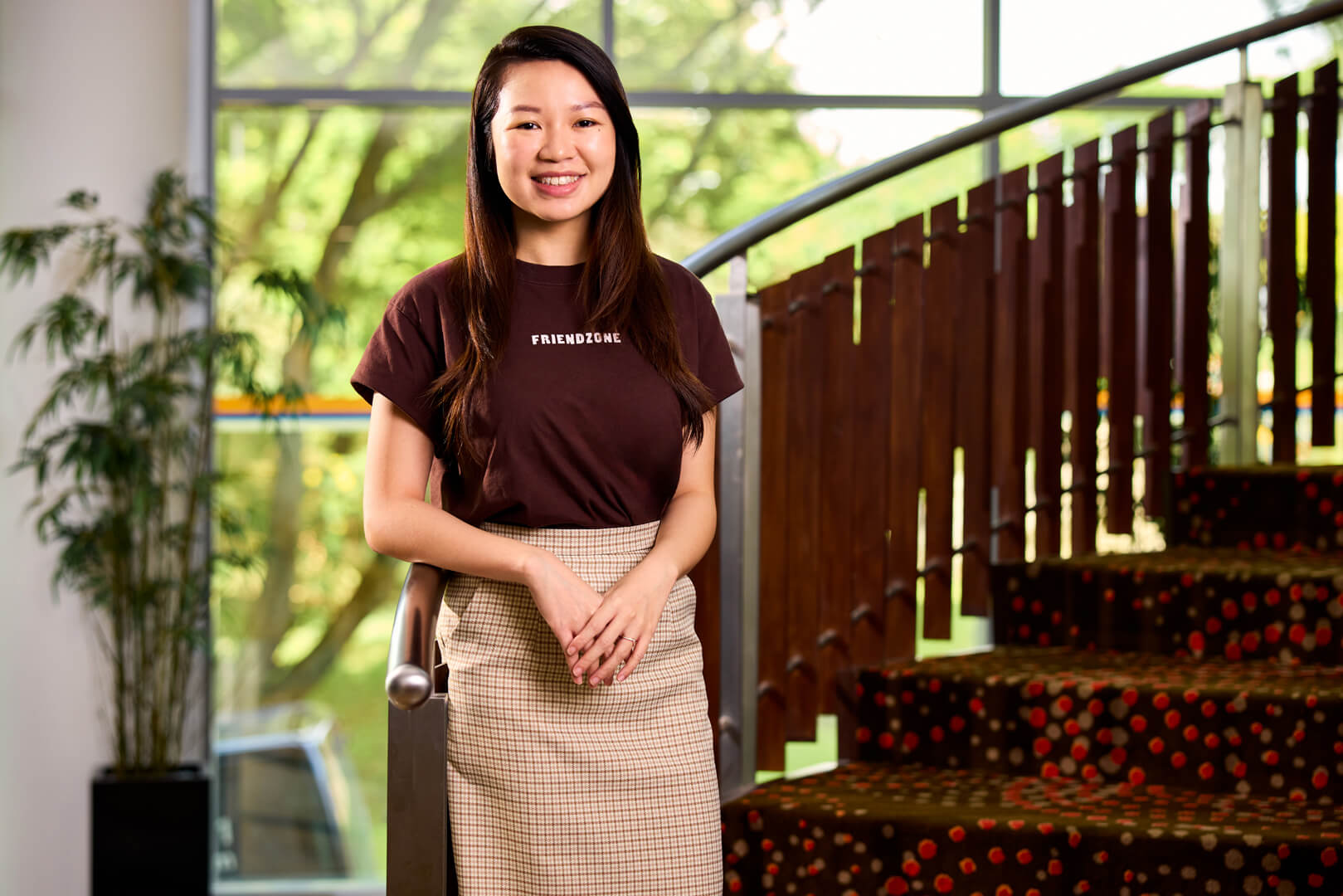 Ms Valencia Wong
Friendzone primarily operates as a business-to-business social enterprise, partnering with organisations, government agencies and institutions to design and run community-building experiences for their target audiences. In addition, Friendzone offers several business-to-consumer programmes that are open to the public and ticketed. These include SG Social, a monthly themed conversation series, and Out of Office, a workplace networking series for young professionals in specific industries like banking and human resources (HR). More recently, Friendzone has launched Friendship School, featuring workshops to help individuals develop and sustain friendships.
BREAKING THE ICE, BUILDING THE BOND
Each Friendzone event is designed to make connection feel natural. Participants begin with group icebreakers, then move into smaller facilitated discussions guided by conversation cards—a signature element from their first gathering.
These can range from the playful to the profound: “What’s your go-to comfort food?” may lead to a deeper reflection on how we cope with stress or celebrate joy. “We’re not just teaching people how to talk,” explained Mr Tham. “We’re helping them become more open, more curious, and more equipped to build real relationships.”
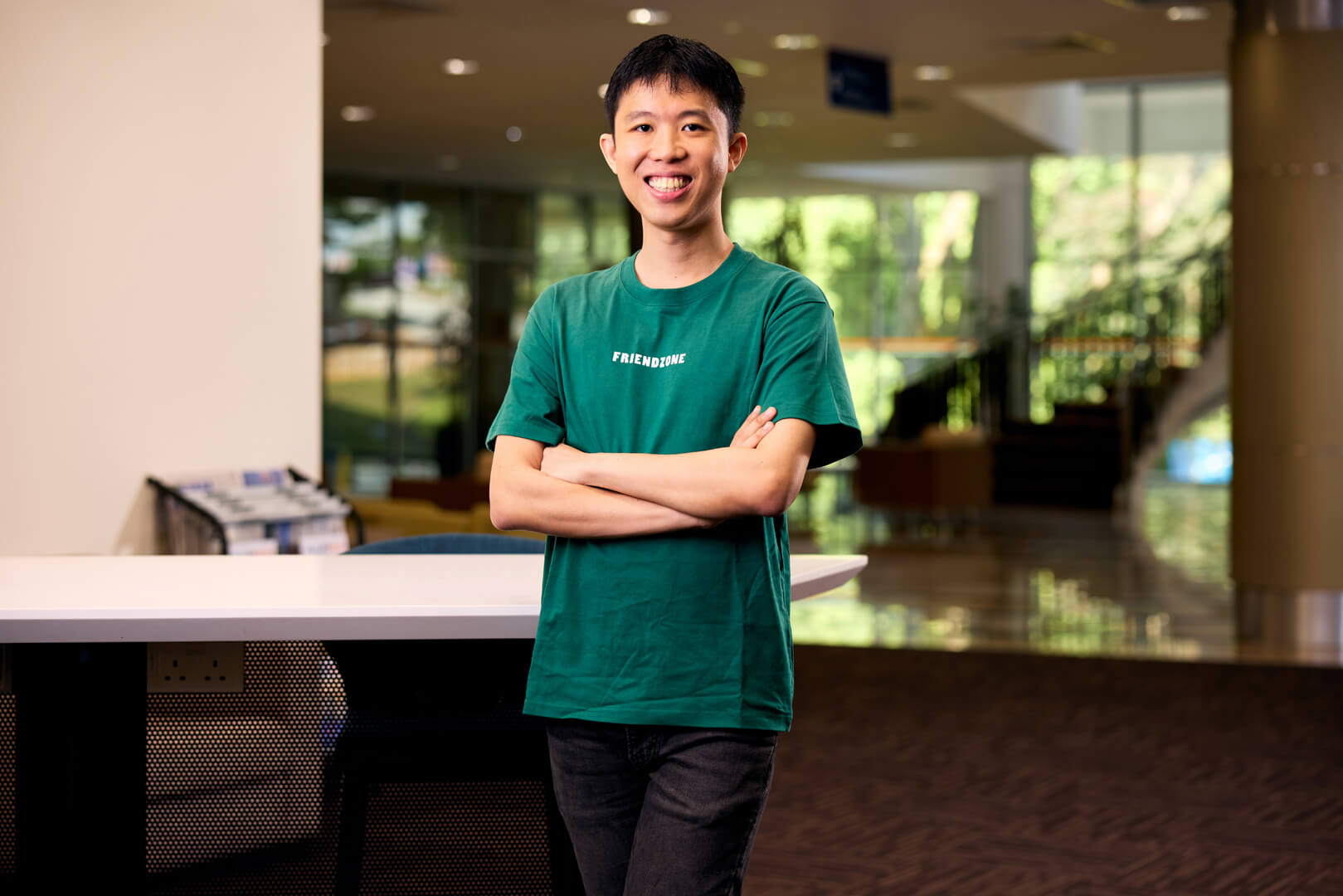 Mr Tham Jun Han
Friendzone’s first neighbourhood event took place at an HDB pavilion in Marine Parade, decked out with fairy lights and powered by sheer hustle — the founders handed out flyers themselves and used their own savings, along with a grant from the National Youth Council (NYC), to buy McDonald’s chicken nuggets and Milo for participants. It drew 20 to 30 curious residents, and, more importantly, sparked connections that lasted beyond the evening.
But it was during the COVID-19 pandemic that Friendzone found unexpected momentum. As social isolation grew, so did the need for connection. Friendzone pivoted online, hosting up to eight virtual neighbourhood-based events each weekend. They also received a grant from the NUS Resilience and Growth Initiative — a scheme supporting alumni-led initiatives that helped communities navigate the pandemic. The funding allowed Mr Tham to dedicate himself to Friendzone full-time.
FROM VOID DECKS TO BOARDROOMS
Since then, Friendzone’s model has evolved beyond just place-based communities. Its programmes now include industry-specific and interest-based groups. The expansions were powered by partnerships with organisations like Reaching Everyone for Active Citizenry @ Home (REACH), National Trades Union Congress (NTUC), DBS, and 7-Eleven, who saw the value in fostering connections among their employees and communities.
“It was very opportunity-driven,” said Ms Chua. “Partners approached us and asked, ‘Can you run this for my company or my sector?’ That’s when we realised the same community-building model could work across different contexts — whether for healthcare, freelancers, tech or STEM professionals.”
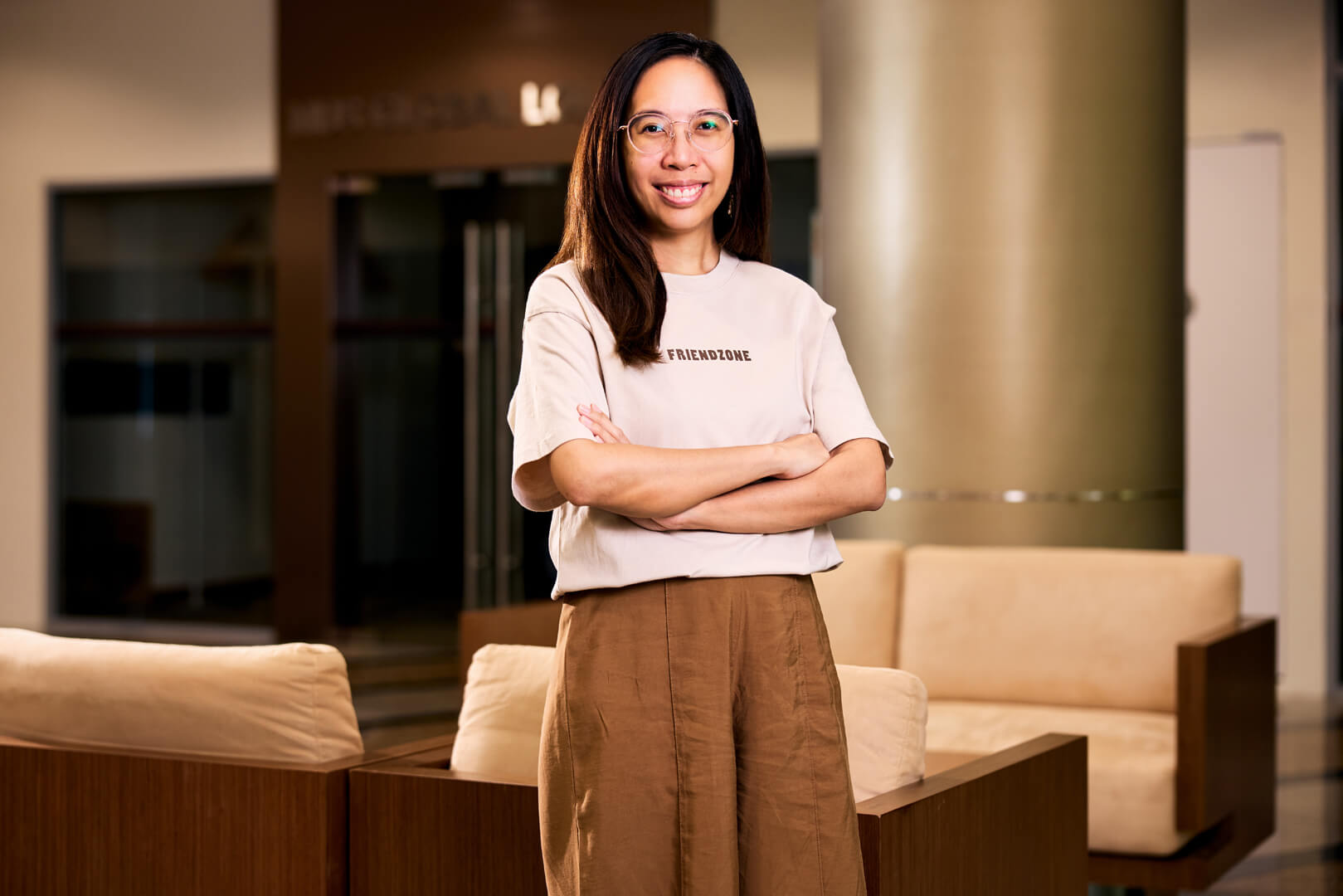 Ms Grace Ann Chua
The impact has been meaningful. At one healthcare event, a nurse and an HR executive discovered shared challenges and formed a peer support circle that continued meeting long after the event.
“We’ve seen participants exchange job opportunities, go for courses together or simply be there for each other emotionally,” Ms Wong added. “The magic happens not just during the event, but in the lives that continue intersecting afterwards.”
In another heartwarming example, two participants who met at a Friendzone event discovered a shared love for tennis. Their casual games eventually turned into an overseas trip to catch the Australian Open together as friends.
Beyond forging strong friendships, Friendzone also values the idea of ‘weak ties’ — connections with people outside one’s usual social circles. A 1973 paper by Stanford University sociologist Mark Granovetter showed that these ties often broaden perspectives and create unexpected opportunities. “The world is made up of different social networks, and if we only stay within our bubbles, we miss out,” said Ms Wong. “Friendzone helps bridge those gaps — across age, race, religion or job sectors.”
LOOKING AHEAD: FRIENDSHIP SCHOOL AND BEYOND
As they continue to grow, the Friendzone team is now working on a new initiative — Friendship School — to help young adults develop the skills to build and sustain meaningful relationships. Through workshops on networking, building social support systems and even handling difficult conversations, Friendship School aims to promote not just social connections, but social health.
“Friendship is something we’re often expected to figure out on our own,” said Ms Chua. “But how do you support a grieving friend? How do you follow up after meeting someone at an event without feeling awkward? These are social skills that aren’t often taught.”
Today, Friendzone has grown into a small but dedicated team of six full-time staff and five interns, including other NUS students and graduates. Around 20 to 30 per cent of participants return for multiple events — a sign that the conversations sparked are not just one-off interactions, but seeds of longer-lasting friendships.
The journey from a grassroots experiment to a growing social enterprise has been anything but linear. But for Ms Chua, Mr Tham and Ms Wong, the mission remains clear: to create spaces where friendships can flourish and where young adults are reminded — you are not alone.
“Many misunderstandings in life happen simply because people don’t talk to those outside their own worlds,” said Mr Tham. “But every conversation has the power to bridge that divide. That’s the world we’re working towards—one where everyone feels seen, heard, and connected.”
Text by Audrina Gan. Photos by Dillon Tan.