12 March 2025
Rewriting the Manufacturing of Biologics Using AI
NUS alumni-founded startup ChemT Biotechnology is revolutionising immune cell therapy manufacturing with AI-powered small molecules.
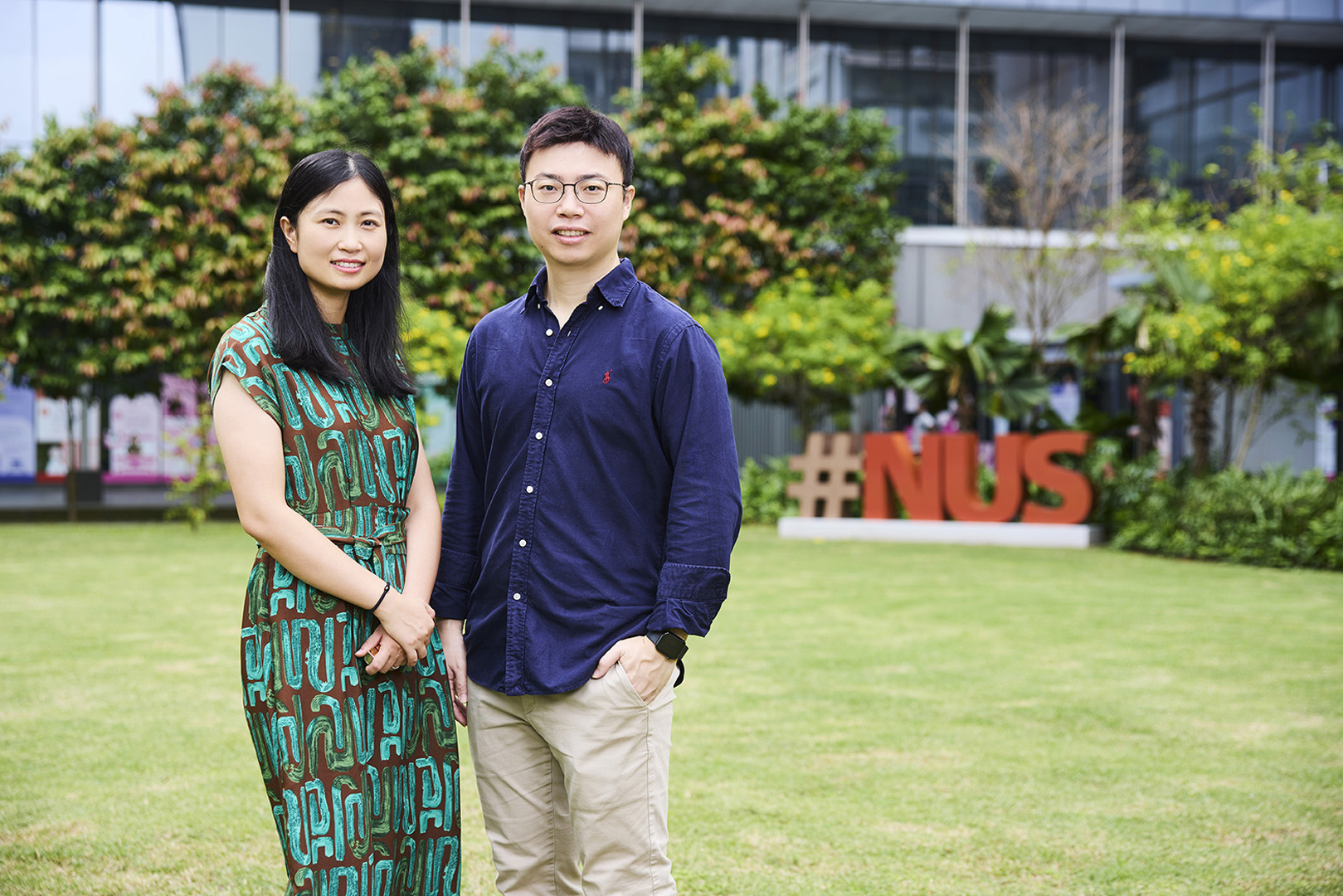
ChemT Biotechnology’s co-founders Ms Jie Sun and Dr Ling Wu
Cell therapy has changed the way we treat auto-immune diseases and cancer, but manufacturing these life-saving treatments is still expensive and complex. ChemT Biotechnology, a company founded in October 2024 by leading scientists and entrepreneurs, hopes to change that. By using AI-designed small molecules, they aim to make immune cell therapy manufacturing faster, more cost-effective and scalable.
At present, CAR-T, TCR-T and TIL are types of immunotherapy that use a patient's own T-cells to fight cancer. The key difference is that CAR-T cells are genetically engineered in a lab to target a specific antigen in cancer cells, while TILs (tumour-infiltrating lymphocytes) are T-cells that are already present within the tumour and are harvested directly from it, allowing them to potentially recognise multiple cancer antigens simultaneously.
However, both treatments rely on expanding a small sample of a patient’s immune cells into millions for reinfusion. According to Ms Jie Sun (Science ‘13), CEO of ChemT Biotechnology, this process is time-consuming and often inconsistent. Manufacturing failure rates also remain high, driving up costs and limiting patient access.
“Current cell therapies cost around S$500,000 per treatment,” said Ms Sun, who is a serial entrepreneur and AI expert with a track record of building successful healthcare startups, including one that was backed by Mayo Clinic and Eli Lilly. Ms Sun — who has a Master's degree from the Harvard T.H. Chan School of Public Health — previously worked as a data scientist at Mass General Hospital and Dana-Farber Cancer Institute in the US and currently mentors startups at NUS Enterprise and MIT Sandbox.
 Ms Jie Sun
Driven by a mission to make cell therapy treatments more widely available to patients, fellow NUS alumnus and co-founder & President of ChemT Biotechnology Dr Ling Wu (Medicine PhD ’20) — an award-winning scientist with over 10 years of research experience in cell and gene therapy — teamed up with Ms Sun to find a way to bring these costs down while improving the quality of cell therapies.
Together the duo came up with ChemT Biotechnology’s flagship product, Chemplify, an AI-powered small molecule solution that helps T-cells stay “younger”, grow faster and become more robust during the manufacturing process.
Here’s how it works:
- Chemplify increases T-cell expansion by 5 to 10 times compared to current methods, allowing more cells to be produced in a shorter time. In one example, T-cells grew 1,000 times in just 11 days, versus the typical 200 times expansion. This increased efficiency helps address a major industry bottleneck — the difficulty in rapidly growing enough high-quality T-cells for cell therapy treatments.
- It reduces reliance on expensive human serum and cytokines, making manufacturing more economical.
- By improving the quantity and quality of T-cells produced, Chemplify could potentially reduce the failure rate of cell therapies when administered to patients.
"Instead of relying on manual processes, our AI speeds up molecule generation and optimisation to create the most effective compounds for cell therapy manufacturing,” explained Ms Sun. This aligns with regulatory guidance to move towards more chemically defined manufacturing processes for biologics.
 The ChemT Biotechnology founders in the lab
TO MARKET, TO MARKET
Currently, Chemplify is being used in research settings by hospitals, biotech companies, and academic institutions across Asia, the US, Israel and Singapore. The feedback has been promising. Some partners have said they are now able to expand T-cells more robustly using ChemT Biotechnology's compound, which may lead them to administer multi-dose treatments, versus the typical single, expensive dose, further improving patient access.
Dr Wu says the next step is to bring their product to GMP (Good Manufacturing Practice) compliance — a critical step for regulatory approval — so it can be used in clinical settings. This requires intensive investment to set up a clean room environment and meet strict sterility requirements for FDA compliance. Dr Wu estimates they will have the GMP-grade product ready by the end of this year. After obtaining the GMP-grade product, ChemT Biotechnology expects to be able to apply for regulatory approval and start using the product in actual patient treatments next year.
 Dr Ling Wu
Dr Wu’s background in cell therapy research and Ms Jie’s expertise in AI and entrepreneurship made them the perfect team. “By combining our knowledge, we could use AI to design cellular drugs that could help improve the manufacturing and production of cell-based therapies,” said Dr Wu. As a newly accepted startup to the NUS Graduate Research Innovation Programme (GRIP), ChemT Biotechnology is looking forward to tapping into NUS’ ecosystem for new talent, funding and collaboration opportunities.
THE BIGGER PICTURE: MORE AFFORDABLE TREATMENTS FOR MORE PATIENTS
Beyond immune cell therapies, ChemT Biotechnology sees potential for developing cellular drugs for other biologics manufacturing, such as Monoclonal antibodies (used in cancer and autoimmune diseases), diabetes treatments and cardiovascular disease therapies. Essentially, their goal is to make advanced biological treatments more efficient, affordable and widely available. “Ultimately, we want to help more patients access life-saving treatments — and that starts with fixing how these therapies are made,” said Dr Wu.
Text by Audrina Gan. Photos by Kelvin Chia.