Keeping Heritage Alive at NUS Baba House
A new gift from the Tun Tan Cheng Lock Trust will honour the legacy and values of the late Ms Agnes Tan Kim Lwi by supporting heritage conservation and education of the Peranakan community through the NUS Baba House.
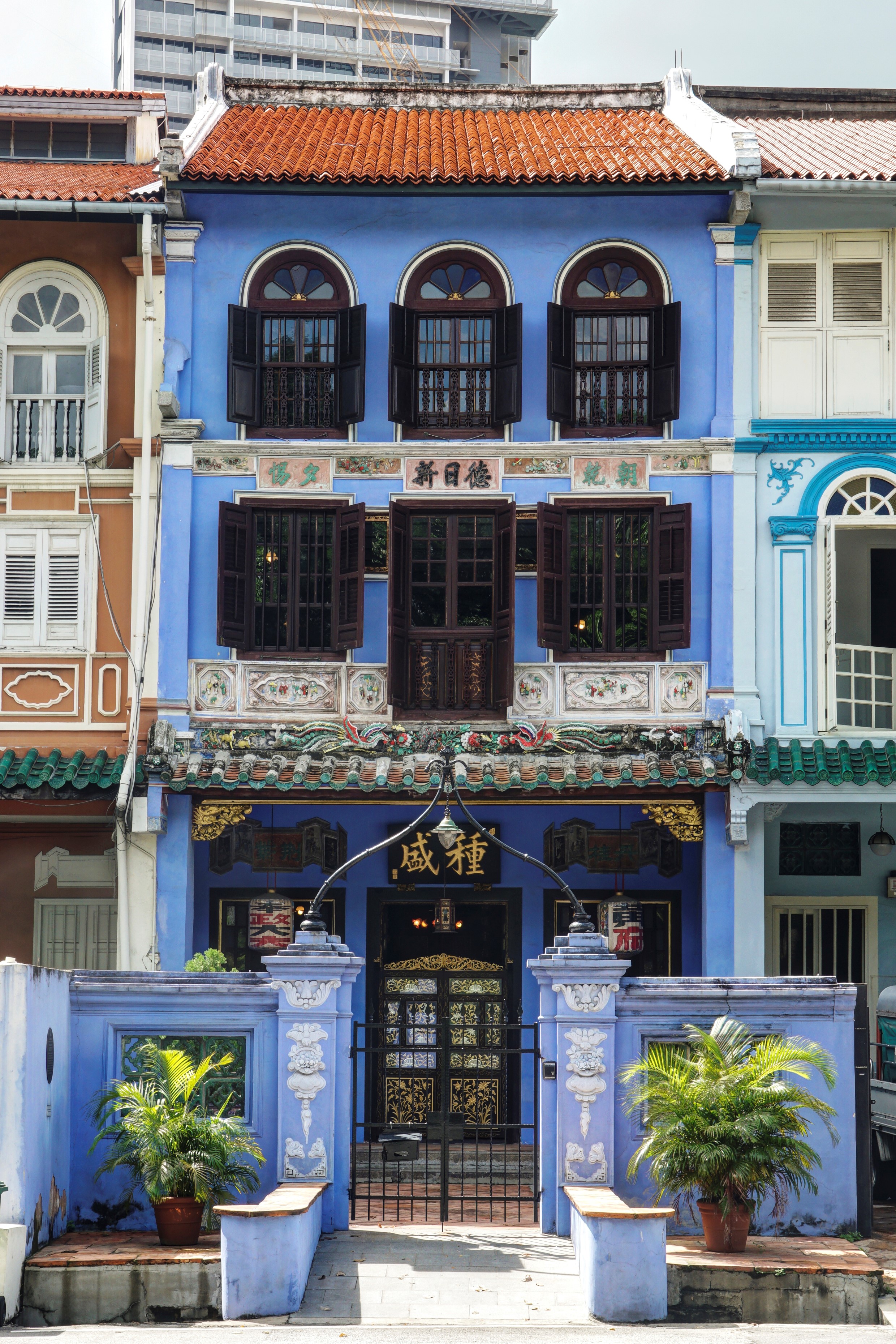
The restored façade of NUS Baba House, a three-storey townhall located at 157 Neil Road, captured in 2008.
This story is featured in the NUS Giving Report 2025/2025 - Future: Powered by Giving. Click here to read more Giving Report stories.
Standing at 157 Neil Road is a quiet three-storey townhouse where visitors can step back in time. Once the ancestral home of a Peranakan Chinese family, namely the Wee family, it now houses more than 2,000 artefacts from early 20th-century Peranakan Chinese history. Its ornate architecture and furnishings tell a story of legacy, tradition and culture.
This was the vision of the late Ms Agnes Tan Kim Lwi, the founding donor of NUS Baba House. Her generosity enabled the National University of Singapore (NUS) to acquire the townhouse in 2006 for restoration and preservsation.
Nearly two decades later, a new gift made through the Tun Tan Cheng Lock Trust pays meaningful tribute not only to Peranakan culture, but also to her legacy and values.
From Founding Gift to Living Institution
As the youngest daughter of renowned Peranakan businessman and community leader Tun Dato Sir Cheng Lock Tan, Ms Tan grew up immersed in the culture that the Baba House preserves today.
A passionate steward of her heritage, Ms Tan supported conservation throughout her lifetime. Even before her gift to NUS Baba House, she had already funded the rehabilitation of two historic townhouses in Melaka, which later became the Tun Tan Cheng Lock Centre.
Ms Agnes Tan with her sister Mrs Alice Scott-Ross (seated) in their Chancery Hill Road home, 1994. Photography by Wah.
“The late Ms Agnes Tan’s support was fundamental to the creation and development of NUS Baba House,” said Associate Professor Daniel Goh, Associate Provost (Undergraduate Education), NUS, who oversees the NUS Museum and NUS Baba House. “Through her generosity, NUS Baba House was able to develop not simply as a preserved historic residence, but as a cultural and educational platform that continues to explore and interpret Peranakan heritage in meaningful ways.”
Beyond her significant financial support for cultural preservation through NUS Baba House, Ms Tan was also a key figure in the development of the House’s collection. Guided by her belief that heritage spaces should be thoughtfully restored and activated as places of learning, she donated important artefacts and portraits from the Peranakan community to furnish the House’s interior.
“Her contributions linked NUS Baba House to the wider historical legacy of the Peranakan community,” said Prof Goh.
Impact That Lives On
In 2021, Ms Tan passed away at the age of 101, leaving a significant impact in the hearts and lives of her family, the Peranakan community and Singaporean society.
However, her legacy continues. Today, her nephew, Mr Peter Lee, serves as an advisor to the Tun Tan Cheng Lock Trust, which she and her sister Mrs Alice Scott-Ross had established in honour of their father.
In continuation of Ms Tan’s commitment to preserving Peranakan heritage, the Trust has made a generous pledge to establish an endowment that will support NUS Baba House’s next chapter through a 20-year roadmap focused on conservation excellence, public engagement and long-term sustainability. This gift will help the House to advance its vision of becoming a global hub for heritage conservation, research and education over the next two decades.

A new gift from the Tun Tan Cheng Lock Trust will carry forward Ms Agnes Tan’s passion for heritage conservation through NUS Baba House.
“NUS Baba House stands as a lasting testament to my late aunt Agnes’ belief that heritage should be carefully preserved and meaningfully shared. It is a precious jewel that continues to offer invaluable insights into the rich history and culture of Peranakan Chinese,” shared Mr Lee. “This gift ensures that the House remains a vibrant site for research, learning and public engagement for generations to come. It is remarkable how much we can still learn from it.”
The gift comes at a significant moment for NUS Baba House, which is currently undergoing major restoration works expected to be completed in 2027.
The Next 20 Years
Where does NUS Baba House envision itself in 20 years’ time?
“NUS Baba House will carry forward Ms Agnes Tan’s legacy by continuing to uphold the values that guided her support for the project: careful heritage stewardship, meaningful education and long-term cultural engagement,” Prof Goh said.
Beyond its continued conservation and restoration work, NUS Baba House will further develop as a platform for education. Through exhibitions, research projects and educational programmes, it will support students, scholars and the wider public in exploring the history and cultural practices associated with Singapore’s Peranakan community.

Over the next 20 years, NUS Baba House will grow in its educational role, bringing Peranakan history and culture to the wider public.
The curators also hope to expand NUS Baba House’s role as a site of critical engagement with heritage. By bringing together conservation practice, curatorial enquiry and contemporary perspectives, the House seeks to encourage deeper reflection on how histories are interpreted and how cultural identities evolve over time.
“In doing so, we will honour Ms Agnes Tan’s vision by ensuring that the House remains not only a preserved historic site, but also a living institution that contributes to education, scholarship and cultural understanding for future generations,” Prof Goh concluded.
Be a part of the next 20 years of cultural education in Singapore by making a gift to NUS Baba House: https://give.nus.edu.sg/NUSBabaHouse. Your support will contribute directly to Baba House’s research aspirations, ongoing conservation efforts and maintenance.