Retrieving books from our closed stacks will take longer due to ongoing renovation & improvement works. Do cater an additional day or two for your requests to be fulfilled. We apologise for the inconvenience & appreciate your understanding. For assistance or queries, contact loans@nus.edu.sg.
Please take note of the following changes in our opening hours during Deepavali:
• 7 November, Saturday (Deepavali Eve): Central Library and C J Koh Law Library will be closed early at 1pm, instead of the usual 5pm
• 9 November, Monday (Public Holiday in lieu): All libraries will be closed
The 24-hour study areas at the Central Library (Level 6) and Medicine+Science Library (Level 1 Atrium, Level 2 and 3 Study Areas) will remain open during this period.

-
Borrowing & Requests
Borrowing & Requests
 Recommend Articles, Books & Other Materials for Purchase
Can’t find a resource you need in our libraries? Send us your request and we’ll source for it
 Intralibrary Loan
Request for a book to be sent to another library within NUS Libraries for collection
-
Services & Help
Services & Help
 Guides & Tools
Discover our many resources for research, learning and teaching - from how-to guides, to databases and other powerful tools!
 Research Starter-kit
Learn about research tools such as Proxy Bookmarklet, BrowZine, Citation Managers and FindIt! with Google Scholar
-
Spaces
Spaces
-
Collections
Collections
- What's on
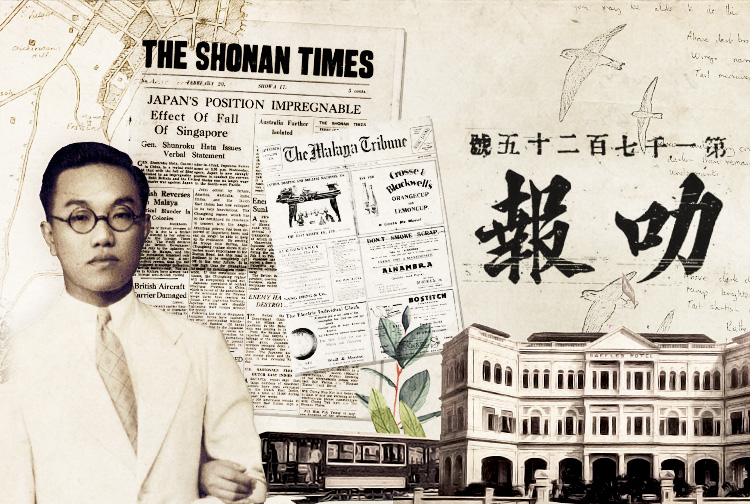

The Changing Tides of History through Raffles College Magazines
By Shawn Wongosari
“Always historicize!” – This slogan, which the late Fredric Jameson had mentioned in his preface to The Political Unconscious, has been my approach to reading any book I come across. Here, Jameson argues for a Marxist interpretation of literature where we should look beyond the texts themselves and reflect on how they are situated within the socio-political struggles of their time (Jameson, p. 10). This was precisely the approach I took when I was reading through the set of student-written magazines from our predecessor institution, Raffles College, in the NUS Libraries’ collection.
I came across the Raffles College Magazines while searching for historical sources unique to NUS as a way to highlight our institution’s 120-year history, specifically that of Raffles College (RC). This attempt to tell the NUS story is a continuation of the stories of our earlier predecessors, the Straits and Federated Malay States Government Medical School (1905-1913), King Edward VII Medical School (1913-1921) and College of Medicine (1921-1949) – the contemporary sister institution to RC.
So, what is Raffles College? Why the RC magazines? And what stories do they tell? These are some questions that I will probe further into below.
A Brief History of Raffles College
According to the 1928-29 Raffles College Annual Calendar, the Governor of the Straits Settlements appointed a committee in 1918 to propose a suitable memorial for the 100th anniversary celebration of Sir Stamford Raffles’ establishment of Singapore as a trading port on February 6, 1819.
Calls for a Centenary memorial began as early as February 1918, months before Brooke announced the committee’s existence. During then, an article in The Straits Budget suggested that a technical college be founded, as “education in all its best and useful forms” was essential to further build upon the “securely laid” foundations that the past hundred years of British rule had established. Later in July 1918, the Eurasian Literary Association, in one of their discussions, had also endorsed the idea of a technical college (The Straits Times, 1918). Apart from a college, there were also other suggestions for the Centenary’s memorial, such as an eye and ear infirmary, a poor-house and a plaque. (Ibid.; The Straits Budget, 1918)
However, during this period, the Centenary was not without its challenges and critics. One op-ed in The Straits Budget called the idea of a Centenary a form of wasteful spending, and the funding (derived from war bonds) should instead be directed to the then ongoing efforts of World War I (The Straits Budget, 1918). Others have noted that the colonial government ought to focus more on improving teachers’ salaries and the quality of elementary and secondary education in the colony, since they form the basis of a quality higher education (Pinang Gazette and Straits Chronicle, 1919; The Straits Budget, 1919). There was also the issue of raising funds for the college. Donations were sought not just in Singapore, but also in other parts of both the Federated and Unfederated Malay states, such as Penang, Johor, Perlis, Kedah and Terengganu (Malaya Tribune, 1919). One exception was Kelantan, where its resident British Advisor reported that the local government would not be contributing any funds due to its poor financial standing (Ibid.). However, the Kelantan government would change its position. This change was evidenced in the 1922 Straits Settlements Government Gazette, where it was reported that they eventually subscribed to the Raffles College endowment fund (CO276/92, PDF p. 134).
Despite those challenges, what was once an idea finally came to fruition. On August 1, 1918, the Centenary committee submitted a report to the colonial government, which then unanimously approved the establishment of a college as a suitable memorial (see RC Annual Calendars of 1928-1948). The proposed college would gradually lay the foundations for future higher education in Malaya (Ibid.).
In 1919, both official and unofficial members of the Legislative Council met and agreed that if $2,000,000 (Straits Dollars) were subscribed to the college’s endowment fund, the government would construct buildings not exceeding $1,000,000 and provide $50,000 for annual upkeep (see RC Annual Calendar of 1939-40, pp. 1-3). Any funding donated by the Federated and Unfederated Malay states will be considered part of that $2,000,000 sum. The college was also backed by prominent donors such as Sir Manasseh Meyer ($150,000), Oei Tiong Ham ($150,000), Eu Tong Sen ($100,000), and the Sultan of Johor ($50,000) (Ibid.). The former three donors would have their names affixed to buildings in the college. These buildings would soon become known as the Oei Tiong Hall (lecture) hall, Manassah Meyer Science Block and the Eu Tong Sen Hall of Residence (see RC Union Bulletin 1947, p. 2).
In support of the decision to establish a college, the Straits Settlements government gave 40 acres of land on Mount Rosie to house the college. However, the location of the planned college was moved to its present site in Botanic Gardens after the land on Mount Rosie (located behind the present-day Catholic Junior College) was deemed too small to accommodate a large building (Ibid.).
Three years later, the Legislative Assembly passed Ordinance No. 13 of 1922, or the Raffles College (Committees Incorporation) Ordinance. This bill, which was assented to by then-Governor Sir Laurence Nunns Guillemard on April 27, 1922, established a financial committee and an executive committee to govern Raffles College (CO 276/92, PDF p. 326). Construction on the school officially started in 1924. While the college’s operations began in 1928, it was only formally opened by Guillemard’s successor, Sir Hugh Clifford, on July 22, 1929 (Raffles College Annual Report 1937-1938, p. 1).

Aerial view of the Raffles College campus buildings in Bukit Timah, taken sometime in the late 1930s or 1940.
It was not until the onset of World War II that the College’s operations came to a halt. The medical department converted the college into a hospital, which made up the first post of the Medical Auxiliary Service (MAS) in 1941 (see Raffles College: 1928-1949, p. 9). The college’s principal at time, Professor W. E. Dyer, became lay superintendent of the medical unit and students were mobilised as full-time volunteers working shifts when Japanese hostilities on Singapore started on 8 December 1941 (Ibid.). The students were organised into companies and were made to be on standby for the medical unit’s makeshift ambulances, which consisted of converted Singapore Traction Co buses (Ibid.). According to former first-generation diplomat Maurice Baker, he, along with fellow schoolmate Lee Kuan Yew (who later became Singapore’s first prime minister), were part of a unit comprising student volunteers who embarked on dangerous rescue missions to recover victims of the Japanese bombings (see Baker, p. 33). After the fall of Singapore, the Japanese converted the college grounds into its army’s headquarters (see Raffles College: 1928-1949, p. 9).
Following the end of the War, RC resumed its operations in October 1946. In the following year, a Commission on University Education in Malaya was established in 1947 to assess the future of higher education development in the region. The Commission was led by Sir Alexander Carr-Saunders, who at the time held the position of director of the London School of Economics (see Lee & Tan, 1996, p. 82). The findings of this commission were coalesced into what became known was the Carr-Saunders Commission report, which suggested the merger of the King Edward VII College of Medicine with Raffles College, which occurred in 1949 (see Carr-Saunders, 1948; RC Annual Report 1947-48, p. 2). This merger marked the end of Raffles College’s history and the beginning of the University of Malaya.

Raffles College Students’ Union meeting sometime in the late 1940s.

A Bukit Timah campus building of the former Raffles College in the 1950s (then already merged as the University of Malaya).
The Raffles College Magazines
The RC Magazines are a set of student-run publications that were published by the RC student union’s magazine committee (see ‘Contents’ page in Raffles College Magazine 1937, Vol. 7, No. 1). These magazines consist of student-written articles, op-eds, poetry, stories, and information and reports on recent activities of the various student clubs within the college. Some of these reports include the sessions of clubs such as, but not limited to, the Historical Society, Economics Society, Physical and Chemical Society, Badminton, Table Tennis and Athletics teams. For example, the Historical society posts the various topics up for debate during their sessions (see RC Magazine 1938, Vol. 8).

Reports from the various clubs and societies.
Photographs of these clubs’ executive committee members are also published in the magazines alongside comics of various college personalities. Vintage advertisements also showcase the various sponsors of the magazine – most notably those on the backpages by Tiger Balm.

Advertisements for Tiger Balm frequently dominated the back covers.
When I came across these historical magazines, what first struck me was the variety of cultural literature written by the students during those periods. Despite Raffles College being an English language institution, some magazine entries were written in Mandarin, Bahasa Melayu, and Tamil. In the second volume of its 1947/48 publication, there featured a poem of the Chinese poet Li Bai, pantuns on the human condition, and quotes from the Tamilian Thiru Kural. Also featured were other articles on comparative analyses of Western and Eastern philosophical thought and pantuns (see RC Magazine 1948-49, pp. 24-26 & 32-39). The variety of languages used reflects the already ethno-linguistically pluralistic nature of colonial Singapore and Malaya at the time.
Even more intriguing were the periods during which these magazines were published. The available issues of the RC Magazines in the NUS Libraries’ collection are dated from the immediate pre- and post-war periods of 1937-38 and 1946-49. No issues were published during the war period.
It is important to note that the pre- and post-war periods were pivotal moments in history. During then, universal values, communist-socialist ideas and proto-nationalist visions were being cross-pollinated across Asia and percolated into the consciousness of the colonised (Harper, 2021). People were beginning to see themselves as part of ‘imagined communities,’ signifying the origins of the future nation-states of present-day Southeast Asia (Anderson, 1983). Furthermore, it was a time when revolutionary anti-colonial figures crossed swords with imperial European powers. Revolutionaries struggled towards achieving the Enlightenment-era ideals of humanism, individualism, freedom, and representative government through the independence and self-determination of one’s political autonomy and identity.
Singapore, given its openness as a free port, was not immune to the changing tides of history. Some of the Raffles College articles and commentaries, which captured the reports and opinions of students of the time, reflected these historical currents. It is also noteworthy that many of these students who have published in the RC magazines eventually went on to become key figures and leaders of the future nation-states of Singapore and Malaysia. Examples include Kwa Geok Choo and Goh Keng Swee, who were both sub-editors of the magazine in 1946 and 1937, respectively (see ‘Editorial’ pages in the RC Magazine issues of 1937 & 1946). These students, through their literary contributions to the magazine, showcased ideas of nationalism, humanism, and economic ideology, particularly on those acclimatised to the Asian context.

A photograph of the RC Union Committee members (1946-1947) which includes Kwa Geok Choo, who was to become the wife of Lee Kuan Yew.
For instance, B. Idris’s India To-Day article in a 1937 issue—published in conjunction with anti-colonialist nationalist Jawaharlal Nehru’s visit to Malaya—describes the state of Indian society, economy, and the challenges faced in light of looming independence. Alongside Idris’s article was Some Ideas of Mahatma Gandhi by James Puthucheary in RC Magazine’s 1947/48, Volume 2 issue. Puthucheary, who later became a trade unionist and a founding member of the People’s Action Party, shared many of Gandhi’s quotes as a tribute to the legendary man following his assassination that same period (Ibid.).
In the Sino-sphere, we have Wong Keng Sam’s Post-War Chinese Thought and Poetry in the 1938 Trinity Term issue and Paul Chang’s The Intellectual Aspect of the Chinese Renaissance in the 1937 Michaelmas term issue. Here, both Wong and Chang explain the awakening of nationalism through the superseding of vernacular Chinese (bai-hua) over classical Chinese (wen-yan) in order to promote and spread republican and democratic ideas to the masses. According to them, this change in the use of Mandarin was catalysed by the New Culture Movement and the May 4th Movement, both of which aimed to resist imperialism when Chinese territories were ceded to Japan following the 1919 Paris Peace Conference. Furthermore, Wong also showcased translated poems by bai-hua pioneer Dr Hu Shih and Guo Moruo, which are characterised by anti-imperialist, revolutionary, and pro-proletarian sentiments (see RC Magazine 1938, Vol. 8, No. 1).
Closer to home, we see debates on constitutional proposals from the 1946 Cheeseman Consultative Committee Report regarding the formation of a new post-war Malayan Union in the 1st volume of RC Magazine’s 1946/47 issue. These were criticisms from both Malay and non-Malay points of view, arguing about whether citizenship rights should differ by race or be conferred equally. And more sentimentally, we have E. H. Lim’s I Examine Myself in the same issue. Here, Lim introspects his identity as an English-educated Malayan Chinese who professes his love for Malaya. His sentiments can be expressed in the last paragraph of his article:
“It was only through a baptism of war and suffering that I regained my soul [from the West] and returned to the East. I regained my sight. I can see now that my country is Malaya, though my blood is Chinese and my education English. And that I have an active part to play, however small, in the rebuilding of a new and better Malaya for my children’s children.”
Lim’s words echoed sentiments of self-determination and what was to become an emerging Malayan national consciousness.
Finally, we return to one of my earlier questions: Why the RC Magazines? Their importance lies in not just echoing the voices of past students who wrote it, but also the prevailing historical circumstances and political struggles – one defined by emerging waves of Asian nationalisms, the contestation between colonisers and the colonised; the pursuit of democracy and universal ideals such as equal rights, republicanism and citizenship. The deciphering of historical context is an important method to interpret sources of antiquarian value.
If you would like to immerse yourself in these exciting periods of history, we invite you to discover our Raffles College Magazines and other historical references related to the history of NUS and beyond. Many of these can be found in our Singapore Primary Sources and Rare Books Collections at the Central Library.
References
An educational problem. (1919, May 7). Pinang Gazette and Straits Chronicle.
Anderson, B. R. O. (1983). Imagined communities: reflections on the origin and spread of nationalism. Verso.
Baker, M. (2015). The accidental diplomat: the autobiography of Maurice Baker. World Scientific, pp. 33-34.
Carr-Saunders, A. (1948). Report of the Commission on University Education in Malaya. Kuala Lumpur: Government Press.
Commemoration. (1918, June 21). The Straits Budget, p. 16.
Dyer, W. E. (1948). Annual report of Raffles College, Singapore for the academic year 1947-1948. Singapore: Malaya Publishing House, Limited.
Frisby, A. W. (1948). Department of Education annual report for 1948: CO 940/3. Singapore: Government Printing Office.
Harper, T. (2021). Underground Asia: global revolutionaries and the assault on Empire. Bellknap Press of Harvard University Press.
Higher education. First steps to a Singapore university. Proposed Raffles College. (1919, March 14). The Straits Budget, p. 17.
Jameson, F. (1981). The political unconscious: narrative as a socially symbolic act. Metheun.
Lee, E., Tan, T. Y. (1996). Beyond degrees: the making of the National University of Singapore. Singapore: Singapore University Press.
Raffles Centenary. (1918, June 21). The Straits Budget, p. 17.
Raffles College: 1928-1949. (1993). Singapore: Alumni Affairs and Development Office, NUS.
Raffles College. A promising position. (1919, September 3). Malaya Tribune.
Raffles College Singapore. (1928). Calendar 1928-1929. Singapore: Malaya Publishing House.
Raffles College Singapore. (1937). Raffles College Magazine (Trinity Term), 7(1). Singapore: Malaya Publishing House.
Raffles College Singapore. (1937). Raffles College Magazine (Michaelmas Term), 7(2). Singapore: Malaya Publishing House.
Raffles College Singapore. (1938). Annual report of Raffles College, Singapore for the academic year 1937-1938. Singapore: Malaya Publishing House, Limited.
Raffles College Singapore. (1938). Raffles College Magazine (Trinity Term), 8(1). Singapore: Malaya Publishing House.
Raffles College Singapore. (1939). Calendar 1939-1940. Singapore: Malaya Publishing House.
Raffles College Singapore. (1947). Raffles College Magazine (Academic Year 1946-47), 1. Singapore: Malaya Publishing House.
Raffles College Singapore. (1948). Raffles College Magazine (Academic Year 1947-48), 2. Singapore: Malaya Publishing House.
Raffles College Singapore. (1949). Raffles College Magazine (Academic Year 1947-48), 3. Singapore: Malaya Publishing House.
Raffles College Union. (1947). Bulletin. Raffles College Union, 1(1).
Singapore Centenary. (1918, February 8). The Straits Budget, p. 8.
The Straits Settlements Government. (1922). The Straits Settlements Government Gazette Index for the Year 1922: CO 276/92. Singapore: Government Printing Office, Vol. 1, pp. 238-243.
The Straits Times. (1918, July 13). Untitled article, NewspaperSG, p. 8.


