


This site uses cookies
By clicking accept or continuing to use this site, you agree to our use of cookies. For more details about cookies and how to manage them, please see our Privacy Notice.
Retrieving books from our closed stacks will take longer due to ongoing renovation & improvement works. Do cater an additional day or two for your requests to be fulfilled. We apologise for the inconvenience & appreciate your understanding. For assistance or queries, contact loans@nus.edu.sg.

 Recommend Articles, Books & Other Materials for Purchase
Can’t find a resource you need in our libraries? Send us your request and we’ll source for it
 Intralibrary Loan
Request for a book to be sent to another library within NUS Libraries for collection
 Guides & Tools
Discover our many resources for research, learning and teaching - from how-to guides, to databases and other powerful tools!
 Research Starter-kit
Learn about research tools such as Proxy Bookmarklet, BrowZine, Citation Managers and FindIt! with Google Scholar

🕒 10.10 am
Finding relevant materials for research can be overwhelming, especially when there are too many search results and you are unsure where to begin. But what if you could uncover meaningful connections between publications, discover related topics, and synthesise ideas with greater ease? This session introduces AI Sense Maker (ASM), NUS Libraries’ AI-powered discovery tool that transforms how you find and engage with the wealth of scholarly publications and rich collections within NUS. Using natural language queries, ASM goes beyond traditional keyword search by delivering contextual insights to your research topic. Whether you’re conducting a literature review, refining a research question, or looking for fresh perspectives, ASM can help you accelerate your discovery and spark disciplinary insights.
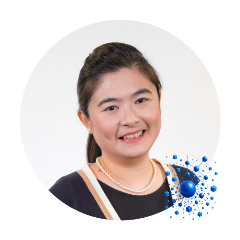
Dr Magdeline Ng | Vice University Librarian, NUS Libraries
Magdeline is Vice University Librarian and Cluster Head of Digital Strategy and Innovation at NUS Libraries. She serves on the WHO Western Pacific Region Librarians Network and FSTA Librarian Advisory Board, shaping global discussions on information access and public health. Believing that teaching deepens learning, she developed the THE1004 Learning to Learn e-course and co-authored Strategic Learning: A Holistic Approach to Studying with Professor Robert Kamei. Her research encompasses systematic reviews, pedagogy, and innovative teaching methods. Magdeline holds a joint appointment with NUS Agility Office, driving strategic transformation. She earned her Bachelor of Science (Hons) in Chemistry from NUS and her PhD in Chemistry from NTU.

Tan Poh Lay | Associate University Librarian, NUS Libraries
Poh Lay is a Discovery Services Librarian who manages a wide range of library applications and ensures seamless access to resources for the NUS community. With a background in IT, she brings strong analytical and problem-solving skills to her role, driving innovation and continuous improvement across these applications.
🕒 10.30 am
Over the past decade, open access has been championed as a transformative vision for scholarly communication; but rising article processing charges, unequal participation in publishing, and the emergence of AI are challenging what openness should look like in practice. This talk examines these challenges and their implications for the future of open access. Participants will explore how libraries and the academic community can work together to advance more sustainable and equitable approaches to open access, while maximising the impact of scholarly research. The session will also feature the launch of the NUS Libraries Framework for Open & Equitable Publishing, highlighting the library's commitment to fostering a more inclusive and responsible scholarly publishing ecosystem.

Assoc Prof Natalie Pang | University Librarian, NUS Libraries
Natalie is University Librarian and Head of the Communications and New Media department at NUS. She is a researcher and educator in digital citizenship and digital humanities. Her research lies at the intersection of technology and society, and her research projects are organised under the themes of digital citizenship, digital inclusion and well-being, and digital heritage. She is involved in various academic communities in library and information science and has served as chair of the programming committee for the Association of Library and Information Science Education (ALISE). Natalie was also a member of the steering committees for the International Conference on Digital Preservation (iPres) and the International Conference on Asia-Pacific Digital Libraries (ICADL). Her work on digital inclusion has been recognised internationally and she serves as a member of the editorial board of the International Journal of Information, Diversity, and Inclusion, Communication Theory, International Journal of Press/Politics, Asian Journal of Communication. In Singapore, she serves as a member of the Media Literacy Council (IMDA), External Assessment Panel (NHB), Heritage Advisory Panel (NHB), and Vice-Chair of the Online Safety Appeals Panel (MDDI). She is also as a member of the Inclusive Policy Lab at UNESCO.
🕒 11 am
As AI grows more capable, a common assumption persists: human researchers retain an edge because we understand lived experience, emotion, culture, and social interaction. But what if AI eventually closes that gap? What can researchers do that AI can’t? Using legal research as an example, this session dives into how legal researchers can move beyond tasks which AI handles well, and focus instead on generating original insights that place AI-generated knowledge into meaningful context.

Prof Damian Chalmers | Geoffrey Bartholomew Professor, NUS Law
Damian has worked at the London School of Economics and Political Science for 24 years with 10 of these as a Professor. He was previously Head of its European Institute and the Jean Monnet Centre for 4 years. He has held Visiting Appointments at the CEU, College of Europe, Copenhagen, EUI, Fundacao Getulio Vargas, Instituto de Empresa, Institute of Advanced Studies Vienna, and Fudan (PRC). He was also a Strauss Fellow at NYU and a Senior Fellow on the British ESRC ‘UK in a Changing Europe’ programme.

Prof Christian Witting | Vice-Dean (Academic Affairs and Undergraduate Studies), NUS Law
Christian's research interests lie in Tort Law, Company Law and Company Management. He has published books and articles in these areas and is working on a series of papers modelling the company as a living system.
🕒 11.30 am
Curious to know how AI transforms research? Using healthcare as an example, this session dives into the use of large language models (LLM) in real-world healthcare settings — from supporting better clinical decision-making and patient care, to automating research tasks. Gain practical insights into the various considerations involved in developing and deploying AI tools for healthcare research. The lessons learned will also provide valuable guidance for researchers looking to adopt AI across other disciplines.

Prof Ngiam Kee Yuan | Head of AI Office, NUHS and Head of Division of Endocrine & Thyroid Surgery, NUH
Kee Yuan leads the AI office at NUHS. In 2025, he won the Singapore Computing Society Tech Leader of the Year Award. As a clinician scientist at NUS, he has publications ranging from clinical science to artificial intelligence. He was awarded the NMRC CIDA award in 2021, which resulted in the development of new AI tools, a patent, and several high impact publications. Kee Yuan is among the world's top 2% of highly cited researchers by Stanford University-Elsevier survey in 2023 and 2025. His professional interests are innovations in surgery and artificial intelligence (AI) in healthcare.
🕒 1.10 pm
Libraries offer seamless access to a vast wealth of scholarly content, but does access also mean you are free to use these resources with generative AI? Whether you're uploading journal articles into ChatGPT to summarise the literature or exploring ways to use library content with AI tools, it's important to understand the copyright, licensing, and ethical considerations involved. This session examines what responsible AI use looks like in an academic setting and introduces the NUS policies and guidelines that can help you use AI confidently and compliantly in your research.
Dr Magdeline Ng | Vice University Librarian, NUS Libraries
Magdeline is Vice University Librarian and Cluster Head of Digital Strategy and Innovation at NUS Libraries. She serves on the WHO Western Pacific Region Librarians Network and FSTA Librarian Advisory Board, shaping global discussions on information access and public health. Believing that teaching deepens learning, she developed the THE1004 Learning to Learn e-course and co-authored Strategic Learning: A Holistic Approach to Studying with Professor Robert Kamei. Her research encompasses systematic reviews, pedagogy, and innovative teaching methods. Magdeline holds a joint appointment with NUS Agility Office, driving strategic transformation. She earned her Bachelor of Science (Hons) in Chemistry from NUS and her PhD in Chemistry from NTU.
🕒 1.30 pm
The COVID-19 pandemic highlighted the critical value of open science, where timely sharing of research output accelerated scientific discovery, enabled global collaboration, and informed responses to an unprecedented public health crisis. At the same time, it exposed challenges surrounding public trust, misinformation, and confidence in scientific research. Reproducibility, transparency, and accessibility are therefore more pertinent than ever. By enabling research to be verified, reused and built upon, it strengthens research quality and integrity. This talk outlines the principles of open science and practical strategies for sharing your research to enhance its impact.
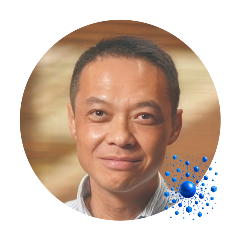
Prof Ooi Eng Eong | Professor, Programme in Emerging Infectious Diseases and Associate Dean (Early Research Career Development), Duke-NUS Medical School
Eng Eong is a Professor in the Programme in Emerging Infectious Diseases and serves as the Associate Dean for Early Research Career Development, both at Duke-NUS Medical School. He trained in medicine at the University of Nottingham and completed his PhD in the NUS Department of Microbiology. He has, for more than 25 years, been conducting research on dengue, starting with epidemiology of dengue in Singapore before focusing on dengue virology and human immune response to infection. Eng Eong is a three-time recipient of the Clinician-Scientist (Senior Investigator) Award and currently holds the Singapore Translational Research Award, all from the National Medical Research Council. He has served in advisory capacities to the pharmaceutical and vaccine industries, and is a member of the Scientific Advisory Board of Science Translational Medicine and an Editorial Board member of PLOS Biology.

Elaine Tham | Regional Director, Publishing Development (Asia) at Public Library of Science (PLOS)
In PLOS, Elaine leads open science engagement, advocacy and partnerships across the region. She brings over 20 years of experience in scholarly publishing and serves on the Board of ORCID. Elaine holds an MEng in Aeronautics from Imperial College London.
🕒 2 pm
The traditional scientific paper—a static PDF tracing its lineage back to the 17th century—is facing an unprecedented evolutionary leap. As generative AI, self-driving laboratories, and automated synthesis reshape how discoveries are made, the way we communicate scientific knowledge must keep pace. This talk explores the massive paradigm shifts currently disrupting scientific publishing—from machine-readable output, AI-assisted peer review tools, to dynamic AI-enabled research workflows. Whether you are a student or faculty member, discover what these emerging trends mean for you and how to prepare for a future where communicating science evolves at lightning speed.

Prof Loh Xian Jun | Executive Director, A*STAR Institute of Materials Research & Engineering (IMRE)
A Singaporean polymer chemist, Xian Jun is globally recognised as a leading expert in the field of biodegradable thermogels and supramolecular biomaterials, which have diverse applications in drug delivery, tissue engineering, cosmetics, personal care, and the food sector. In addition to his leadership at IMRE, he holds concurrent Adjunct Professorships at NTU and NUS.
In 2025, his pioneering research on thermogels was recognised as one of the IUPAC Top 10 Emerging Technologies in Chemistry. An exceptionally prolific and influential scientist, Xian Jun has authored over 500 publications, holds 38 patents, and amassed over 46,000 citations with an H-index of 118. His significant contributions have been recognised with numerous honors, including election as a Fellow of the Singapore National Academy of Science, the Royal Society of Chemistry, the Institute of Materials, Minerals & Mining, and The Institution of Engineering and Technology. In 2022, he received the Singapore Public Administration Service National Award (Silver) for his contributions during the COVID-19 pandemic.
Prof Christian Witting | Vice-Dean (Academic Affairs and Undergraduate Studies), NUS Law
Christian's research interests lie in Tort Law, Company Law and Company Management. He has published books and articles in these areas and is working on a series of papers modelling the company as a living system.

Assoc Prof Shefaly Shorey | Vice-Dean (Administration), Yong Loo Lin School of Medicine
Shefaly is an Associate Professor with tenure, Vice Dean (Administration) at NUS Medicine, and Director of the Yeo Boon Khim Mind Science Centre. An internationally recognised nurse scientist, her research focuses on family health, mental health, digital health, and implementation science. She has published over 290 papers, is listed among Stanford’s Top 2% Most-Cited Scientists, and is a recipient of Singapore’s President's Award for Nurses.
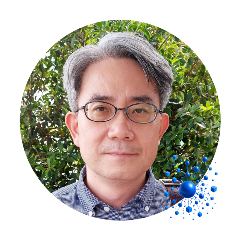
Assoc Prof Son Joonmo | NUS Department of Sociology and Anthropology
Joonmo Son is an Associate Professor of Sociology at NUS. He also serves as co-editor of Current Sociology (an official journal of the International Sociological Association) and Asian Journal of Social Science. His work has appeared in journals such as Social Networks, Journal of Health and Social Behavior, and Journal for the Scientific Study of Religion.
🕒 3.45 pm
Below sessions will be held concurrently. Please select one workshop during registration.
Generative AI is rapidly changing how systematic reviews are conducted. From literature searching, search results screening, data extraction, quality assessment, to manuscript writing, AI can support each stage of the systematic review process. In this practical session, explore the use of chatbots to deepen your understanding of systematic search strategies, discover tools that can help you be more efficient and more!
Learn:

Wong Suei Nee | Senior Librarian, NUS Libraries
Suei Nee has more than 10 years of experience working as a Librarian. Her work interests include Systematic Review searching and teaching users how to search for full-text articles. She has worked in both the Central Library and Medical Library, and relishes the different learning experiences both libraries offer. She is also part of the Scholarly Communications and Systematic Review Team.

Annelisa Chin | Senior Librarian, NUS Libraries
Annelissa enjoys working with students and researchers through systematic review consultations and workshops, where she shares the methodology and best practices for systematic literature search.
Looking to demonstrate your research impact? Curious how your research ranks in the global research landscape? Or evaluating research strengths across researchers? In this hands-on taster workshop, you’ll learn how to use SciVal to generate research metrics and benchmark research performance. Whether you're an individual researcher or supporting research strategy, you'll leave with practical skills to make the most of SciVal.
Learn:
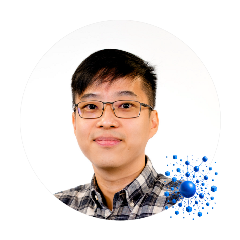
Richard Ho | Principal Librarian (Scholarly Communications), NUS Libraries
Richard leads the Scholarly Communications Team at NUS Libraries, working closely with the NUS community to support and advance initiatives in academic publishing, open access, research impact, research data management, and NUS' institutional repository, ScholarBank@NUS.