


This site uses cookies
By clicking accept or continuing to use this site, you agree to our use of cookies. For more details about cookies and how to manage them, please see our Privacy Notice.
Due to renovation works, selected books housed in the closed stacks will be temporarily unavailable from 22 June 2026 to 31 December 2026.
We apologise for any inconvenience this may cause and appreciate your understanding. Should you require assistance or have any queries, please contact us at loans@nus.edu.sg.
Digital Gems and Examination Papers Database are currently undergoing maintenance. During this period, users may experience issues logging into the websites.
Open Access materials that do not require login will remain accessible. If you encounter difficulties viewing a file online, please try downloading the file and opening it locally instead.
We apologise for any inconvenience caused and appreciate your patience while the maintenance is being carried out.


 Recommend Articles, Books & Other Materials for Purchase
Can’t find a resource you need in our libraries? Send us your request and we’ll source for it
 Intralibrary Loan
Request for a book to be sent to another library within NUS Libraries for collection
 Guides & Tools
Discover our many resources for research, learning and teaching - from how-to guides, to databases and other powerful tools!
 Research Starter-kit
Learn about research tools such as Proxy Bookmarklet, BrowZine, Citation Managers and FindIt! with Google Scholar
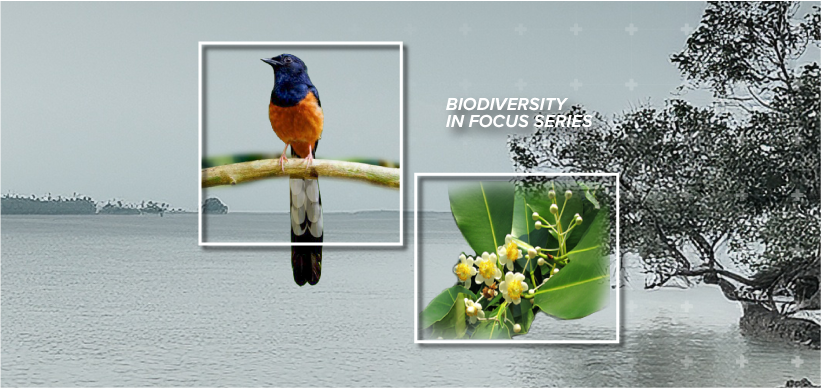
The formation of early botanical landscapes and spaces in Singapore were related to colonial practices on the one hand, and the network of botanical gardens and diasporic labour, on the other. This talk discusses the roles and histories of these spaces as related to botanical texts, and how they shape our understanding today.

Lai Chee Kien researches on histories of art, architecture, settlements, urbanism and landscapes in Southeast Asia. He is an architectural and urban historian, and a registered architect in Singapore. He graduated from the National University of Singapore with an M Arch. by research [1996], and a PhD in History of Architecture & Urban Design from the University of California, Berkeley [2005]. His publications include Building Merdeka: Independence Architecture in Kuala Lumpur (2007), Building Memories: People, Architecture, Independence (2016) [Book of the Year, Singapore], The Merdeka Interviews: Architects, Engineers and Artists of Malaysia’s Independence (2018, co-authored), and Singapore Chronicles: Architecture (2019). He is Vice-President of the Society of Architectural and Urban Historians of Asia (SAUH-Asia), and an Advisory Council Member of the International Association for the Study of Traditional Environments (IASTE).
This event is open to all, including NUS staff/students and the public. Booking availability on a first-come-first-served basis.
For general enquiries, contact askalib@nus.edu.sg.
