Retrieving books from our closed stacks will take longer due to ongoing renovation & improvement works. Do cater an additional day or two for your requests to be fulfilled. We apologise for the inconvenience & appreciate your understanding. For assistance or queries, contact loans@nus.edu.sg.

-
Borrowing & Requests
Borrowing & Requests
 Recommend Articles, Books & Other Materials for Purchase
Can’t find a resource you need in our libraries? Send us your request and we’ll source for it
 Intralibrary Loan
Request for a book to be sent to another library within NUS Libraries for collection
-
Services & Help
Services & Help
 Guides & Tools
Discover our many resources for research, learning and teaching - from how-to guides, to databases and other powerful tools!
 Research Starter-kit
Learn about research tools such as Proxy Bookmarklet, BrowZine, Citation Managers and FindIt! with Google Scholar
-
Spaces
Spaces
-
Collections
Collections
- What's on

Unveiling the Journey: Evolution of Speech-Language Therapy in Singapore
By Wong Suei Nee, Elizabeth J. Teh, & Wei Ping Sze
In the lead up to the Master of Science (Speech & Language Pathology) programme’s 20th anniversary in 2026, our library is partnering with the programme to trace its evolution within the broader context of its field.
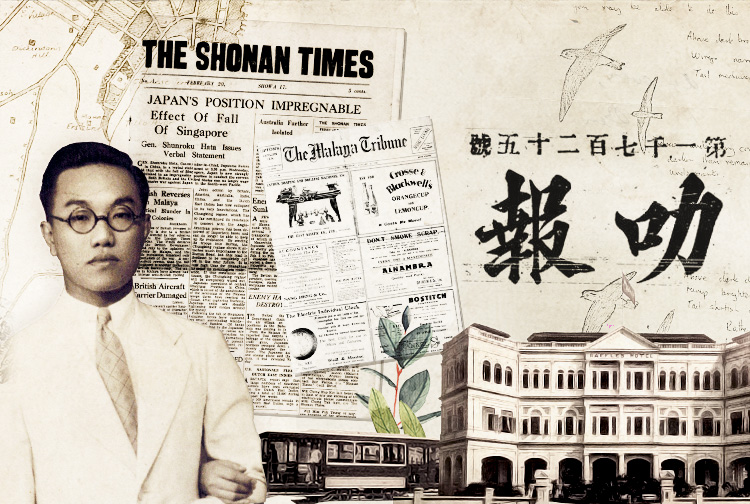
NUS Libraries has been co-teaching information literacy with the programme for more than a decade, making this a timely opportunity to document its history and highlight its contributions. Before the 1960s, the field relied heavily on expatriates. A breakthrough occurred in the 1960s when Mrs Juliet McCully became the first Singaporean to receive her Speech Therapy diploma from the Kingdon Ward School of Speech Therapy in London, funded by a Colombo Plan scholarship which she learned through the newspaper. The Colombo Plan, established in 1951 to foster human capital development in Asia and the Pacific, was instrumental in reducing reliance on expatriates by enabling Singaporeans to pursue professional qualifications abroad, thereby developing homegrown talent in our local workforce.
This was seen in the case of Mrs Juliet McCully, who, following her return, was appointed the first Speech Therapist in Singapore General Hospital’s Speech Therapy Department, established on August 19, 1968. A second therapist, Miss E Chua, joined the Department five years later in August 1973 (Singapore General Hospital, 1976).
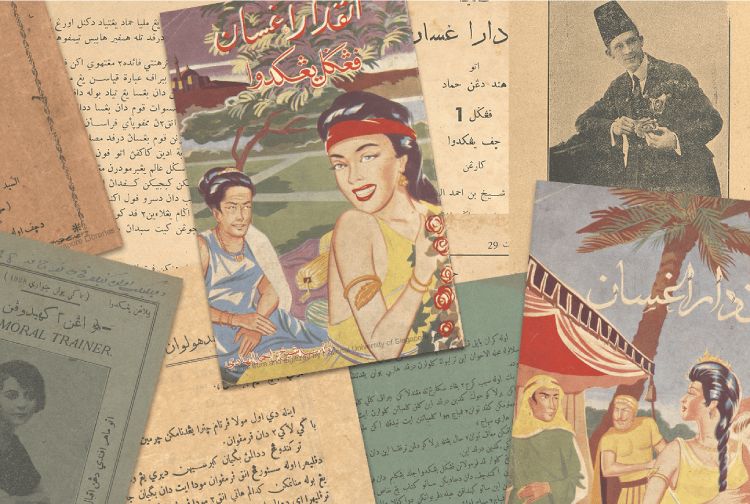
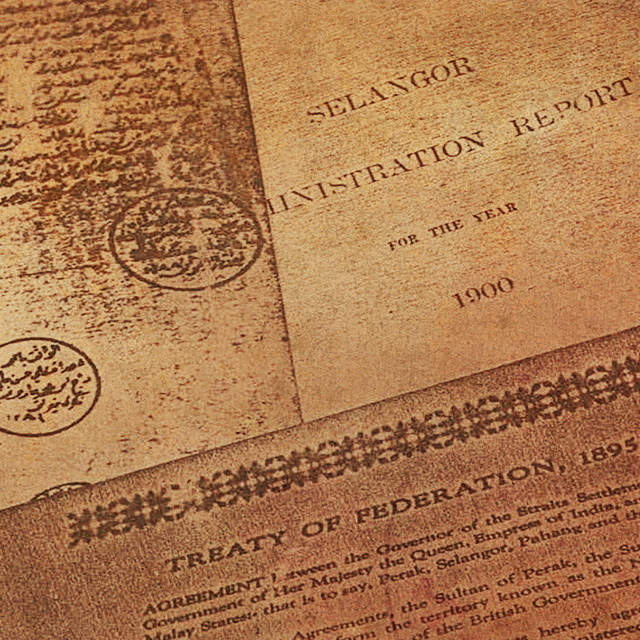
More records about the Colombo Plan are available in our Singapore-Malaysia collection:
While it was undeniable that the Colombo Plan contributed to the healthcare system by providing opportunities for Singaporeans to train as therapists, a persistent shortage of allied health professionals remained due to increases in demand.
Shortage of speech and language therapists was reported in the 1960s (Hospital, T. T. S.,1938) and persisted to the 1980s. Tan Tock Seng Hospital, for instance, reported a sharp increase of 70.9% in demand for speech therapy service in a year, according to its 1977 Annual Report. Similarly, in the 1989 Annual Report by Department of Rehabilitation Medicine, Dr Tan Eng Seng noted that “the lack of health therapists continued to hamper the department’s work. Admission had of necessity become more selective.”
In 2007, the Master of Science (Speech & Language Pathology) was established by Associate Professor Susan Rickard Liow to offer entry-level training for the profession. For about two decades, it was conducted as a two-year clinical training programme, with biennial intakes. Since its inception, the programme has achieved the following :
- Graduated 221 students across nine cohorts from 2007 to 2025.
- Achieved 100% employment rate upon graduation, based on data gathered since 2021.
- Developed bilingual clinical resources for both adult and pediatric populations related to assessment and intervention. This is to champion applied clinical research. A full list of these clinical resources can be found at https://medicine.nus.edu.sg/dgms/SLP/home.html.
- Successfully organised nine editions of the “Student Research Seminar,” which drew substantial interest from the profession’s community and general public.
- Gained international recognition at the Dysphagia Research Society Meeting in 2013, when one of the graduates, Jason Khoo, was awarded first place for his poster presentation based on his NUS MSc (SLP) research on a new swallowing intervention, Chin Tuck Against Resistance (CTAR), created by a former NUS MSc (SLP) staff, Mr. Yoon Wai Lam (please see Yoon, Khoo, & Rickard Liow, 2013; Sze, Yoon, Escoffier, & Rickard Liow, 2016).

- Introduced basic and intermediate-level courses, on Effective Clinical Supervision Skills in 2021, following a two-year market research which provided insights for its curriculum development. This was a milestone as it expanded the programme’s outreach beyond the MSc (as a basic qualification) to post-qualification training for Speech Therapists.
- The two courses have since expanded their target audience to include a wider group of Allied Health Professionals, including occupational therapists, social workers, and psychologists. Both courses are now fully recognised by the Allied Health Professions Council and accredited with Continuing Professional Education (CPE).
In 2026, the programme will transit from a biennial to annual intake to meet growing demand for speech and language therapists, particularly in eldercare and children in special education. This marks yet another milestone as the programme celebrates its 20th anniversary.
The programme has come a long way since its inception in 2007. While speech and language therapy remains a niche profession in Singapore with only a small number of graduates per cohort, the programme has grown steadily over the years. In writing this article, we hope to deepen appreciation for the profession and inspire greater interest in the field so that our nation’s growing needs will one day be fully met by our local workforce.
Select list of secondary sources
For a fuller understanding, let us start with the Singapore/Malaysia Collection (E-books via Word Scientific), as it provides an overview of the Allied Health professions and medical education in Singapore:
- Lau, H. C., Teo, E., Tan, I. C. C., Lau, C. M., Lim, H. B., Chua, M., Tan, G., Tong, J., & Wong, G. (2015). Allied health professionals. In K. Satkunanantham & C. Earn Lee (Eds.), Singapore’s health care system: What 50 years have achieved (pp. 155–159). Singapore: World Scientific, 2016
An introduction to the field of allied health, which highlights the work and challenges of the professionals involved as they seek to deliver a top-class healthcare service:
- Many talents, one passion: In praise of healthcare heroes. Singapore: Grey Cells Series, 2011.
A book which presents the history of medical education in Singapore from 1905 to 1995. It also describes the major milestones and achievements in the development of medical education in Singapore:
- A continuity of ideals: Commemorating 90 years of medical education (1905–1995): Medical Faculty, National University of Singapore. Singapore: Armour Pub, 1995.
On page 120 in this book, we found that rehabilitation therapy has come a long way in Singapore since 1947 when Physiotherapy was first established, followed by Occupational Therapy in 1949 and Speech Therapy in 1968.
- The first general hospital: 175th anniversary, 1821-1996 / advisor, Kwa Soon Bee ; editorial committee, Lawrence Lim … [et al.]. Singapore: Singapore General Hospital, 1996.


