





This site uses cookies
By clicking accept or continuing to use this site, you agree to our use of cookies. For more details about cookies and how to manage them, please see our Privacy Notice.
Retrieving books from our closed stacks will take longer due to ongoing renovation & improvement works. Do cater an additional day or two for your requests to be fulfilled. We apologise for the inconvenience & appreciate your understanding. For assistance or queries, contact loans@nus.edu.sg.


 Recommend Articles, Books & Other Materials for Purchase
Can’t find a resource you need in our libraries? Send us your request and we’ll source for it
 Intralibrary Loan
Request for a book to be sent to another library within NUS Libraries for collection
 Guides & Tools
Discover our many resources for research, learning and teaching - from how-to guides, to databases and other powerful tools!
 Research Starter-kit
Learn about research tools such as Proxy Bookmarklet, BrowZine, Citation Managers and FindIt! with Google Scholar
We are committed to the responsible and judicious use of technology to augment and enhance our sustainability efforts, from helping reduce the carbon footprint of field trips, to making wayfinding more accessible.
NUS Libraries approaches the trade-offs between the benefits of digital technologies on sustainability with its environmental impact through strategic resource allocation and the adoption of advanced technologies, such as adopting energy-efficient digital processes.
Some highlights of our digital sustainability innovations include:
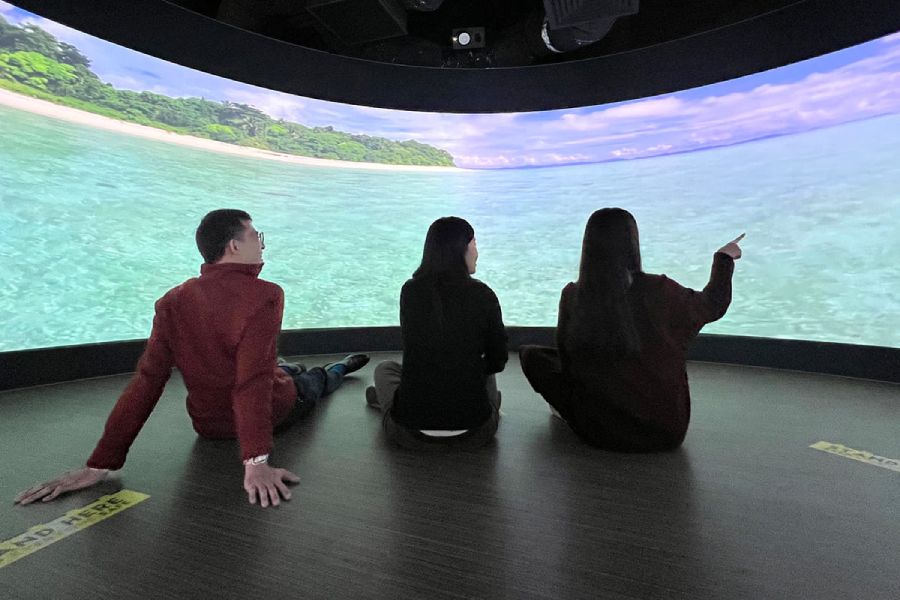
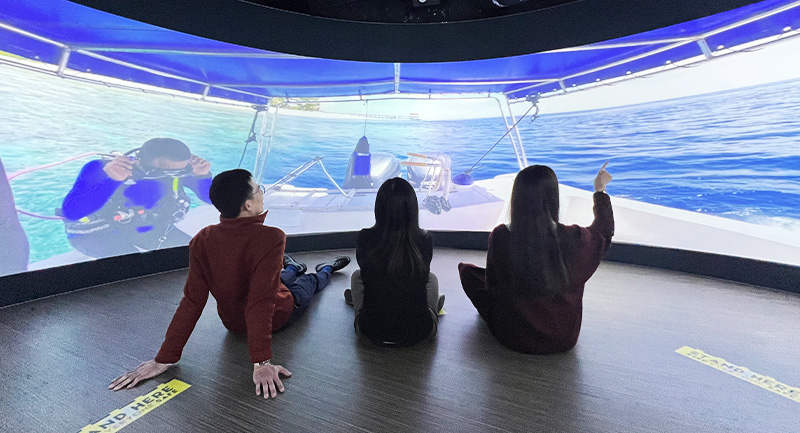
This award-winning project, a collaboration between NUS Libraries' Tech Central team and NUS' Department of Geography, transports participants into an immersive 360-degree experience around the unique tropical ecosystems of Southeast Asia. Focusing on students in the fields of environmental studies and conservation biogeography, the project aimed to deepen understanding of the biodiversity of tropical ecosystems, their vulnerabilities, and the importance of community-based conservation and ecosystem restoration. The project was recognised at the 2023 QS Reimagine Education Awards for showcasing the potential impact of 360-degree films in enhancing collaborative learning experiences and access to education.
By providing an immersive 360-degree experience, the Roots to Reefs 360 project enhances understanding of biodiversity without necessitating physical travel. This contributes to sustainability by reducing the carbon footprint associated with conventional field trips while also making education more accessible.
More importantly, the film inspired audiences to take action — from wanting to find out more and visit tropical ecosystems around the region in person, to wanting to do more to support community-led restoration and conservation of these ecosystems.
Another way NUS Libraries used digital transformation to align with sustainability principles was in the development of a 360° Virtual Tour of the National University of Singapore's (NUS) Kent Ridge and Bukit Timah Campuses. Originally born out of the need to provide a virtual tour option during the peak of the COVID-19 period, this innovative collaboration with NUS' Office of Admissions provided a virtual alternative to traditional campus tours, minimising the need for physical travel and thereby contributing to a reduction in the carbon footprint associated with campus visits.
Similarly, our NUS Libraries 360 tours allows visitors to view our library having to come all the way to campus for a visit, and has the added benefit of being a wayfinding tool.
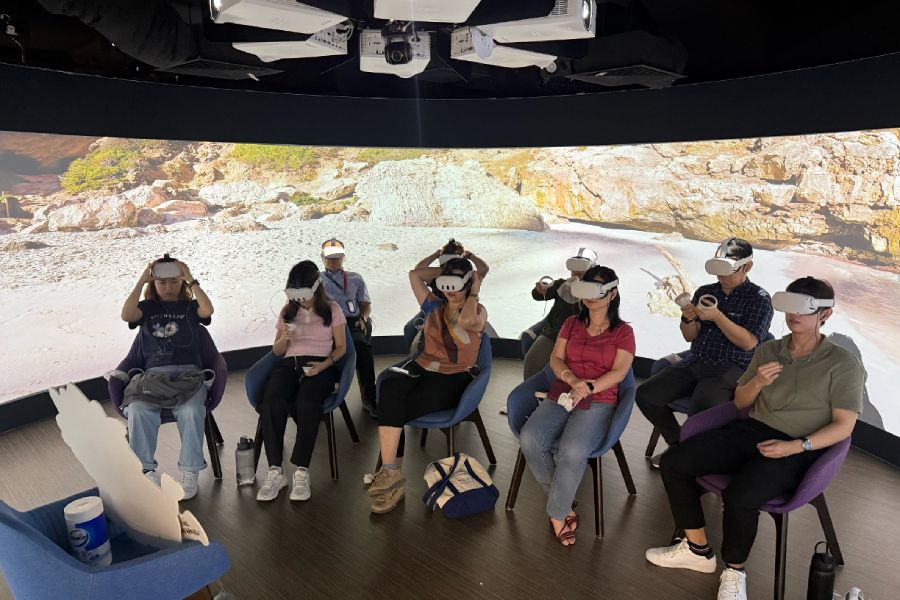
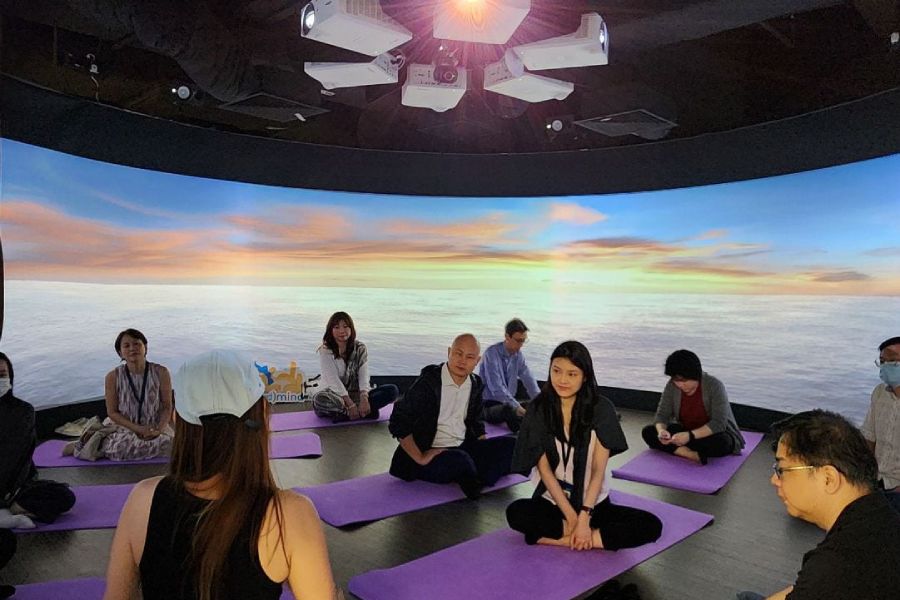
The Immersive Wellness initiative promotes mental health and innovative health solutions among our campus community. By offering relaxation sessions in the Libraries' 360imx theatrette, the initiative reduces stress and improves focus among students and staff, directly contributing to their mental well-being. The integration of technology with wellness practices demonstrates an innovative approach that can serve as a model for other institutions. This focus on well-being fosters a supportive community environment, essential for holistic development, and aligns with the goal of improving health through innovative and community-focused practices.
In a recent upgrade to our ongoing LibMaps initiative, we took the opportunity to do so sustainably. The project is a collaboration with NUS' Department of Geography, as well as the Singapore Land Authority and Ministry of Defence, who granted permissions for use of their maps. Initially hosted on a dedicated server, the infrastructure had reached its end of life and needed to be decommissioned.
We decided to migrate the LibMaps platform to the cloud, which reduced upkeep costs and requirements. The new hosting service allowed us to offer the same interface in a static architecture, eliminating the need for server-side computations to respond to client requests, further reducing power consumption.
This design also removed most of the need for maintenance and drastically reduced the risk for potential bad actors and security risks. Lastly, this design can be hosted in the cloud, removing the need for a local server, resulting in greater efficiency of manpower and energy use.
The maps themselves are crucial to enhancing scholarship and awareness of sustainability issues in Singapore. For example, the Animal Map illustrates the locality of first published records of established non-native animal species in Singapore from the nineteenth century to present, represented by orange point markers.
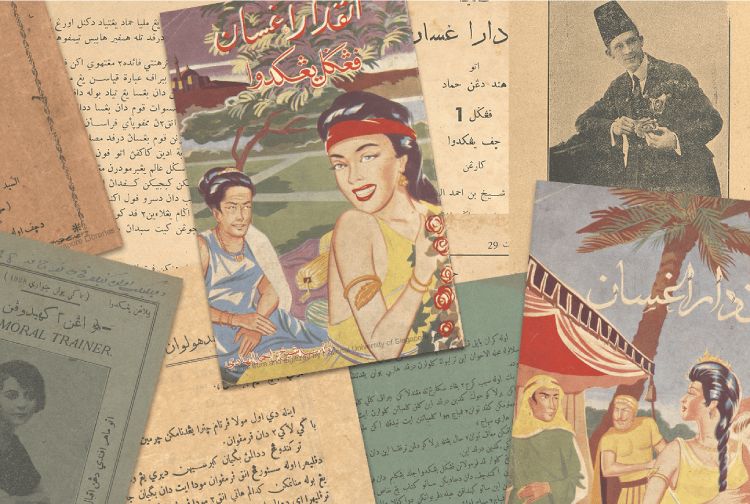
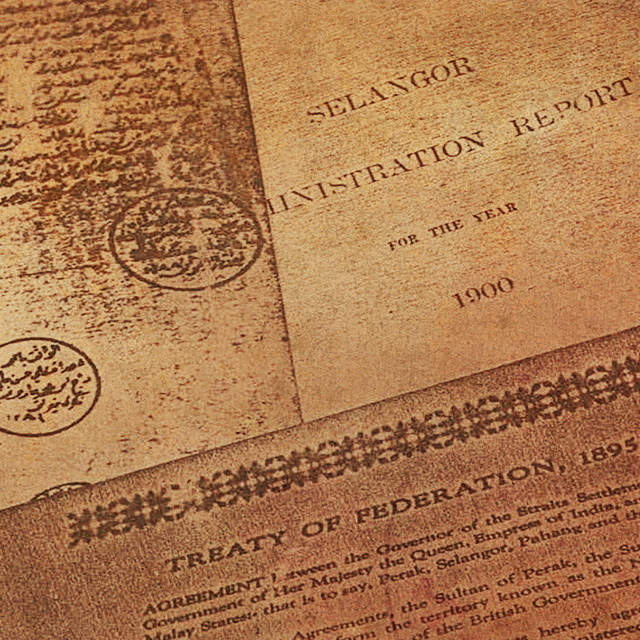
This system is a linchpin for our efforts in safeguarding cultural heritage, ensuring longevity, and enhancing accessibility. The digital preservation system allows us to protect precious rare books and materials from the ravages of physical degradation, while managing technological obsolescence, and ensuring continuity for future generations. In digitising this rare content, we enable global access, foster cultural understanding and knowledge transfer across different communities and time periods.
