





This site uses cookies
By clicking accept or continuing to use this site, you agree to our use of cookies. For more details about cookies and how to manage them, please see our Privacy Notice.
Retrieving books from our closed stacks will take longer due to ongoing renovation & improvement works. Do cater an additional day or two for your requests to be fulfilled. We apologise for the inconvenience & appreciate your understanding. For assistance or queries, contact loans@nus.edu.sg.


 Recommend Articles, Books & Other Materials for Purchase
Can’t find a resource you need in our libraries? Send us your request and we’ll source for it
 Intralibrary Loan
Request for a book to be sent to another library within NUS Libraries for collection
 Guides & Tools
Discover our many resources for research, learning and teaching - from how-to guides, to databases and other powerful tools!
 Research Starter-kit
Learn about research tools such as Proxy Bookmarklet, BrowZine, Citation Managers and FindIt! with Google Scholar
We prioritise sustainable construction practices such as the use of carbon-neutral and eco-friendly building materials, as well as emphasising carbon footprint reduction in every aspect of our facilities.

The Medicine+Science Library (pictured above) was officially opened in 2023. We partnered with University Campus Infrastructure to introduce key sustainability features and embed them into the very design of the building. This includes:
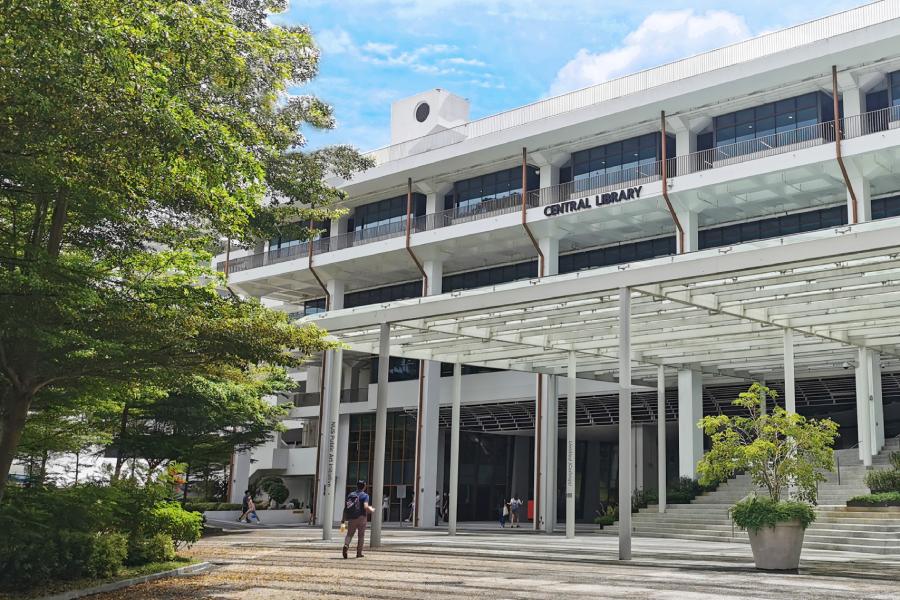
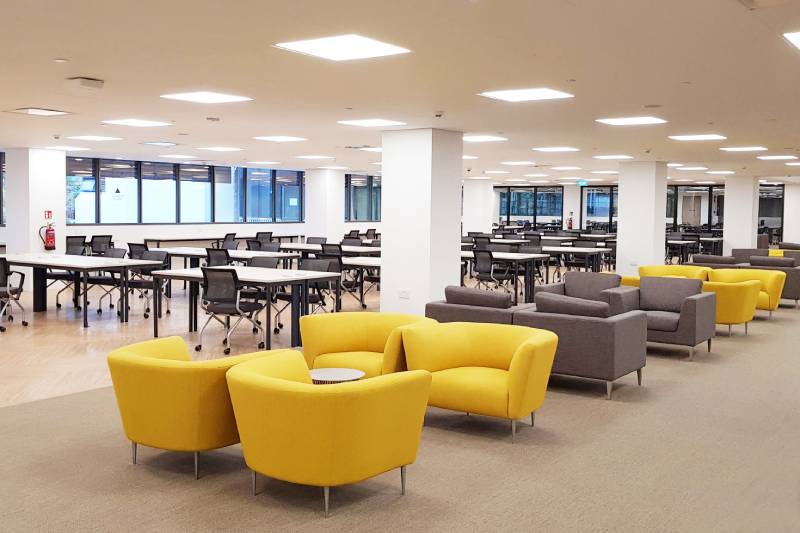
NUS’ Central Library (pictured above) underwent a major renovation from 2018 to 2021, working with University Campus Infrastructure to improve the overall quality of facilities, as well as re-organise internal layouts to create more study spaces and new teaching and resource facilities. This allowed us to introduce more sustainable features to the building, which resulted in up to 48% energy savings! Some of these features include:
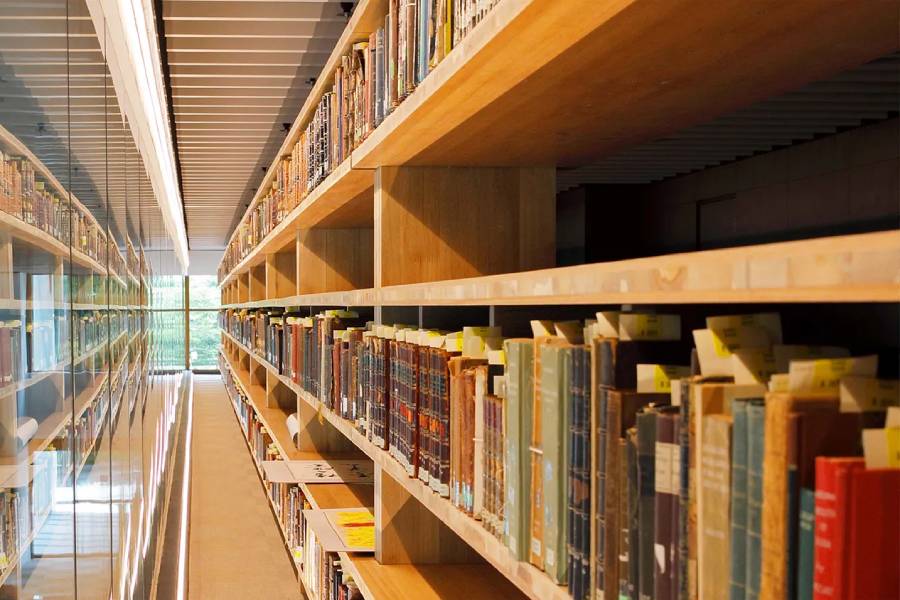
The Central Library BookBridge (pictured above) is a first-of-its-kind bookshelf made from tropical Mass Engineered Timber (MET), a renewable, sustainable building material for architecture. This award-winning showpiece was the result of a close collaboration between NUS Libraries, Professor Shinya Okuda from NUS Department of Architecture, and Roger&Sons, a homegrown woodworking firm in Singapore. The 31-metre BookBridge was launched in March 2021 and proudly displays a selection of NUS Libraries' rare book collection.
Our libraries have automated occupancy monitoring of library spaces. This enables efficient space usage as patrons can quickly gauge the number of people in each library at any given point in time. The data collected over time also helps libraries to monitor the occupancy and adjust our opening hours or space availability accordingly to reduce electricity consumption from air conditioning and light usage.
Managing limited library space efficiently and sustainably is a challenge, especially during peak periods when demand is high. Ensuring equitable access while preventing overuse and resource wastage is essential to maintaining a sustainable study environment.
Partnering with NUS IT, as well as NUS Agility Office's uNivUS team, we leveraged the existing campus-wide uNivUS mobile app to co-develop and deploy an online seat booking system. The app-based service was rolled out for the Central Library and Medicine+Science Library, and was positively received by users. The service helped minimise wastage of space and ensure that resources are used optimally.
