


This site uses cookies
By clicking accept or continuing to use this site, you agree to our use of cookies. For more details about cookies and how to manage them, please see our Privacy Notice.
Retrieving books from our closed stacks will take longer due to ongoing renovation & improvement works. Do cater an additional day or two for your requests to be fulfilled. We apologise for the inconvenience & appreciate your understanding. For assistance or queries, contact loans@nus.edu.sg.


 Recommend Articles, Books & Other Materials for Purchase
Can’t find a resource you need in our libraries? Send us your request and we’ll source for it
 Intralibrary Loan
Request for a book to be sent to another library within NUS Libraries for collection
 Guides & Tools
Discover our many resources for research, learning and teaching - from how-to guides, to databases and other powerful tools!
 Research Starter-kit
Learn about research tools such as Proxy Bookmarklet, BrowZine, Citation Managers and FindIt! with Google Scholar
As an academic library, we place heavy emphasis on the preservation of documentary cultural heritage, making accessible more resources on sustainability, as well as the co-creation of cultural heritage outputs that will enhance our community's awareness of sustainability issues and generate more scholarship in support of that aim.
Some of these efforts can be seen in the following initiatives:
We actively maintain a curated list of materials and resources that aid students and researchers in discovering environmental studies and sustainability related work. The guide is available through the university library's Environmental Studies subject guide.
The Digital Sustainability Exhibition held from 1 July 2026 to 30 April 2027 is organised by NUS Libraries in partnership with SG EcoFund. Credits, acknowledgement and references for the exhibition is documented on the Digital Sustainability Exhibition Resources page.
This collection contains rare and unique content on the flora and fauna of Southeast Asia. A labour of love between NUS Libraries and Lee Kong Chian Natural History Museum, it contains open access biodiversity materials from both entities. The biodiversity library of Southeast Asia can be found in our Digital Gems Collection.
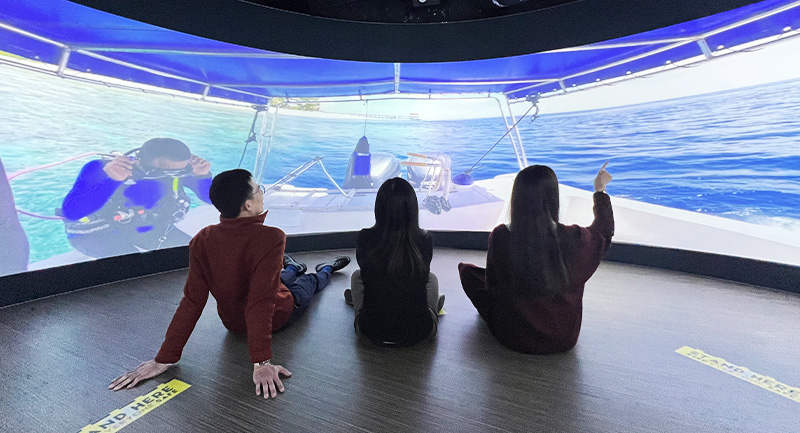
The "Nature Remixed" audio-visual installation took an innovative approach to fostering a deeper understanding and appreciation of biodiversity and nature. The installation fuses Natural History collections, sound recordings, and machine learning, encouraging viewers to reflect on nature and spark discussion among visitors.
NUS Libraries' special collections of artworks were used as data for machine learning. This exhibit featured a machine learning algorithm that perpetually generates never-before-seen specimens out of a database of natural history drawings. Original books containing natural history illustrations from the 19th century, are also on loan from the National University of Singapore Libraries and are on display at the exhibition.
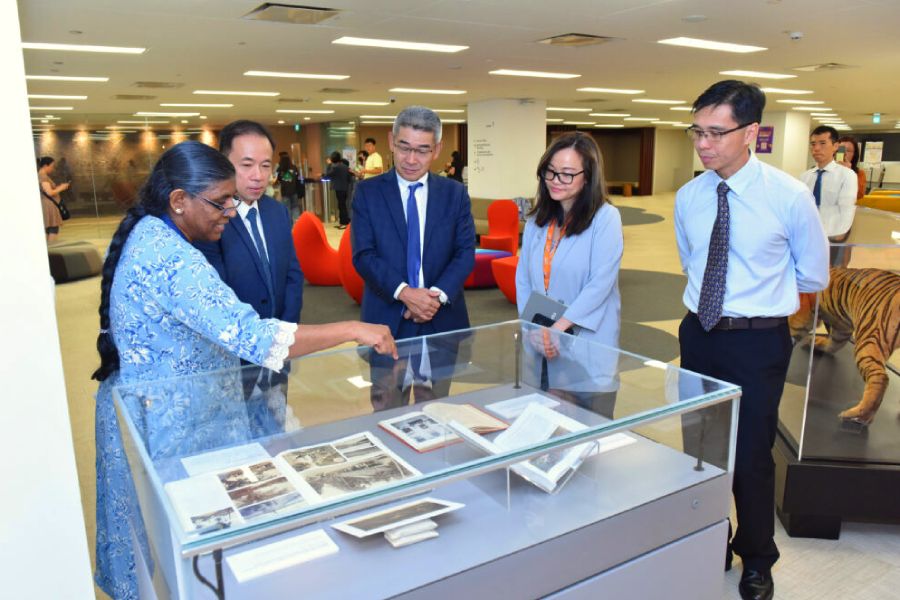
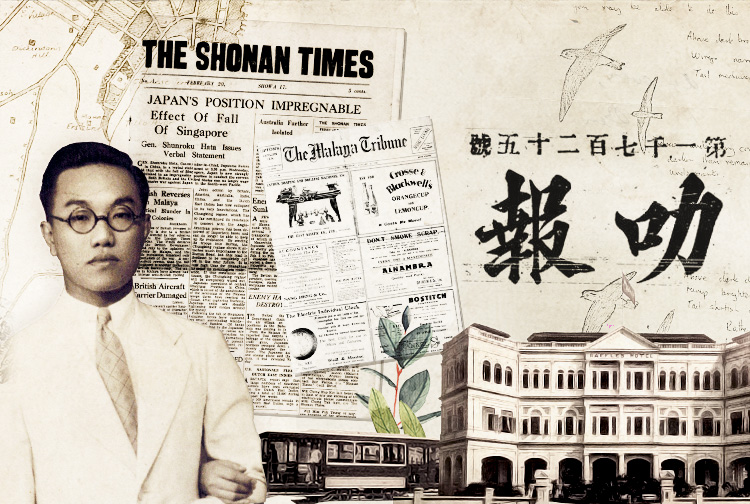
The launch of the book “8 1/2 Hours in Singapore” is a result of a collaboration between NUS Libraries and the Lee Kong Chian Natural History Museum, with support and assistance from the National Museum of Singapore, the National Library Board, National Archives of Singapore, the Meiji Shinbun Zasshi Bun ko of Tokyo University, Dr Noriko Iwaki and Dr Timothy David Amos. Authored by Maimon Hussin, Kathy Poh and Jeslynn Teo (pictured above), the book emphasises the importance of historical and interdisciplinary approaches to understanding biodiversity.
Taking pride of place in the book is a selection of woodblock prints by renowned Japanese artist Kubota Beisen, drawn from our rare books collection. These works help to vividly illustrate early depictions of Singapore's wildlife and environment, highlighting the cultural and ecological heritage of the region. This awareness fosters a deeper understanding of the ecological changes over time, promoting the preservation of natural history and encouraging responsible stewardship of biodiversity.
As expressed by Head of LKCNHM Assoc Prof Darren Yeo, "It is the recognition that the data from specimens and books—many more than a century old—that have been cared for by LKCNHM and NUS Libraries remain relevant and benefit from being studied together...This interdisciplinary understanding of our past biodiversity... will surely help us in our journey to becoming better stewards of our present, and future, biodiversity."
We also provide access to databases such as Dimensions which includes filters for research related to the 17 United Nations Sustainable Development Goals (SDGs), enabling faster and more targeted searches for literature relating to sustainability.
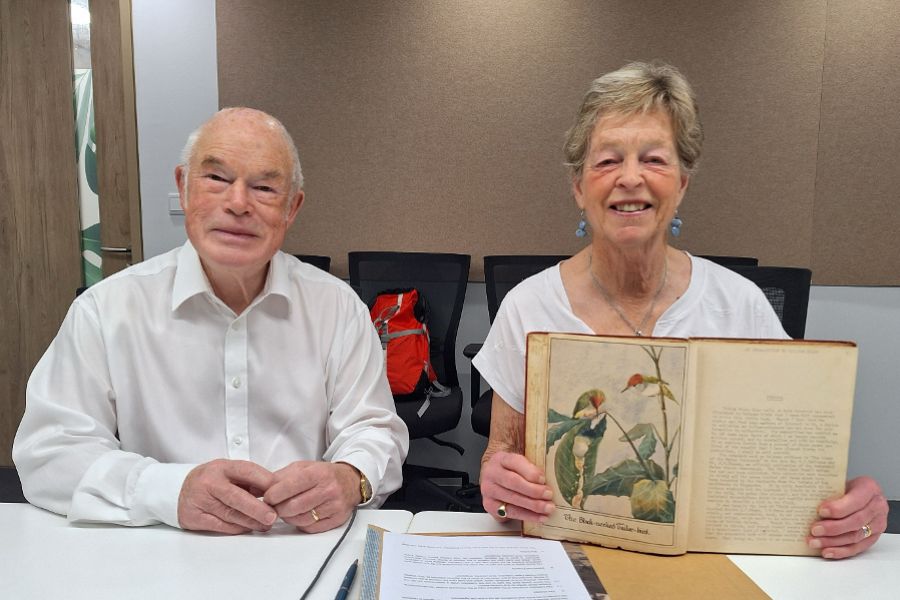
NUS Libraries' collections include notable works on avian biodiversity in Southeast Asia. From the observations of World War II prisoner of war Guy Charles Madoc, kindly donated to us by his daughter Fenella Madoc-Davis (pictured above, right), to the addition of Alfred R. Wallace's early publications on birds of the Malay Archipelago, these works provide historical context and foundational research on biodiversity, offer insights into early systematic studies of avian species, contributing to the understanding of species diversity and ecological relationships in the region. These rare books highlight the pioneering efforts in natural history and conservation, inspiring contemporary research and education on sustainability and biodiversity preservation.

The inclusion of a 200-year-old Bugis-Makassar manuscript in the NUS Libraries' collection (pictured above) allows us to contribute to preserving and making accessible historical knowledge on regional cultural and economic exchanges. This manuscript, believed to be from the 19th century, provides insights into the interactions between the Bugis-Makassar community and Singapore, highlighting the role of maritime trade in the region's development.
This is an ongoing collaboration with NUS' Department of Southeast Asian studies, and Universitas Muslim Indonesia (DMI), to digitise, translate, and study historical Bugis-Makassar documents, supporting the sustainability of cultural heritage, ensuring that the narratives of early settlers contribute to a broader understanding of Southeast Asia's interconnected history and identity.
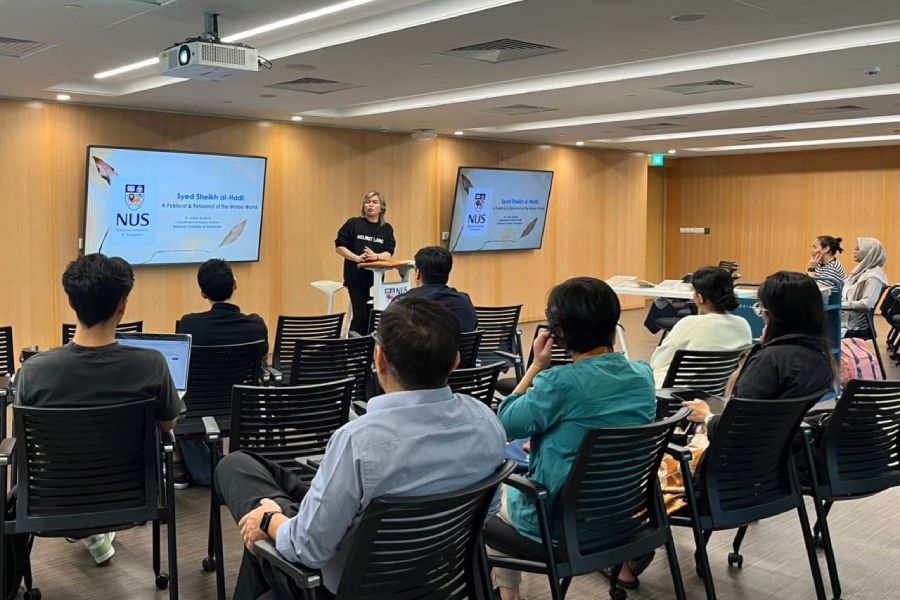
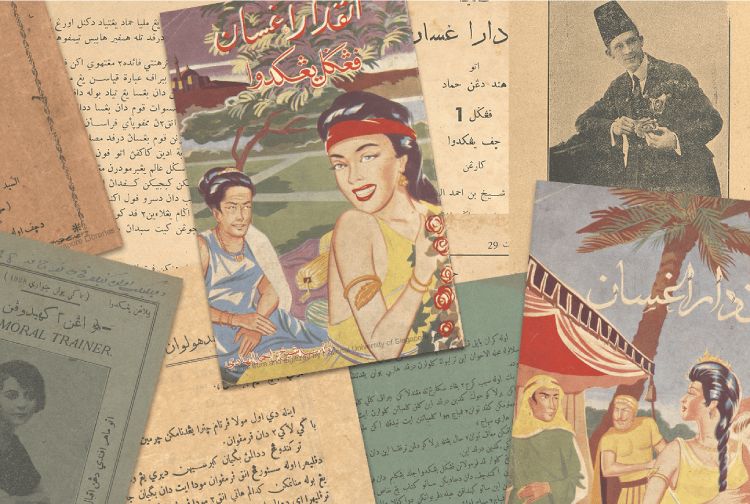
The Syed Sheikh Al-Hadi collection supports sustainability through cultural, educational, and social dimensions. In collaboration with NUS' Department of Malay Studies (pictured above), NUS Libraries helped preserve and digitise Al-Hadi's works, sustaining cultural heritage and enriching historical narratives, ensuring these legacies reach future generations.
Educational sustainability is enhanced as these resources become accessible for continuous learning, fostering research on societal reforms and Malay nationalism. Social sustainability is promoted through discussions on reformist ideas, encouraging dialogue on women's rights and education reform. Digitisation also preserves fragile documents by reducing wear, ensuring they remain accessible for future research, and supporting sustainable practices in cultural and educational contexts.
